Online Reporter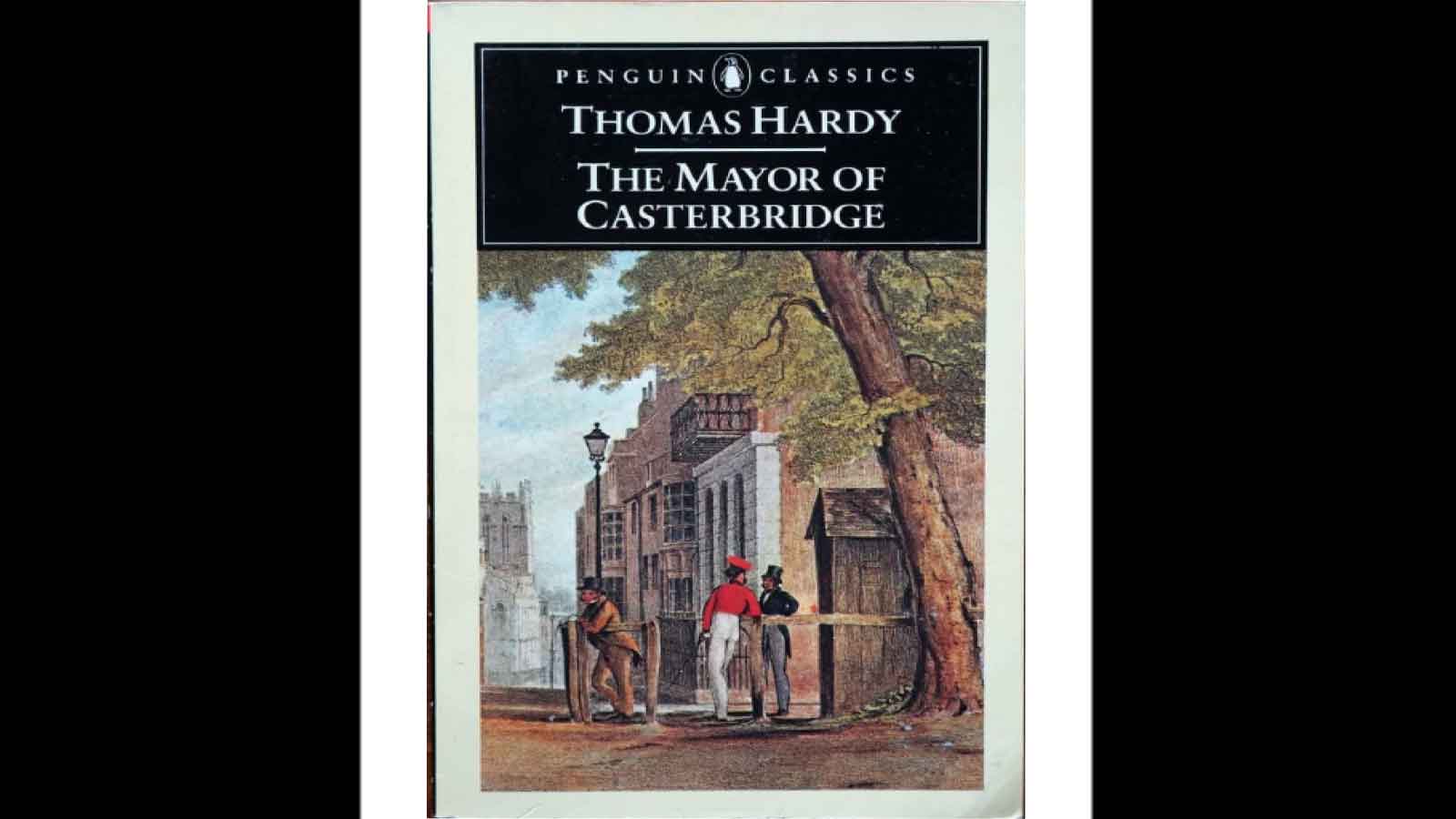
Elliot Ziwira-At the Bookstore
“By all means marry; if you get a good wife, you’ll become happy; if you get a bad one, you’ll become a philosopher,” so reasons the philosopher Socrates.
The quip may raise a smile, but in an age increasingly haunted by crimes of passion, intimate-partner violence and relationships turning fatal, it also invites a more uncomfortable question: how much of our lives can we blame on the people we love?
Can a partner make or break us? Can another person alter the course of our destiny? Or do we sometimes surrender responsibility for our choices by invoking fate, circumstance or the supposed failings of those closest to us?
Thomas Hardy’s timeless novel, “The Mayor of Casterbridge”, offers fertile ground for such questions.
At first glance, the novel appears to support an old and troubling idea: that a “bad wife” can bring a promising man down. But Hardy’s tragedy is more complicated than that. Beneath its Victorian attitudes towards marriage and womanhood lies a powerful meditation on temperament, consequence, chance, pride and the limits of human control.
Read from today’s perspective, the novel becomes less an indictment of women than a warning about what can happen when human beings make destructive choices and then discover that consequences have longer memories than they do.
Hardy tells the story of Michael Henchard, an ordinary hay trusser who rises from obscurity to become one of the most prominent men in Casterbridge. His ascent is as dramatic as his eventual collapse.
In a moment of drunkenness at a fair in Weydon-Priors, Henchard sells his wife, Susan, and their daughter, Elizabeth-Jane, to a sailor for five guineas.
It is an act so outrageous that, even today, the reader is tempted to regard it as beyond comprehension.
Yet Hardy is less interested in creating a simple villain than in showing how one reckless moment can acquire a life of its own.
Henchard later regrets what he has done. He vows to abstain from strong liquor for 20 years, one year for every year he has lived, and sets out to rebuild himself.
His fortunes change dramatically.
He travels to Casterbridge, where prosperity eventually finds him. He becomes a successful corn and hay merchant, mayor and chief magistrate, seemingly transforming himself into the respectable man his earlier life had denied him.
But Hardy’s world is one in which the past does not disappear simply because the present looks better.
After 18 years, Susan and Elizabeth-Jane return to his life. And with them comes the past Henchard had tried to bury.
Before the disastrous auction, Hardy writes of a conversation about “the ruin of good men by bad wives” and the frustration of promising young men through “an early imprudent marriage”.
The language is unmistakably shaped by its time, but it also reveals something about Henchard’s worldview. He sees marriage as part of the explanation for his misfortune.
“I married at 18, like a fool that I was; and this is a consequence of it,” he says.
His words are telling because they expose a familiar human tendency. That is, looking beyond ourselves for the source of our unhappiness.
Henchard certainly has reasons to regret his marriage and the circumstances surrounding it. But the decision to auction his family is his own.
Alcohol may cloud judgement, anger may distort perception and circumstances may narrow choices, but responsibility does not simply evaporate.
That distinction is particularly important for the contemporary reader.
In a society confronting crimes of passion, it is tempting to explain violence through jealousy, betrayal, marital conflict or the behaviour of the victim. But explanation should never become exoneration.
Hardy’s tragedy insists that destructive impulses can have devastating consequences long after the moment that produces them has passed.
The sailor, Newson, arrives at precisely the wrong moment — or perhaps, from Hardy’s fatalistic perspective, precisely the right one.
The auction begins almost as a grotesque joke. Those present assume Henchard cannot possibly be serious. But Newson takes the offer seriously, pays the five guineas and leaves with Susan.
Had the sailor arrived five minutes later, events might have unfolded differently.
This is Hardy’s great fascination—the extraordinary power of chance.
A life can turn on a conversation, encounter, missed opportunity, passing impulse or person arriving at precisely the wrong moment.
Man imagines himself architect of his destiny, yet Hardy repeatedly places him inside a web of circumstances he cannot fully control.
Henchard’s subsequent rise is a product of such chance. His fortunes improve in Casterbridge, while a chance encounter with Donald Farfrae helps rescue his damaged reputation when his wheat turns out to be poor.
Farfrae, a gifted young Scotsman, eventually becomes his manager, friend and confidant.
But the relationship gradually deteriorates. Henchard’s temper, pride and jealousy begin to overwhelm his better qualities. Farfrae, meanwhile, becomes increasingly successful and eventually emerges as his business rival.
The contrast between the two men is central to the novel.
Henchard possesses strength, ambition and generosity, but he is impulsive and emotionally volatile. Farfrae is measured, adaptable and methodical.
The tragedy is that Henchard often sees Farfrae’s rise not as an extension of his own generosity, but as a threat to his position.
Therefore, his dismissal of Farfrae is less a consequence of Susan’s return than of his own inability to manage jealousy and wounded pride. This is where the novel complicates its own apparent argument about women bringing men down.
Susan returns, yes. Lucetta enters his life and Elizabeth-Jane becomes central to his emotional world, while the furmity woman carries the memory of his shame.
But Henchard remains responsible for many of the choices that propel him towards ruin.
Womanhood may surround the tragedy, but it does not create all of it. Indeed, Susan herself is hardly the scheming “bad woman” suggested by the language of the period. She is more a casualty of Henchard’s reckless decision than its author.
Her meekness and limited understanding of the law lead her to believe that the sale is legally binding. When Newson appears, she accepts the strange logic of the world she inhabits and leaves with him.
Her return 18 years later is not an act of vengeance. It is the past coming home.
And when she dies, Henchard is confronted with another devastating revelation: Elizabeth-Jane is not his biological daughter. Their own child had died three months after the auction.
The revelation deepens his isolation.
The man who once stood at the centre of Casterbridge begins to disappear from it. His wealth, reputation, influence and relationships slip away.
Ironically, Farfrae rises as Henchard declines. The contrast is almost cruel in its symmetry. The man who once took Farfrae in as a friend and brother is eventually displaced by him.
Yet even here Hardy resists a simple morality tale. Henchard is neither entirely good nor entirely bad.
He is flawed, proud, passionate, generous, impulsive and capable of genuine remorse. That complexity is what keeps him alive for the contemporary reader.
We recognise the danger not because we are identical to him, but because we recognise fragments of ourselves in him — the pride that refuses apology, the anger that arrives before thought, the jealousy that masquerades as love, the decision made in a moment and regretted for years.
This is where “The Mayor of Casterbridge” (1886) acquires renewed relevance in our own troubled times. There is nothing romantic about possessiveness. There is nothing heroic about a man or woman who responds to rejection with violence.
There is no honour in treating another human being as property. And there is no justification for turning relationship breakdown into a death sentence.
Hardy could not have known the language through which we discuss intimate-partner violence today, but his novel understands something fundamental about destructive relationships. Emotions can become dangerous when pride, entitlement and poor judgement are allowed to govern human conduct.
Through the tragedy, we learn that the language we use matters. Calling someone a “bad wife” or “bad husband” may simplify a complicated relationship, but it can also obscure individual responsibility.
People are not possessions. Marriage does not give one person ownership over another. Love does not confer the right to control, and heartbreak, however profound, does not excuse violence.
Thus, Henchard’s downfall cannot be pinned entirely on Susan, Lucetta or any other woman. His tragedy is the product of a collision between personality, circumstance, chance and choice.
Fate opens some doors and closes others, but human beings still walk through them. That may be Hardy’s deeper lesson. Time, too, remains one of the novel’s most formidable forces.
Like most men used to having their way, Henchard believes he can escape his past through reinvention, but time keeps returning him to the consequences of his earlier actions. His rise and fall expose the fragility of status and material success.
A man can be mayor today and a forgotten labourer tomorrow. He can possess wealth, influence and admiration and still be defeated by the wounds he carries within.
Henchard’s death in a desolate swamp, poor and disgraced, and his burial without honours, brings the tragedy to its bleak conclusion. The man who once seemed to command Casterbridge leaves the world with almost nothing.
In that sense, Hardy strips life of its illusions. Titles, wealth and reputations do not save us from fate and our own shortcomings. Neither do our attempts to rewrite history.
What remains is what we do with the choices placed before us.
So, can a woman bring a good man down?
Hardy’s 19th-century world might tempt us to answer in the affirmative, but our own world demands a more careful response.
True, people can influence us intensely. Partners can wound us, inspire us, support us or contribute to our downfall, even. But we remain responsible for how we respond to what happens to us.
The furmity woman, Susan, Lucetta and Elizabeth-Jane may seem to form a chain around Henchard’s fate, but the tragedy eventually belongs to him as much as to anyone else.
Maybe, the modern-day reader should turn Socrates’ old joke on its head. Marriage may make us happy, miserable or philosophical. But no partner should become the scapegoat for choices that belong to us.
“The Mayor of Casterbridge” remains compelling because, beneath its Victorian attitudes and fatalistic machinery, it asks a question that has not aged.
When life brings us to the crossroads, what will we blame — and what will we take responsibility for?
• For an immersive reading experience, visit the DigiHub Retail Shop at Herald House, corner George Silundika Avenue and Sam Nujoma Street in Harare. Contact Leon on 0772739306.