admin
admin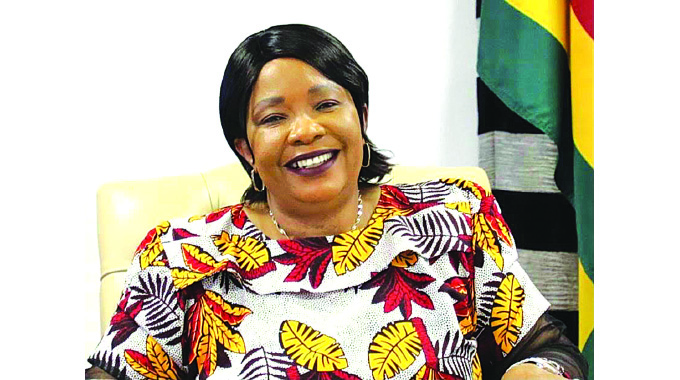
Culture and tradition are important for people, but we need to remember that culture is something living, how we and our families live and interact and even tradition, the sort of cultural matters we inherit from our grandparents, can be accepted, rejected or changed.
So as we adapt to a changing world our culture changes. As we learn more about that world, traditions become more or less useful.
And all the time, we are continuously creating our culture and we are continually generating new traditions or changed traditions to pass on to our children and grandchildren.
This has been going on for thousands of years in all cultures. Despite the efforts of the colonialists in Zimbabwe to carve their interpretation of traditions into stone, these in fact have always been living and changing, and always will be.
Sometimes what appeared, a few hundred years ago, to be a rational belief is found as time advances to be no longer so.
Thus when we know more than a distant ancestor we apply that new knowledge, and if we could make contact with that ancestor we would get their approval, as no one sensible ever expects their great grandchildren to live the same way they did, or would even want them to.
Sometimes an old belief, even if it is incorrect, is not harmful. But there are times when it is, such as the superstitions that surround albinism, and that has prompted First Lady Amai Auxillia Mnangagwa to use her influence to get people to accept scientific fact and change cultural perceptions.
We now know exactly what albinism is and what causes it. We know exactly that it is not even a disability, but can give some health concerns to those living with it.
Albinism means that you have none of that protective pigment that most human beings have. Just that, a purely surface phenomenon.
It is caused when you inherit two copies, one from each parent, of a gene that strips out the protective pigment.
If you have only one copy, then your skin tone will be the same as if you had none, roughly half-way between the skin tones of your parents.
Rather usefully, pigmentation increases in density for most people when you stand in the sun. This can be a life saver for people of northern European descent. But for those living with albinism this cannot happen.
Zimbabweans, having lived through the horror of race-based colonialism, know perfectly well that skin tone has zero effect on your mental or physical abilities.
But skin pigment does protect against ultra-violet light, and this is important if you tend to spend a lot of time outdoors in a country like Zimbabwe, a land in the tropics and at high altitudes.
Those living with albinism not only suffer excruciating pain from sunburn, but are also at high risk from skin cancer.
And here we come to the practicalities, as Amai Mnangagwa was careful to address with donations of sunblock creams.
In the modern world all that low or zero natural skin protection means is that you need a good hat and access to the modern sunblocks, which have been around for a surprisingly few decades.
Even 50 years ago there was only something pharmacists mixed up from a white crystal dissolved in surgical spirit, that was not that wonderful, but helped.
These days there are some very good lotions, containing a range of compounds, all the way up to titanium dioxide, which work well, but which are not cheap.
Long-sleeved shirts and trousers can cut consumption, but everyone who needs these lotions should be able to access them. Among the many things we should be making in Zimbabwe is a good general purpose sunblock and those who need it and cannot afford it should be getting the minimum needed supply for free.
This is just logistics, and clinics and schools can be used to get the supply chains in place.
There are other markets besides those with albinism. The ultra-strong sunblocks are needed, for example, by some of those of northern European descent, especially if they have red hair, another pair of genes that this time convert the small amount of protective pigment to a non-protective pink pigment.
As our tourist industry revives there will be more people wanting to buy something useful.
More important than the logistics of getting the protective creams to the children, although this is practically important for those without the natural skin protection, was Amai Mnangagwa’s careful plea for a change in attitude, recognising that albinism is not something in itself special or very important, once the protection factor is sorted out, and stop harking on old and discredited superstitions.
Presumably there have always been people who knew albinism was nothing dramatic, the parents of those with albinism, who just saw a normal child who walked and talked at the normal ages, but who did suffer sunburn.
The odd ideas must have arisen because of the difference in looks and some people jumped to the wrong conclusion.
Communities where those with albinism do not look much different jumped to other wrong conclusions about other physical differences, but not that one.
We can jump to the right conclusions because we are better informed. For most of us those with albinism present no challenges or having to actually do anything.
It is not like ensuring there are ramps or bathrooms for people in wheelchairs. Schoolteachers may need to watch out for sunburn, make the child wear a hat and see what can be done about sunblock, but that is about it.
Already the cultural changes are in progress, and now just need to become complete. We can learn a lot from our forefathers, in many areas, but when they got something wrong we can advance by getting it right.
That way we can have the best of all worlds.



 Online Reporter