admin
admin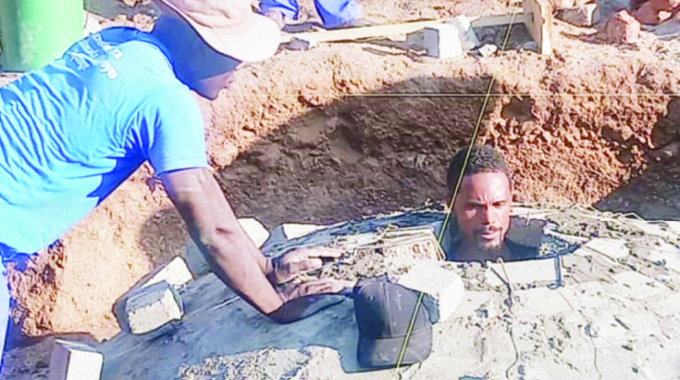
Sifelani Tsiko Agric & Innovation Editor
The burden of maintaining the household with cooking energy falls on women like Maidei Musukutwa (36) of Chipiro Village in the Ward 2 of Chimanimani district in eastern Zimbabwe, who must travel long distances to look for firewood.
Musukutwa and other women at her village must carry shoulder — high piles of firewood from the forest, which are now severely depleted.
She usually stacks it at her homestead where she stays with her parents.
Apart from being mugged, Musukutwa and most other women, face the risk of many kinds of sexual violence.
When she and other women venture into forests to gather firewood either for domestic use or for sale they can fall victim to various manners of sexual violence perpetrated by some criminals in their community.
“Women carry the heavy burden of ensuring that our families are fed. To feed our families we need firewood for cooking. These days our forests are depleted and getting firewood is getting harder,” Musukutwa said.
“We face a number of problems including the risk of being mugged or raped by men here. There is too much alcohol and drug abuse and women now face the danger of being abused. And it is now more critical than ever before to switch to new cooking solutions such as biogas, that can be generated here at home without us facing all these risks.”
The introduction of a community biogas training programme for clean cooking solutions has wiped away the weight of the horror they experienced while fetching firewood.
Practical Action is implementing the biogas programme under Flood Resilience Measurement for Communities project in partnership with ministry of energy through REA.
The programme is aimed at supporting those participating in internal savings and lending schemes and to strengthen community’ response to climate hazards through early warning systems.
In a partnership with the Ministry of Energy and Power Development, Practical Action is working closely with rural communities to promote energy saving technologies.
The use of tsotso stoves, an energy saving method, is not sustainable for rural communities in the long run as laws to ban tree cutting are being enforced and deforestation is reducing the amount of wood available for locals.
Practical Action and together with a Government biogas expert is training local community members to build biogas digesters and set up clean energy businesses that do not use firewood and traditional stoves to promote alternative livelihoods.
The biogas training programme not only gives women a more resilient way of surviving in the face of climate change but helps protect forests which are fast dwindling due to human and livestock pressure.
“I was so excited when our household was chosen for a pilot biogas training programme. I use a tsotso stove and after training, I have now embraced the use of biogas for cooking,” said Musukutwa.
“I dug out a place for the installation of the biogas dome. Construction is now almost complete and I cannot believe that very soon I will be using biogas to cook. I am going to buy a gas stove soon. This kind of energy will make a huge difference for us as women.”
Demand for biogas in rural households is fast increasing as deforestation leaves little firewood available for cooking.
“We are training local builders on how to build biogas digesters. The response is overwhelming and women and men here are so keen to take up the new energy saving technologies,” said Blessing Jonga, a biogas expert in the Ministry of Energy and Power Development.
“Community biogas and clean cooking solutions for food processing is the way to go. The use of biogas can reduce the burden that women face when fetching firewood. We are training locals so that they can be empowered to run biogas construction businesses on their own.
“We have so far trained more than 200 builders across the country in a programme we work closely with the Rural Electrification Agency (REA) and Practical Action. People can approach the trained builders to set up bio digesters in their homesteads.”
The objective of the biogas units is to address issues of climate change, deforestation, health effects of carbon fuels on humanity and minimise the effects of greenhouse gases on the environment.
Under the RBCC Flood Resilience Measurement for Communities (FRMC) project, Practical Action is setting up demonstration units in selected homes and it is hoped that through these models, the use of biogas in the community will be encouraged.
Nkosiphile Mthethwa, a Practical Action programme officer said the demonstration units will help promote the use of biogas in wider rural communities.
“Biogas systems are essential particularly now when firewood is getting scarce and as the country moves to promote the use of clean energy sources,” he said.
“Providing communities with reliable fuel can help rural households to firewood and eliminate the associated greenhouse gas emissions.”
There are numerous benefits for using the biogas system.
Jonga said the use of biogas reduces deforestation due to reduced demand for firewood. In addition, he said, it can reduce the incidence of respiratory diseases caused by burning solid fuels.
Mthethwa said biogas by-products such as the effluent and sludge could be used by the community as manure and fertiliser for their community gardens thereby improving food security and livelihoods in the communities.
“This is an important project for us,” said Evidence Mutitsve, 22, a builder from Nyaruwa village who is undergoing training.
“This is going to empower us as women. Incidents of rape while fetching firewood are going to be reduced as we will be able to harness biogas in our homes. We are now going to save trees and help reduce deforestation in our area.”
Mutitsve said she was not aware of the biogas technology before the training.
“Training has been good for us. It has opened our minds to new possibilities. I did not know that we could get gas from cows! I am so grateful to Practical Action and our Government for training us to build bio digesters,” she said.
“Mr Jonga is helping us a lot and I am so confident that I am going to run my own biogas construction business successfully.”
In Zimbabwe and most other developing countries, biogas technology has been adopted mainly for household use.
However, the rate of adoption of the technology has not been high, due to lack of knowledge, low investment capacity and the slow rolling out of the technology.
But with the promotion of a sustainable business approach, where locals are trained and empowered to run biogas installation systems on their own, earning an income, this clean energy approach is likely to gain traction in rural communities.
This new approach is necessary to influence families dotted in various rural communities to adopt the technology.
“These demonstration units are part of our extension activities which we are using to promote and motivate people to adopt biogas technology,” Jonga said.
“As we train locals, more and more people are now aware of the technology, getting interested in it. They are now seeing the relevance of the technology in resolving their domestic energy problems. Apart from just getting the energy, they are also getting additional benefits such as bio-fertilisers.
“All this helps families to take decisions to adopt the technology.”
The use of biogas has numerous benefits. It can help reduce energy expenditure for vulnerable communities through increasing access to efficient energy solutions.
Apart from this, it reduces exposure to air pollution from traditional heating and lighting by improving the health and livelihoods of vulnerable women through promotion of climate smart technologies.
Biogas technologies also empower people with entrepreneurial skills and innovative ideas as well as enhance biodiversity conservation and sustainable utilisation of natural resources of vulnerable communities.
Zimbabwe has developed the National Domestic Biogas programme which are market-driven.
To date, more than 150 biogas digesters have been constructed as the country steps to provide access to clean energy for cooking, lighting and productive use.
The programme targets to improve lives, increase incomes of rural households and contribute to sustainable waste management and nutrient recycling.
Energy is at the heart of all efforts aimed at attaining the country’s Vision 2030 of becoming an upper middle income economy, as well as a major driving force behind the attainment of all Sustainable Development Goals (SDGs).
In Zimbabwe, energy still remains a key enabler for many SDGs — from expanding access to electricity, to improving clean cooking fuels, from reducing wasteful energy subsidies to curbing deadly air pollution that each year prematurely kills thousands of people around the country.


 Online Reporter