Chronicle Editor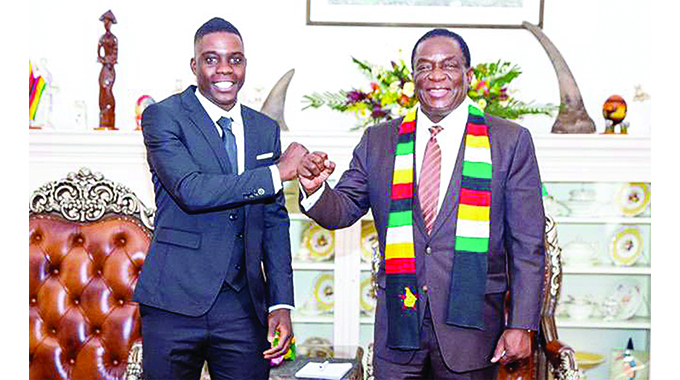
Limukani Ncube, Feature
IN his thesis, Understanding Diaspora Remittances Levels in Zimbabwe (2009-2020), Bonga Washington Garikai from the Department of Banking and Finance, Great Zimbabwe University, argues that governments across the globe are progressively becoming aware of the increasing significance of international migration and remittances on the international development agenda.
He says remittances are perceived as one of the key benefits that migration brings to originating countries.
Zimbabweans abroad send money and goods back to their country of origin, and these are known as diaspora remittances. Remittances contribute to national development if harnessed into the national economy.
Furthermore, the economic turnaround stories of Asian economic giants such as South Korea, China and India in the 1960s to date are also attributed to the contributions made by their expatriates in the diaspora. The funds were mainly channelled towards infrastructure and industrial development. The researcher goes on to recommend that the government should work on policies that would encourage Zimbabweans in the diaspora to remit more to their country.
This is because investments by migrants beyond remittances can change the development landscape of local communities, if appropriate options are given, he argues. According to media reports, in May Finance and Economic Development Minister Professor Mthuli Ncube said Zimbabweans in the diaspora last year sent home a total of $1 billion, the highest ever contribution made to the local economy. Prof Ncube said the remittances surpassed the previous year’s amount of $635.7 million.
The minister added that the increase in remittances was possibly due to the use of formal channels that remained operational during the Covid-19 pandemic.
“Maybe some of it has to do with the fact that, the diaspora had to use formal channels because of Covid-19. So, we saw an increase due to that. But really, that just shows you it is a steady inflow of external resources into the economy and is targeted to families for investment. So, it’s a good amount of influence,” he was quoted as saying.

Furthermore, the country’s economic blueprint towards the attainment of Vision 2030 where the country will attain an Upper Middle-Income status, the National Development Strategy 1, says improving diaspora participation in national development strategies is key.
Government has said the Upper Middle-Income Economy, with less income disparities, will be underpinned by the development of a middle class. In addition, employment rates will be raised upwards by 80 percent. The desired Upper Middle-Income Economy will have a per capita Gross National Income (GNI) of over US$5 000 in real terms by 2030, from US$1 440 realised in 2018. GNI is the total amount of money earned by a nation’s people and businesses. It is used to measure and track a nation’s wealth from year to year.
To ensure diaspora participation, Government has embarked on a number of strategies that include a review of the diaspora policy and enacting an enabling legislation, promotion of inside and out of homeland driven diaspora engagement, establishment of formal institutional and coordination structures and establishing diaspora trade and investment frameworks to promote Public Private Partnerships involving diaspora consortiums.
Diaspora participation in community development has been on the rise in parts of Matabeleland South, with Zimbabweans abroad funding the refurbishment and construction of clinics and schools. Esigodini and Beitbridge hospitals were this year refurbished from resources put together by locals and the diaspora community. However, diaspora participation has been more pronounced in Bulilima. The Member of Parliament for Bulilima East who is also the Minister of Environment, Climate Change, Tourism and Hospitality Industry, Cde Mangaliso Ndlovu, hailed people from his constituency for partnering Government in the development of infrastructure resulting in several clinics being constructed. It is estimated that diasporans have so far contributed R10m for the construction of 20 clinics in the area.
“Let us analyse the diaspora contribution in the development of our area. One clinic costs about R500 000. When we talk of 20 clinics, it means we are close to R10 million that is invested in the social infrastructure by our children based in the diaspora. This is the highest investment that can be done by locals partnering the Government,” he said.
To further cultivate diaspora contribution in local development, and lure investors from all corners, President Mnangagwa commissioned evangelist, Prophet Uebert Angel as Presidential envoy and Ambassador-At-Large to the Americas and Europe whose responsibility will be to seek trade and investment opportunities.
Speaking to journalists soon after meeting President Mnangagwa, Prophet Angel said he will use his connections globally and his entrepreneurial abilities to promote investment in the country.
“I would want to appreciate His Excellency, the President, for affording me this opportunity to serve my country as Ambassador-at-Large and Special Envoy to the President to the Americas and Europe. I think this is really commendable.”
Prophet Angel recently facilitated that national team footballer based in England, Marvelous Nakamba, and former Nottingham Forest, and Queens Park Rangers striker, Dexter Blackstock meet President Mnangagwa as part of the drive to bring investors into the country and get more locals based in the diaspora to play ball. Blackstock said he was finalising plans to build a cancer hospital, and help boost the pharmaceutical industry, in this country.
“Extremely honoured to meet his Excellency, the President of the Republic of Zimbabwe, Cde ED Mnangagwa, to finalise our plans to build a dedicated cancer hospital and help improve the pharmaceutical industry,” he tweeted.
Blackstock told local journalists, after the meeting, that he was exploring a host of investment opportunities.
“I feel fantastic, being in this great country. I have been brought in by Ambassador Uebert Angel, to see some real opportunities, for me to use my expertise coming from United Kingdom, with the help from his Excellency, the President, to aid bring changes in the country. Marvelous is a fellow footballer, like myself, he plays in England so I know him from the United Kingdom. You know, professional footballers, we are a very small circle, so it’s great for me to come here, with him. He also wants to invest in the country, it’s a big thing for him to give back to young people, to give people opportunities, to share what he has been able to achieve in his life. It’s great for me to come with him and make a real difference in his country,’’ he was quoted as saying.
Last month, Nakamba also confirmed meeting with Prophet Angel in England where they discussed investment opportunities back home.
“(I) had a successful meeting with Uebert Angel at the Angel Manor. During the meeting, we discussed about the opportunities of investing in Zimbabwe and I’m looking forward to these opportunities.”
Nakamba is already involved in philanthropy work, and like other Zimbabweans dotted around the globe, has been afforded a chance by the government to fully participate in the country’s economic turn around.


 Online Reporter