Online Reporter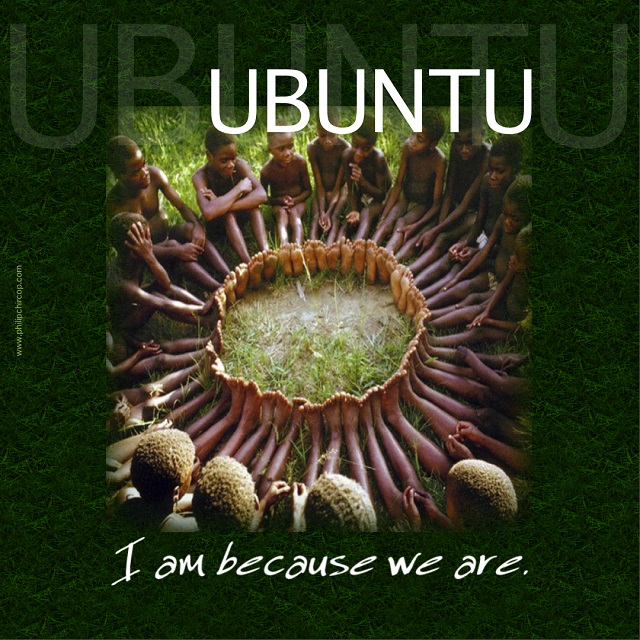
Phineas Chauke, [email protected]
IN an increasingly competitive global economy, nations are recognising the need to turn inward, drawing on their cultural heritage and value systems to shape distinctive economic models. These models not only suit their unique circumstances and endowments but also strategically position them for self-sustenance and global leadership. Zimbabwe, with its rich traditions and enduring values, is well placed to do the same.
While countries such as China have long leveraged concepts like Guanxi — a traditional system rooted in trust, relationships and mutual obligation — to drive commerce and grow into arguably one of the largest economies in the world, African countries have not fully integrated their cultural systems into their commercial frameworks. Africa, in general, possesses strong traditions, values and belief systems that must be adapted into business philosophies. Zimbabwe and other Southern African countries have their own powerful philosophical foundation in ubuntu/hunhu, which should underpin economic development.
The question is no longer whether heritage can influence business, but how Zimbabwe can deliberately translate its cultural values into a coherent economic philosophy. Ubuntu, often expressed as “I am because we are,” emphasises community, trust, respect and shared prosperity. These are not merely social ideals; they are principles capable of underpinning a distinctly Zimbabwean approach to business.
Globally, several economies have successfully embedded cultural values into their economic systems. Japan’s corporate networks, built on loyalty and long-term relationships, and Germany’s Mittelstand model, grounded in craftsmanship and community-rooted enterprises, demonstrate how culture can shape economic success. Following the Second World War, Japan’s economic growth was driven by embracing a new mindset, blending Western technology with indigenous philosophies such as Kaizen (focused on continuous improvement, waste reduction and long-term societal benefit), Shibusawa (3-way satisfaction – seller, buyer and society), Wa (harmony and consensus in decision-making), and Koeki (the alignment of corporate growth with national development), among others.
Africa itself offers an instructive precedent. In the post-independence era, Julius Nyerere advanced the philosophy of Ujamaa in Tanzania, premised on collective ownership, self-reliance and community-centred development. While its implementation encountered economic challenges, Ujamaa articulated enduring principles that resonate strongly with ubuntu — particularly the emphasis on shared prosperity, social cohesion and ethical responsibility. For Zimbabwe, the lesson lies not in replicating the model wholesale, but in adapting its core ethos into a modern, market-aligned framework that balances community benefit with enterprise growth.
For Zimbabwe, the opportunity lies in formalising what already exists informally. Across the country, business practices often depend on relationships, trust networks and community linkages — elements that closely mirror ubuntu principles. However, these practices remain largely uncodified and underutilised in formal economic systems.
Experts advise that transforming ubuntu into a viable business philosophy requires deliberate action. This includes embedding cultural values into corporate governance frameworks, entrepreneurship training programmes and national economic policy. Zimbabwe has already taken a bold step towards positioning heritage as the foundation for economic success by adopting the Heritage-Based Curriculum in schools. This ensures that the values underpinning a uniquely Zimbabwean economic system are instilled in children from an early age. Heritage institutions such as the National Museums and Monuments of Zimbabwe are also playing a role by promoting cultural awareness and preserving values that support these systems. The next step is to link this work more directly with economic planning and private sector development.
Such a model would prioritise long-term relationships over short-term transactions, balance community benefit with profitability, and emphasise ethical conduct and accountability. It would also promote inclusive participation, particularly among youth and women. Importantly, this approach aligns with the growing global shift towards sustainable and socially responsible business practices. There is also scope to connect this philosophy with heritage-based industries, including tourism, education, agriculture and cultural enterprises, thereby creating a holistic ecosystem in which culture informs what is produced, how it is produced, and how business is conducted.
However, caution must be exercised against romanticising culture without structure. For a heritage-based business philosophy to succeed, it must be institutionalised, measured and aligned with modern economic realities. This requires clear implementation frameworks, incentives and support systems that enable businesses to operate within this model while remaining globally competitive.
As Zimbabwe seeks to differentiate itself in the global marketplace, embracing a heritage-driven business philosophy offers a compelling pathway. It provides not only an economic strategy but also a distinct national identity in commerce. In this emerging paradigm, heritage is no longer confined to museums and monuments; it becomes a living system that guides how Zimbabweans build enterprises, create value and engage with the world. It also shapes how business relationships are formed and sustained, as well as how corporate activities deliver benefits to communities. The future of Zimbabwean business, it seems, may well lie in the wisdom of its past.
λ Phineas Chauke is National Museums and Monuments of Zimbabwe Head of Marketing. He can be reached on +263776058523.