admin
admin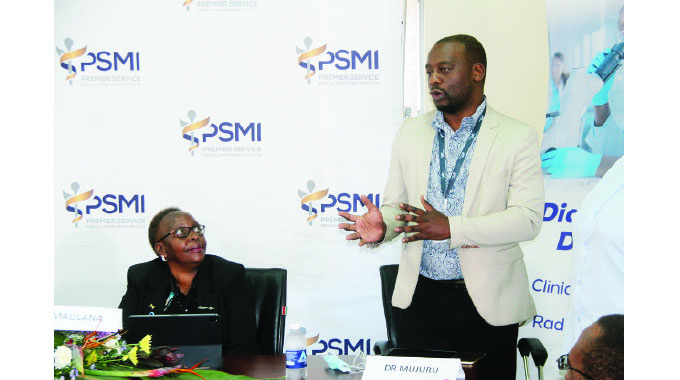
Rumbidzayi Zinyuke-Senior Health Reporter
Eight years ago, Walter Marupewo was an athletic 10 years-old with a bright future ahead.
Being an all-rounder athlete, he was selected by his school to travel with the sports team to Hwange for competitions.
Without knowing the impact of what they were doing, Walter and his friends quenched their thirst from a hose pipe that was watering the loan at the venue.
Unfortunately for them, the water had some poisonous chemicals which were being used to fertilise the loan, so the little ones were in for a rough couple of days as they all got sick.
While the rest his friends eventually healed, Walter’s condition did not get better.
“By the time I got to Harare, I had become severely dehydrated and I was taken to hospital. The doctors then told my parents that I had suffered kidney failure. I barely remember what was happening at that time because I was half dead. My body had become swollen due to build up of fluids. I was also diagnosed of jaundice at the same time,” he said.
Walter needed treatment fast and doctors performed what is called peritoneal dialysis but this did not work as his body continued to swell. They then took him for haemodialysis and he got a temporary catheter.
That is when his condition started to change.
“I really do not remember much of what happened but I know I started coming back to life after a few days of dialysis. It has been eight years since that day and I have made tremendous progress. I can now manage my condition fairly well,” said Walter.
Despite the progress, last year, he started developing weakness in his joints resulting in his hip joints giving in. He cannot say if the condition was a result of the chronic kidney failure or something else but he is now bound to a wheelchair.
But this has not deflated his optimism that he can still achieve his dream of one day becoming a doctor and saving someone’s life, the way doctors saved his.
Today he continues to receive his haemodialysis and is doing fairly well.
Walter is one of the numerous people suffering from chronic kidney disease in Zimbabwe.
While he and 499 others are currently accessing dialysis treatment at different institutions across the country, many others have not been able to afford it, while many more have not even been diagnosed.
Dialysis helps to keep renal patients’ body in balance by removing waste, salt and extra fluids from the blood to prevent them from building up in the body. It often involves diverting blood to a machine to be cleaned.
But according to experts, patients with CDK can develop many complications if they continue using the catheter for dialysis as it is prone to causing infection if not taken care of properly.
This week, as part of commemorations of the World Kidney Day held on March 10, the Premier Service Medical Investment Pvt (Ltd) (PSMI), collaborated with Dr Wilfred Muteweye, a cardiovascular surgeon based in Harare to provide eight patients selected from public and private institutions with free fistula creations.
An Arteriovenous fistula (AVF) is a permanent access recommended for patients on chronic dialysis. Unfortunately, due to the high cost of creating this AVF, most patients cannot afford it as the Cardiovascular Surgeon charges in Zimbabwe range from US$850 to US$980 over and above the hospital, theatre and sundries charges.
Walter got his fistula and doctors are certain it will help to make his life much better as it will promote infection prevention and control during dialysis, thus eliminating missed sessions due to catheter infections.
Speaking during the handover of the service on Thursday, PSMI executive director health services, Dr Margret Maulana said this was part of the group’s corporate social responsibility.
“We have decided as PSMI that regardless of resource constraints and challenges we are facing as a country, we can afford to spare something to make sure that our surgeon is able to create access for the patients to have comfortable access for their dialysis. This we are doing as we move towards the vision of one day being able to provide kidney transplants,” she said.
Dr Muteweye, the surgeon, said creating arteriovenous fistulas was very important for renal patients as it was a long term solution to access dialysis.
“We are creating what we call arteriovenous fistula. For renal patients, their kidneys are not functioning well and while they are on dialysis, the dialysis machine becomes the new kidney. The kidney has a blood vessel which takes blood to the kidney to be filtered or washed and then there is another blood vessel which takes blood from the kidney to the body so that the blood that has been filtered goes back to the body.
“But for these patients, we create access which will take blood to the dialysis machine and when the blood is filtered, it comes back through that same access that we have created back to the body,” he said.
He said the process could be life changing for those who received the fistula, as they could last for between three to seven years depending on how well the patients managed them.
Mr Prince Pawandiwa, another recipient of the arteriovenous fistula said his journey through chronic kidney disease had been tough.
Like Walter, he has been on dialysis for almost nine years now.
“In 2013, I would wake up to a bloody pillow everyday for almost a month. Little did I know that I had kidney disease. I only sought treatment after I started feeling weak and just fell unconscious and I was diagnosed with chronic kidney disease. I received a permanent catheter then and I got two sessions of dialysis before I started feeling better. It has been nine years since I started dialysis and I can say I am doing much better but having this fistula will actually make a difference as it will help to minimise infections and there is no chance of it collapsing a few months after getting it like what can happen with the catheters,” he said.
Globally, one in every 10 people are affected by chronic kidney disease, which translates to about 850 million people affected at various stages.
There is a projection that CKD could become the fifth leading cause of death by 2040 highlighting the importance of having more efforts channelled towards prevention of progression of chronic kidney failure.
PSMI renal head of department Sister Diana Zhira said Zimbabwe has about 500 people who are on dialysis but the number of renal patients could be higher as many go undiagnosed.
“At PSMI we have about 150 patients on dialysis at our renal units across the country but only 27 percent of these have fistulas so we have a great number of patients who require having this access. This will go a long way to enhance their lives as the fistula is easy to maintain and there is low risk of infection as compared with the temporary and permanent catheter. Patients lose a lot of money in managing the catheters,” she said.
World Kidney Day offers an opportunity to raise awareness of kidney disease and highlight disparities in its burden and current state of global capacity for prevention and management.
This year’s campaign is running under the theme “Kidney Health for All: Bridge the Knowledge Gap to Better Kidney Care” and focuses on efforts to increase education and awareness about kidney health and reducing the high CKD knowledge gap at all levels of kidney care.



 Online Reporter