dyton mupawaenda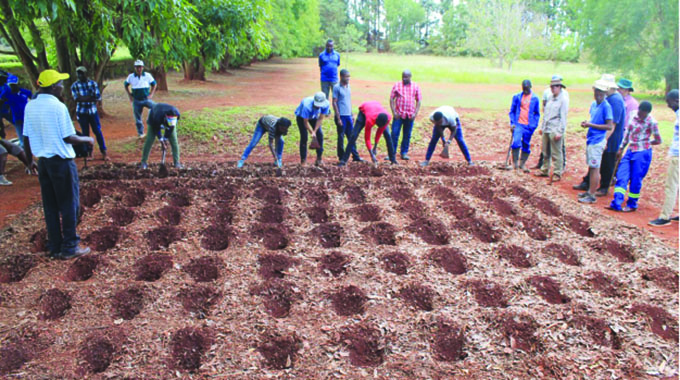
Obert Chifamba
Agri-Insight
WHILE many farmers may want to quickly forget the harrowing memories of the prolonged dry spell that characterised the first half (October to December) of the 2024/25 farming season, those with a futuristic approach to life may want to review it and see how they can survive such calamities the next time they come.
Given that many farmers had planted their early crop with the October and November rains hoping to dodge the potential impact of the perceived challenge of the normal to below normal rains for this segment of the season, thanks to the predictions of a La Nina weather pattern, many of them seem to have been targeting to evade that lurking danger.
It has also become normal practice for farmers in recent times to try as much as possible to stagger planting dates and ensure they can salvage something in the event of a hostile season owing to the prevailing climate change complications.
Staggering planting dates also implies having a very early crop that is usually used for testing the nature of any given season. In some cases, this crop has managed to survive to become the food security pillar for many households.
This crop has easily changed from being the guinea pig to a saviour for many households in those circumstances when the season would have rains just at the beginning before going dry throughout.
And back to today’s business – it is known that no sane individual watches a projectile that is about to strike them without ducking, blocking or running away.
The intention here is to bring out the fact that farmers should not just watch their sweat and investments being destroyed without trying to mitigate the impact of the hostile weather. It is also crucial for them to learn from everything that they go through in their line of duty.
They should use their experiences from the dry spell at the start of this season, for example, to improve their preparations for future seasons.
Their planning should take into account such factors as the water requirements of the crops at their various stages of development, for instance, the early phases of growth when the impact of slight water deficits on yields is generally less severe than when the crop is at a more advanced stage of maturity.
On the one hand, insufficient soil moisture soon after planting and during the germination stage can cause some seeds to fail to germinate fully, or lead to weak and uneven germination. This could then result in poor crop establishment, and uneven plant stands, which ultimately affect crop yields.
The situation in which most dryland farmers currently find themselves highlights the importance of understanding how early-season dry spells can affect crops. Some farmers have very young crops at the present moment after replanting, while some have crops that are approaching maturity, with some already harvesting.
This obviously shows how the different groups handled their business at the start of the season. One observation I made is that most farmers using the Pfumvudza/Intwasa programme fared better during the dry spell, while it was business as usual for those with access to irrigation infrastructure except in cases where the water sources had dried up.
This was, as a matter of fact, a wake-up call to all farmers whether on dryland or using irrigation to adopt water harvesting each time there are rains falling in abundance and generating significant run-off.
The harvested water can come in handy during difficult times and the water can be harnessed to water some crops and nurse them through a difficult patch. This can help improve and stabilise yields when rainfall fails to provide sufficient moisture for normal plant growth.
One other conservation practice is mulching. Mulching helps trap moisture in the soil while suppressing weeds, too, thereby reducing competition for the little moisture in the soil between crops and weeds.
It is also important for farmers to understand that under conservation methods, they stand a better chance of salvaging some yields even during a difficult season. For an activity such as weeding, it is advisable for farmers to allow their weed controlling activities to cause minimal soil disturbances and protect crops by reducing weed pressure and competition for scarce soil moisture during dry periods.
In the event that poor germination is witnessed, because of poor moisture availability in the soil, farmers may be forced to do gap-filling or outright replanting where necessary, with resources permitting. The planting window has, in many areas, remained open, allowing farmers intending to replant to do so into December or even January in some instances.
With such a situation fast becoming the order of the day each season, it is only sensible for farmers to be proactive and incorporate mitigation measures into the planning process.
Such planning should also not be restricted to crops only, but must include livestock. In the recent past, there have been a lot of deaths among various livestock units, because the owners had not put in place some fall-back positions on which to recline when it became necessary.
Those deaths, mostly in cattle, should leave farmers alive to the need to prepare and stock supplementary feeds for their animals. The planning should also be extended to water harvesting and storage, for without this precious resource, the animals will also not survive.
Livestock are highly susceptible to heat stress, which can lead to reduced productivity, fertility challenges, and heightened vulnerability to diseases. It is, therefore, critical to ensure there is sufficient water for livestock during hot periods to maintain their health and mitigate potential losses in agricultural productivity.
Of course, this discussion will not exhaust the list of interventions farmers can implement during dry spells, but just highlights some of the precautionary measures that farmers can take to make their lives more tolerable.
Farmers need to appreciate that some of the decisions they have to make are situation-specific, and should be made with careful consideration of the prevailing and forecast conditions, in close consultation with relevant experts such as agricultural extension officers or agronomists.
They also need to regularly access continually updated forecasts, and rely on authoritative forecasts from official sources like the Meteorological Services Department to make informed decisions.



 Online Reporter