Online Reporter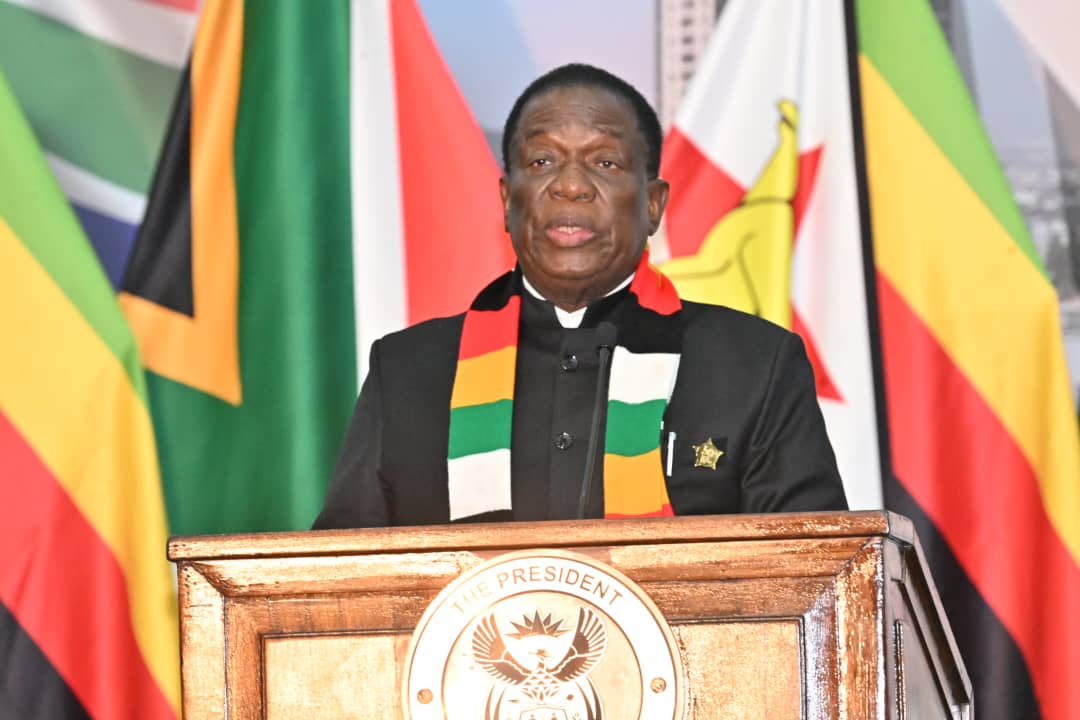
Zvamaida Murwira-Senior Reporter
PRESIDENT Mnangagwa has extended the State of Disaster he declared on 17 rivers requiring rehabilitation following years of degradation caused by mining and related activities by an additional two months.
The rivers earmarked for rehabilitation include Mazowe and Murowodzi rivers in Mashonaland Central Province; Mazowe and Save rivers in Mashonaland East Province; and the Angwa, Sanyati, Munyati and Mupfure rivers in Mashonaland West Province.
Other rivers include the Umzingwane and Insiza rivers in Matabeleland South Province; the Manzimudaka, Mutebekwi, Sanyati and Mtshingwe rivers in Midlands Province; and the Mutare, Haroni and Nyamukwarara rivers in Manicaland Province.
An Inter-Ministerial Committee established to oversee the rehabilitation programme felt that the three months initially earmarked for the process were insufficient and that more time was needed to complete the rehabilitation works, hence the decision to extend the period.
The regulations were made in terms of the Civil Protection (Declaration of Disaster Emergency Riverine Ecosystem Rehabilitation) Notice, while the legal instrument extending the rehabilitation works is Statutory Instrument 146 of 2026.
According to the regulations accompanying the extension, it was noted that rehabilitation of the rivers was still under way and had not yet been completed to the satisfaction of the Inter-Ministerial Committee on Riverine Ecosystems Rehabilitation.
The regulations state that the extension means the powers, duties and arrangements conferred and provided for under the initial notice will continue in force pending completion of the river rehabilitation programme.
“Now therefore, His Excellency, the President, in terms of section 27 of the Civil Protection Act (Chapter 10:06), hereby declares as follows: the declaration of a state of disaster made in terms of section 3 of the principal notice, and every power, duty, arrangement and provision conferred, imposed or made by or under the principal notice, is hereby extended and shall, unless sooner revoked or further extended, continue in force until the 28th of October 2026,” reads the notice.
“Save as amended by subsection (1), the principal notice shall continue to apply with full force and effect, including, but not limited to, the composition and mandate of the Inter-Ministerial Committee, the National Clearing House Committee, and the rights and obligations of approved contractors set out therein.”
President Mnangagwa said any contractual agreement entered into in terms of the initial notice would also remain in force.
“Any rehabilitation contract concluded under the principal notice, and the duration thereof, shall be read as extended consistently with subsection (1), in accordance with paragraph 3(1) of the Third Schedule to the principal notice.”
The declaration of a state of disaster allows Government to mobilise resources towards the rehabilitation of the rivers.
In declaring the state of disaster in May this year, President Mnangagwa said several rivers had been adversely affected by mining activities.
“As a result of the need to properly rehabilitate riverine ecosystems throughout Zimbabwe that have been adversely affected by legal and illegal alluvial mining activities, a state of disaster exists throughout Zimbabwe with effect from the promulgation of this declaration,” reads the notice.
In the preamble to the regulations, President Mnangagwa noted that rivers are complex and fragile ecosystems that are easily damaged but slow to recover naturally, requiring effective rehabilitation through a multidisciplinary approach.
He said Government recognised the need for a comprehensive framework to support and accelerate the natural recovery of rivers significantly degraded by past riverbed and alluvial gold-mining activities.
The President noted that there was a need for a river rehabilitation framework that promotes environmental sustainability and long-term ecological restoration while ensuring that communities are not negatively affected in the process.
The regulations establish an Inter-Ministerial Committee on Riverine Ecosystems Rehabilitation, which will supervise the rehabilitation programme and will be jointly chaired by the Minister responsible for Environment and the Minister responsible for Water Resources.
Some of the committee’s functions include calling for bids for river rehabilitation contracts, approving rehabilitation contracts, overseeing the implementation of approved contracts and processing grievances lodged with it in writing.
Other members of the committee include the Minister responsible for Mines, the Minister responsible for Home Affairs, the Minister responsible for Local Government and any other minister or representative of an entity whose participation is deemed necessary by the joint chairpersons.
The regulations stipulate that any minerals recovered by an approved contractor must be reported to the ministry responsible for mines within seven days of recovery. The ministry may, where necessary, conduct an inspection to verify the quantity and value of such minerals for royalty purposes.