

 Online Reporter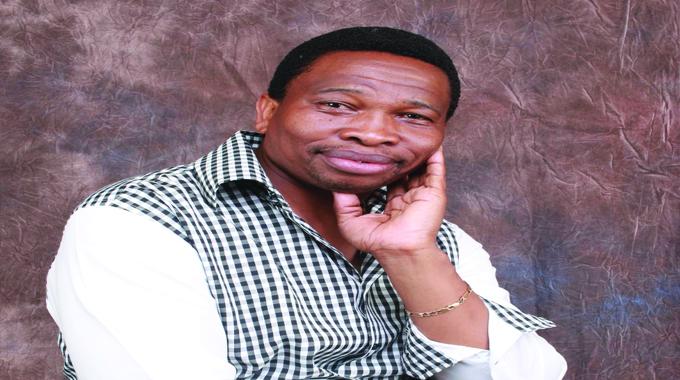
Trust Khosa, Zimpapers Arts and Entertainment Hub
SOME encounters change a life forever, moments so profound they leave an indelible mark on one’s soul. For veteran Mbaqanga and Afro-jazz artiste Lwazi Tshabangu, that life-altering moment came when he crossed paths with the legend, Lovemore “Majaivana” Tshuma.
Now 54, Tshabangu still speaks with a hushed reverence as he recalls those few precious months working with the elusive, US-based icon — a man who once stirred the hearts of Zimbabweans with his rich voice and timeless storytelling.
“Growing up in Bulawayo, Majaivana was a beacon, a giant we all looked up to. He was our idol. Every child, every aspiring musician, revered him. To eventually share a stage with him was nothing short of divine,” Tshabangu said.
The seasoned crooner, dancer, and pianist met Majaivana at a crucial juncture, not just in the legend’s career, but in his own formative years as an artiste. That moment, he insists, was not by chance, but by God’s favour and grace.

“I met him through Albert Nyathi, who connected me when Majaivana was looking for a backing vocalist. We worked together for several months, and it was during that period that I truly understood music, not just how to play it, but how to live it. He never carried the weight of his legendary status. He always made us feel at home, and in doing so, he earned our respect.”
Yet, like many beautiful things, their time together was fleeting. Tshabangu recalled, with a heavy heart, how things took an unexpected turn. Shortly after Majaivana left for the United States, the music, once vibrant and full of promise, fell silent. He found himself stepping away from the very path he had only just begun to walk.
“When he left Zimbabwe for the US, it felt like a chapter closed too soon. We never got the chance to record a song together. It’s a regret I carry to this day. To me, it was like losing a big brother. I had no choice but to move on and forge my own path, but he is the one who truly ‘ordained’ me.”
Although decades have passed and silence has grown between them, Tshabangu says Majaivana’s spirit never left him.

“I haven’t heard from him since the day he left — more than two decades ago. Our last conversation still echoes in my mind like a song that never quite ended. Each time I perform his songs; Isono Sami, Umoya, Angila Mali, Emagumeni, I feel his presence. It’s not imitation; it’s communion. Through the music, I still speak to him.”
Fans, too, feel that lingering connection. At every show, the requests flood in for Majaivana, for the old songs, for memories.
“It means something, doesn’t it? That after all these years, the people still remember. They still want to feel what he made them feel.”
Tshabangu has walked his own path since then, curating musical shows in the early 2000s, performing across Zimbabwe, and growing a loyal following. His two albums, Kumnyama (2001) and Ithuba Lami (2005), have carried his voice to appreciative ears, and new recordings are in the works.
“I may not have many albums, but my music is honest. It tells my story, and those who listen understand it. I’m working on a few new recordings, and deep down, I believe they will resonate with many hearts out there,” he said.
For nearly two decades, Tshabangu has performed at hotel venues and private events, particularly at Cresta Jameson in Harare, which he hopes to make his permanent base. His band, comprised of long-time collaborators Thomas Chibwe on lead guitar, Evans Fifteen on bass, Carlton on keyboards, and Tapiwa Chisvo on drums, feels more like family than crew.
“I met Thomas in 2005, Evans in 2006, and Tapiwa was a session musician when we first worked together. Now, we’re a team. We’ve seen it all,” he reflected.
Off stage, he is a father of two, a mentor to young musicians, and a vessel of a generation’s memories.
“I owe a lot to Majaivana. He didn’t just work with me, he ordained me. That’s what it felt like. He gave me a blessing I didn’t even realise I needed at the time.”
Tshabangu’s story is not just about music, it is about torch-bearing, about carrying forward a light kindled by a legend. And though Majaivana may be thousands of miles away, his spirit lives on in the chords, the lyrics, and in the hearts of those, like Tshabangu, who still believe in the magic of music that tells our stories.


