Online Reporter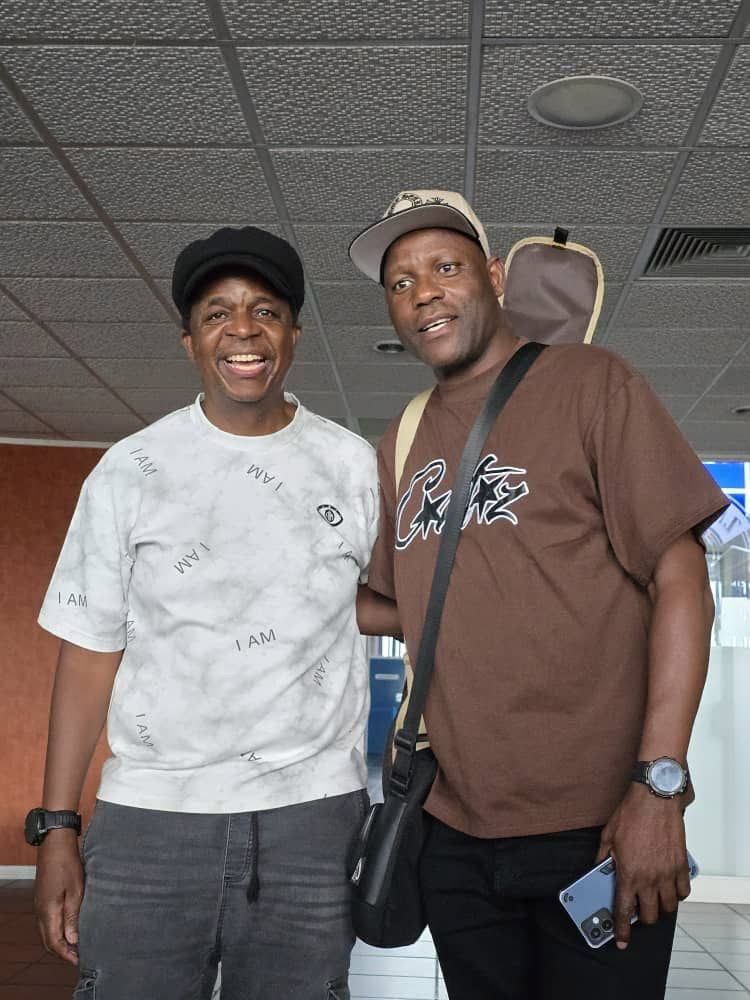
Langalakhe Mabena, [email protected]
SOUTH Africa-based legendary DJ and producer Oscar “Oskido” Mdlongwa has been honoured by President Cyril Ramaphosa with the Silver Order of Ikhamanga, one of the country’s highest national awards. The honour recognises his pioneering role in shaping Kwaito music and his contribution to developing young artistes through music production and entrepreneurship.
The Order of Ikhamanga is reserved for individuals who have made outstanding contributions in fields such as arts, culture, music, journalism and sport. Oskido’s recognition places him among a distinguished group of individuals whose work has had a lasting impact both locally and internationally.
Over the years, Oskido has built an iconic career that has influenced the direction of South African music. He is widely credited with discovering and mentoring some of the biggest names in the industry, including DJ Black Coffee, DJ Maphorisa, DJ Tira, DJ Fresh, Boom Shaka, Mafikizolo, Trompies, Bongo Maffin, Thebe, Busiswa, Winnie Khumalo and DJ Zinhle, among others.
The awards ceremony was held on Tuesday at the Sefako Makgatho Presidential Guesthouse in Pretoria, where several other prominent figures were also honoured. Among them was Springbok rugby coach Johan “Rassie” Erasmus, who received the Gold Order for his leadership in rugby, and internationally acclaimed jazz and R&B musician Jonathan Butler, who was awarded a Silver Order for his global contribution to music.
Other honourees included the late jazz legend Jonny Mbizo Dyani, who was posthumously recognised for his role in advancing jazz and musical resistance, as well as Professor Deuteronomy Bhekinkosi Zeblon Ntuli for his work in language preservation and translation. The late Samuel Mhangwani and Benjamin John Peter Tyamzashe were also honoured for their contributions to culture and social cohesion.
Responding to the recognition, Oskido took to social media to express his gratitude, describing the award as a shared achievement.
“I am deeply grateful to President Ramaphosa and the Presidency for this honour, the Order of Ikhamanga. But I receive this on behalf of all of us, my family, Kalawa Jazmee, DJs United, every pioneer, every creative, and every believer. We lift each other, and God opens the doors. This is only the beginning,” he said.
His remarks reflect the collaborative nature of his career, which has been built not only on personal success but also on empowering others in the music industry.
The recognition has also been welcomed across the region. Bulawayo jazz musician Jeys Marabini described Oskido as a towering figure whose influence goes beyond South Africa.
“Congratulations to Oskido on his recent award. He is a legend who has contributed immensely to the music industry in South Africa, Africa, and across the world, and he continues to do so,” said Marabini.
Oskido’s story is also deeply connected to Zimbabwe. Born to the late Esaph Mdlongwa and Sophia Molefi, he spent part of his early life in Bulawayo, particularly in Luveve suburb. He attended Gifford High School before later moving to South Africa.
His upbringing in Zimbabwe played a key role in shaping his musical identity, which later influenced the Afro-house and Kwaito sound he helped popularise in South Africa.
His journey to success was not straightforward. After relocating, Oskido initially earned a living by selling hot dogs outside the Razzmatazz nightclub in Hillbrow. It was during this period that he built connections that would later change his life.
He formed a friendship with the late Ian Sigola and Radio Metro DJ Evidence Kemp, who helped guide his early steps in the music industry. Sigola supported him by lending him vinyl records so he could practise DJing.
A turning point came when a resident DJ failed to show up at Razzmatazz. The club owner gave Oskido a chance to perform, and his set impressed the crowd. That moment marked the beginning of his professional DJ career.
Despite his success in South Africa, Oskido has maintained strong ties with Zimbabwe, particularly Bulawayo. In 2012, he introduced the Kalawa Homecoming Party, which grew into one of the biggest festive season events in the country for several years.
The annual event featured many artistes he had mentored, including Mafikizolo, Uhuru, Professor, the late AKA, Cassper Nyovest, DJ Zinhle, DJ Maphorisa, DJ Fresh and Kwesta. For nearly a decade, the show became a major highlight on Zimbabwe’s entertainment calendar before it began to decline around 2018.
Oskido last performed in Bulawayo on April 18 this year, headlining a show during Zimbabwe’s 46th Independence celebrations, further cementing his connection to his roots.
Local DJ and music promoter DJ Gesh 23 Sibanda said the honour was long overdue, pointing to Oskido’s influence during difficult periods in the music industry.
“Oskido has done virtually everything that qualifies someone to be called a legend, but his journey was not as smooth as many people imagine. He was rejected by the apartheid-era radio and music system, which dismissed his music.
“He did not give up on his dream. Instead, he started distributing his own music through a system known as ‘star taxi music’, where he sold music to taxi drivers who then played it during their trips. This helped make Oskido a household name.
“For him to be honoured with the Order of Ikhamanga was long overdue because this man is literally ‘Kwaito and House’ music personified. Almost all the successful musicians in these genres were groomed by him,” said Gesh.
Gesh added that Oskido’s influence stretches beyond music into the way events are organised and promoted in the region.
“Today, you have events such as the Harris Music Festival using the same concept that was introduced by Oskido through the Homecoming gigs. That’s how impactful and genius he is,” said Gesh.
Oskido’s recognition stands as a powerful reminder of how talent, persistence and vision can shape an entire industry. His journey from humble beginnings to national honour reflects not only his personal success, but also the lasting impact he has had on African music and culture.