Online Reporter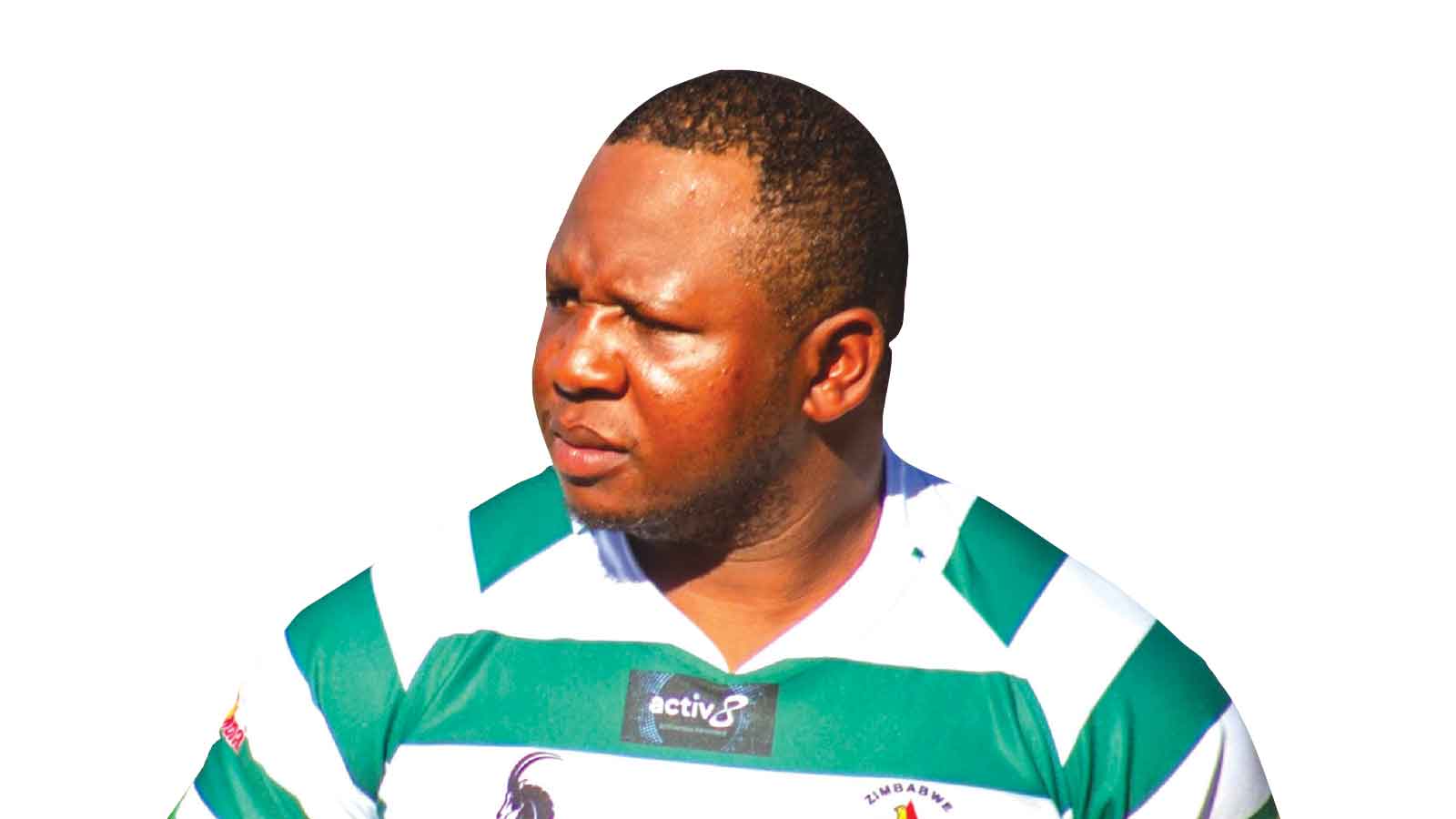
Tinashe Kusema
Zimpapers Sports Hub
THERE is a moment most athletes never speak about, the one that settles quietly in the body before it ever reaches the mind, and when it does, it does not ask for permission, it simply presents a truth that cannot be ignored.
For Brian Makamure, that moment arrived at the peak, just after Zimbabwe had done what had felt distant for years — qualifying for the Rugby World Cup — a collective achievement that would have been enough for most players to hold on a little longer.
For him, it became something else.
“Loud, proud and contagious,” he says, smiling.
That energy has followed him everywhere, from the front row where space is tight and every second is a collision, to the dressing room, where he has always found a way to lift the mood, to carry a group through tension, to remind teammates why they started in the first place.
In a sport that demands control and structure, Makamure brought something human into it, a presence that made the work lighter without ever taking away from its seriousness.
For more than a decade, he has been part of Zimbabwe rugby’s spine, not just as a prop who did the hard work upfront, but as a constant in a system that has rarely offered that kind of stability.
Since making his Sables debut in 2012, Makamure stayed, season after season, through years when the team struggled to hold shape, when players came and went, when the game asked more than it gave back.
He remained and that consistency, in the context of Zimbabwe rugby, carries weight.
He leaves as the only Zimbabwean to have lifted the Africa Cup three times, first in 2012 and then again in 2024 and 2025, seasons that have come to define a renewed belief around the Sables, a sense that the team is no longer just competing but beginning to understand what winning looks like again.
He was there when it was uncertain, and he was there when it finally aligned.
There are memories that stay with players long after the noise fades.
For Makamure, one of them is not a final or a trophy lift, but a grind of a game in the Africa Cup, deep into the second half, bodies heavy, the scrum resetting again and again, each push feeling like it could decide everything.
Those are the moments front rowers live in, where there is no space for celebration, only pressure, only the next hit, only the demand to hold your ground when everything in you is asking for a breath.
That is where careers like his are built.
“From the many highs of my career, I think the big one is being able to represent my country for as long as I have,” he says, his voice steady.
“That in itself is not easy. But if I have to pick one, it would be helping Zimbabwe qualify for the World Cup. That is enough for me.”
It is a simple line, but it carries finality.
The World Cup is the dream that sits above everything else, the stage that defines careers, the place where you measure yourself against the best.
He helped take Zimbabwe there. He just will not be the one to walk out when it begins.
That decision sat with him longer than he lets on.
“The decision to retire was not an easy one,” he says. “There was a lot of thought, a lot of introspection.”
“After we qualified, you start asking yourself if you can push for two more years, if you can fight for a place in the squad. That is the dream for every sportsman.”
At 35, with the demands of a front row career behind him, the questions became harder to ignore.
Recovery shifts. The margins tighten. The difference between being in the starting group and being part of the wider squad begins to touch identity.
He was not interested in holding on for the sake of it.
“There were a lot of considerations about my effectiveness,” he says. “I did not want to be someone who is just making the squad and coming off the bench. I wanted to be in the thick of things, contributing on the front line.”
That clarity shaped everything that followed.
The conversations with family, with teammates, with himself, the quiet moments away from the field where decisions like this are made without noise or audience, the kind that settle over time until they feel right.
“It took a lot of prayer,” he says. “That is where I found peace with it.”
So he stepped away, not pushed out, not forced by injury or form, but by choice, by an understanding of his own standards and a refusal to fall below them.
Zimbabwe now move into a World Cup cycle with something they have not carried for a long time, momentum that feels real, built on back-to-back continental titles and a group that has begun to understand the demands of winning consistently.
At the same time, the next phase brings a different kind of test, one that stretches beyond the continent into opposition that will expose every gap.
Makamure will not be in the front row when that happens, but he has not walked away from the team.
Zimbabwe’s immediate focus shifts to the World Rugby Nations Cup, where they will face Tonga, England and Wales, fixtures that offer a clear measure of where the team stands and what lies ahead.
Makamure watches that with the same honesty that shaped his own decision.
He still speaks like a player inside the group, still processes the game through preparation, through detail, through the small edges that decide outcomes.