

 admin
admin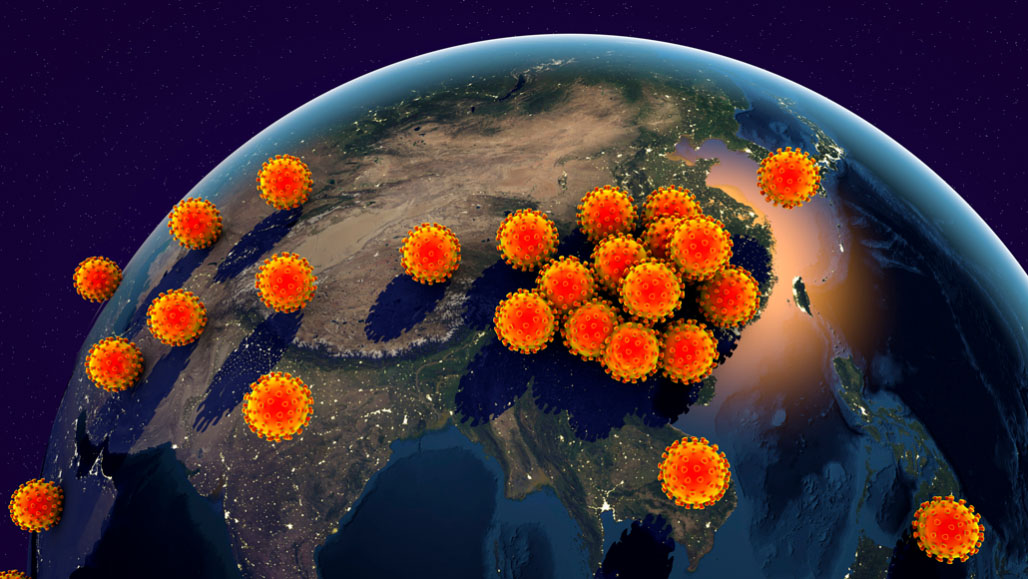
Elliot Ziwira
At the Bookstore
GLOBAL pandemics like Covid-19, HIV/AIDS and Ebola have led to universal polarisation which leaves individuals seeking flight through delicate wings, in a way exacerbating the situations they purport to be escaping from.
Due to suspicion and mistrust, folks subsequently create enemies out of the few friends who might have remained loyal to them in the face of adversity.
It is trite that grief is not new since it has always been Man’s companion from the time of Creation.
However, persistent questions always arise.
Is it really God’s plan that people should grieve? Is a world without grieving or suffering possible? Could the world be a better place if misery in all its forms is nipped out?
The Bible is awash with incidences of anguish; abject suffering to the extent that one may be tempted to doubt the efficacy of being as enshrined in Godliness.
A closer look at the scriptures reveals that God is both the source of sorrow and the solution to the same.
Indeed, the essence of being will lose meaning if Man’s existence is not tested against his faith. God has a way of testing faith by deliberately allowing the faithful to be exposed to suffering.
The story of Job purveys how hope becomes a panacea to suffering if one’s faith remains unshakeable. Jesus Christ, like all of us, was not insulated against pain, suffering and the fear of the unknown, so that humanity may understand the meaning of healing.
It cannot be overemphasised that a woman is spurred on to endure nine months of pregnancy by the eventual thrill of holding her precious bundle of joy.
All the suffering she might have gone through, or will experience even after delivery, is obliterated by the envisaged joy.
When the body is burdened the soul becomes encumbered. Therefore, for both the body and soul to be liberated healing has to happen.
But what exactly constitutes healing, especially in the age of HIV/AIDS, Covid-19 and Ebola, leading to hopelessness?
Kalu (2008) cited in Chitando and Klagba (2013:1), says about healing: “But healing is a hot topic: What exactly do churches mean by healing? Can healing always occur? Can healing occur without physical cure? Are the claims sustainable or fraudulent?
“It is surmised that the popularity of divine healing in Africa arises from the poverty in the communities that are plagued by the collapse of the healthcare delivery system.”
There has been a marked rise in Pentecostalism in Africa, generally, and pertinently in Zimbabwe, as multitudes seek spiritual healing to their barren toils.
With challenges converging on his/her lap, the individual’s hope remains anchored in faith. Anything that proffers or pampers that hope becomes the real or imagined Holy Grail.
However, in the wake of this desire for spiritual catharsis, how do believers cushion themselves against smooth-talking charlatans, who prey on their gullibility and poverty, since they appear to be willing vessels whose faith is cast in stone?
It has to be noted that healing and curing are not new phenomena, nor is Pentecostalism.
Pentecostalism has been in existence since the early 1900s. What has prompted the upsurge in numbers, though, is what perhaps boggles the mind.
Against this backdrop, the reading of the informative book “In the Name of Jesus: Healing in the Age of HIV” (2013), edited by Ezra Chitando and Charles Klagba and published by Ecumenical HIV and AIDS Initiatives in Africa (EHAIA), becomes not only apt, but enriching.
The resonating book is a worthwhile effort by historians, anthropologists, scholars of religion and theologians. It is a must read for those whose reading of books is not only in pursuant of academia, but the enrichment of both the mind and the soul.
Through thorough research, the contributors trace the history of religion in Africa; the nature of healing and curing in traditional societies; and the advent of Christianity and its influence on the African’s psyche.
The book explores how healing is central to the African’s worldview of worship, through the examination of Protestant churches, the Catholic church, African Independent/Indigenous/Initiated/Instituted churches (AICs), African religion and Pentecostalism.
African religion, sometimes referred to as African Traditional Religion (ATR), is steeped in cultural norms which are also inspired by the concept of healing and well-being.
To the majority of Africans “health is a sign of good relations between the community of the living and the departed elders of the community (ancestors).”
African societies have always believed in the existence of a third force to sickness and death. Sickness, like death, does not come naturally, as such healing is given prominence.
Contrary to the Euro-centric view of the African, traditional healers in Africa are regarded in awe and revered in today’s communities.
The belief in the obtaining of an omniscient and omnipotent presence characterises the African’s worldview as pertains to healing and faith.
Through mediums, and/or oracles, who were intercessors in the communion between the living and the dead, rapport was always made possible between the physical being and the spiritual one.
Chepkwony (2005) cited in Chitando and Klagba, notes: “The advent of Christianity and the dawn of colonisation in the 19th Century marked the decline of the practice of healing in Africa.
“The missionaries and colonial governments looked down upon and greatly discouraged African beliefs and practices. Christians in particular perceived Africans as pagans, superstitious, ignorant and a lost lot in the abyss of darkness.”
Chepkwony (2005) maintains that colonialists and missionaries believed that all African medicine was evil, and referred to their healers as “so called witchdoctors” who practice “black magic”.
Therein lay the gist of the matter. Religious intolerance impedes healing, and aggravates suffering, instead of mitigating it.
However, despite concerted efforts to downplay the relevance of African approaches to healing, traditional healers remain powerful as they are “believed to detect illnesses that have a spiritual origin”.
The existence of spirits as enshrined in African religion also played a crucial role in the establishment of AICs, which existed and still exist alongside Protestantism, Catholicism and Pentecostalism as well as African religion, in that the emphasis remains on the totality of healing.
Biblical allusions to healing also help in putting the essence of faith in context. The advent of HIV/AIDS has brought new dimensions to spirituality and healing.
This has somehow exposed multitudes, Christians and non-Christians alike, to charlatans disguised as healers, pastors and prophets who rightfully or cunningly claim that the Holy Spirit defeats all illnesses.
Their prescription of prayers, the use of oil, holy water and other agents to effect healing, sometimes defeats attempts to contain the spread and potency of HIV/AIDS as those who are said to have been healed stop taking antiretroviral therapy.
This problem is not only unique to AICs, but to Pentecostal churches as well. Pentecostalism advocates the centrality of Jesus Christ in healing.
Chitando and Klagba note: “Prosperity in this life, good health and optimism in challenging circumstances are the hallmarks of Pentecostalism.”
In the chapter “Healing in Pentecostal Churches”, Nontando Hadebe highlights the role of Pentecostalism in retrieving the concept of faith healing to the Church. The rationale is motivated by the fact that mainline churches are underplaying the essence of healing.
Miracles are the cog that drives Pentecostalism, and as was the case with Seymour’s revival meetings between 1906 and 1908, when people “spoke in tongues, prophesied, preached divine healing, went into trances, saw visions and engaged in other phenomena such as jumping, rolling, laughing, shouting, barking and falling under the power of the Holy Spirit” (Robech, 2006; Albreht, 1999 cited in Hadebe, 2013:115).
Mainline churches have been at the forefront in stigmatising those afflicted and affected by HIV/AIDS in the same way that many African cultures take as taboo discussions on sex and HIV/AIDS (Shoko, 2013).
“When Christians were judgemental, many people living with HIV suffered and died because of the stigma created by these judgemental attitudes,” Hadebe observes.
When attitudes changed a new lease of life was realised through access to spiritual resources. Christians and African religion practitioners have a role to play in the fight against misery, especially in the era of HIV/AIDS and other pandemics like Covid-19.
Healing is not only physical, but is also spiritual. If one believes that he/she is healed and society accepts him/her as being healed, then, indeed, he/she will be healed.
As was the case with lepers who were condemned to the periphery of existence because of their condition, HIV/AIDS can only be subdued if healing ceases to be an individual effort. Everyone should be involved, with the Church playing a bigger role.
People should be enlightened that ARVs are God’s plan in conquering HIV/AIDS, and that doctors, like prophets, healers and pastors are His vessels.
Healing comes through the intervention of supernatural and natural forces. God’s intervention comes in many forms. What is important at the end is the realisation that the totality of healing is not an individual effort (Togarasei in “The Bible and Healing”).
Indeed, in the name of Jesus Christ, HIV/AIDS can be healed as long as everyone plays his/her part with the knowledge that healing and curing are two different things.
Healing, as the Bible clearly outlines, involves the use of both natural and supernatural agents. Bio-medical healing, which is the use of modern medicines, is as natural as the use of holy oil, water, mud, leaves and roots; and also works in tandem with the invocation of supernatural forces and not against them.


 Online Reporter