Online Reporter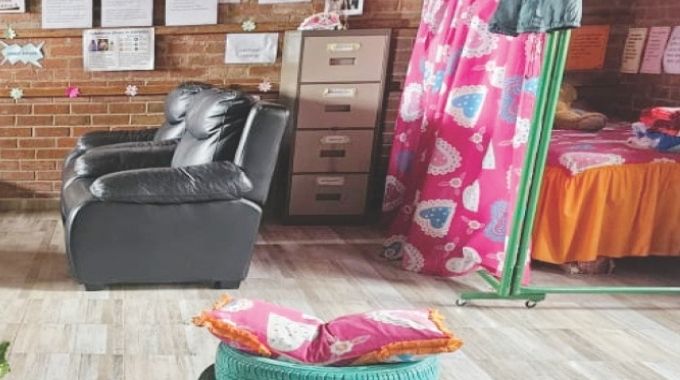
Robin Muchetu, Health and Gender Editor
SEXUAL abuse has harrowing and far-reaching effects on children. It shatters their confidence and dignity, leaving them distrustful of those around them. Many children feel unloved and worthless, so much so that they struggle to give love and affection to others.
School, where children spend most of their time is however, one place that often reveals signs that a child comes from a broken home, a place marred by abuse and devoid of love.
Mawaba Primary School in Lobengula West, Bulawayo stands out as a beacon of hope and healing — an inspiring example of how education can serve as a sanctuary for traumatised children.
An unconventional yet profoundly effective approach that the school has adopted involves healing with rabbits.
Within the school premises, there is a dedicated Gender-Based Violence (GBV) Room, which provides a safe haven for learners where they are assisted to talk about their challenges, get counselling and even get police intervention in cases where serious violations would have occurred.
It is through this facility that children with challenges are introduced to interaction with the rabbits as a form of therapy, helping them to heal from their traumatic experiences.
The school head of Mawaba Primary, Mrs Memory Sibanda shared how the healing initiative is working and improving the lives of children facing abuse at home.
“We have rabbits at the school and each term one class mans the rabbits, they feed them and give them water and also clean around the cages. So when learners go for Guidance and Counselling lessons teachers are trained to identify those who are troubled. Those children are made to join the class taking care of the rabbits. The aim is to foster a love for animals and nurture their sense of compassion,” said Mrs Sibanda.
She highlights that caring for the rabbits helps children develop empathy and emotional connection, which is therapeutic and fosters acceptance and care for others.
“An abused child lacks love most of the time and has a lot of hatred in them and anger. But once they develop that connection and love for animals and the animal warms up to them, they feel loved back. If you go to our GBV room, there are teddy bears and if you give the infants to play with those, some children beat up the teddy bears, tear them apart and ‘harm’ them. We see that the child will be coming from a home with domestic violence, they have no love for anything and destroy things in their path,” said Mrs Sibanda.
“When a child starts to feed the rabbits, they develop to love and care for the animal just like what humans should experience. If they can love an animal, they will be able to love another person. So we use rabbits as a healing mechanism from the trauma at home,” she added.
Mrs Memory Phiri the District Schools Inspector said once children develop that bond with the rabbits it gives them a reason to continue coming to school despite the trauma at hand.
“As the Ministry of Education, we are doing these projects with schools, as the child does these projects, they are kept safe, he has a reason to go to school every day, learn life skills and address their trauma,” she said.
According to online research, the unconditional love of a pet can do more than keep one company. Pets may also decrease stress levels, improve heart health and even help children with their emotional and social skills. Interacting with animals has been shown to decrease levels of cortisol, a stress related homorme.
School teachers and the school head were trained on how this healing takes place and how the GBV room can assist in identifying cases.
“Many learners have come to us reporting abuse at home, including sexual abuse and we have liaised with the victim support units. Since opening the GBV room, we have seen a rise in reports and we are able to provide timely assistance to learners, the community and staff,” said Mrs Sibanda.
Child Protection Committees also follow up on abused learners or those who fall pregnant while still at school, ensuring they are reintegrated into the education system and do not drop out after childbirth.
Neglect remains one of the most common forms of abuse faced by children.
“We have cases where parents fail to provide adequate clothing or food. We are working to assist by engaging with guardians and calling on community support. We also run the ‘Isandla Somusa’ programme, donating clothes to less privileged children. We are committed to ensuring no child is left torn or unkempt
“We have recorded few cases of physical and sexual abuse cases and when those are brought to us, we take them straight to the police,” added Mrs Sibanda.
“We did receive a case where a learner here told the Guidance and Counselling teacher that they were sexually abused and we liaised with the victim friendly unit and the child is back in school.”
The school also collaborates with the community, which reports cases they might not be aware of, ensuring all incidences of abuse are addressed in strict confidence.
Learners are also involved in a vegetable garden project where they grow various vegetables in a greenhouse and on a plot of land situated within the school. The vegetables compliment the school feeding programme where the learners get one hot meal a day. They also have 200 broiler chickens and several rabbits.
The school head added their initiatives are rooted in the philosophy of Ubuntu, embracing practical solutions that reflect Zimbabwean values and foster community healing.
Mrs Sinatra Nyathi, the Provincial Manager for the National Aids Council in Bulawayo, said as an organisation, they are supporting the school in its HIV programmes.
“We support Aids Clubs within schools. We have previously been carrying out the Determined, Resilient, Empowered, Aids-free, Mentored and Safe girls (Dreams) programme, which was empowering learners in terms of GBV, HIV and the prevention of teen pregnancies. The learners have also been taught about risk mapping—when they are coming from school, which areas are risky and should be avoided in order to remain safe,” said Mrs Nyathi.
NAC also stated that they are empowering young learners in schools with information on HIV, STIs, teenage pregnancies and reporting GBV. Teachers have also been trained on Sexual Reproductive Health (SRH).
“We train them on age-specific, culturally acceptable SRH because we realised that teachers are one of the most effective persons to reach out to learners. We have the ‘Not in My Village, Not in My School, Not in My Church’ campaign. We must continue talking about these issues in our media houses for the safety of the children,” she said.
She emphasised that learners need to be equipped with life skills so they can stay safe from the risks of HIV infection. She added that this is possible through the strengthening of Guidance and Counselling classes. This, she said, will greatly help learners to delay sexual debut and protect them from HIV and STIs.
“This delay will enable them to make informed decisions and choices regarding when to start having sex. We want to keep them safe from HIV by all means,” she added.
The school boasts a solar system that they earned in the NAC quiz competition, where they came second.