Chronicle Editor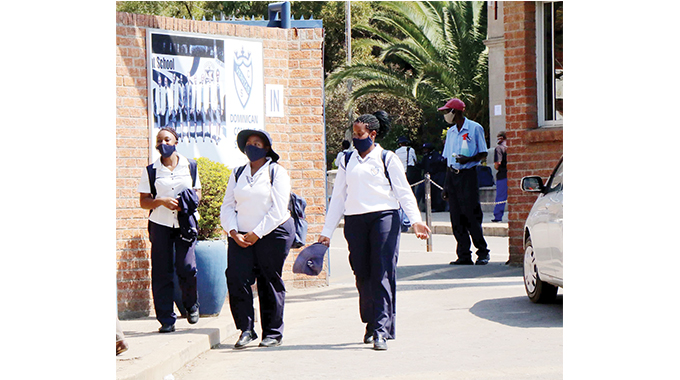
Dr Tatenda Simango
I HOPE I find you well and in good spirit. Covid-19 positive cases are getting less by the day, but this is a time when we need to maintain vigilance so as to avoid another spike in cases. As the country is trying to reopen to a new normal, there is potential risk of local transmission cases increasing. The hotspots include where people stand in line to receive services such as at boreholes, retail centres, buses, opening of schools and national borders. These pose a risk to more Covid-19 local transmission cases but if we are all vigilant and maintain social distancing, wear our masks while sanitising and washing our hands on a regular basis, we reduce this risk significantly.
The schools opening in phases is a necessary development but it has to be well managed to prevent our children from getting infected. Having information and facts about Covid-19 will help diminish students’ fears and anxieties around the disease and support their ability to cope with any secondary impacts in their lives.
A critical stage will involve transportation of learners, as most learners commute. Parents have to ensure a corona-safe mode of transport. Most urban learners use public transport to school. Arrangements will need to be made to have school or Zupco buses/ commuter omnibuses dedicated to transport learners to their respective schools.
These vehicles will need to adhere to strict hygiene standards:
– Sanitisation of vehicles before and after carrying passengers with alcohol spray or chlorinated water.
– Temperature check of all passengers before they embark (more than 37,5 degrees should not to be allowed on the vehicle).
– Hand sanitisation of all passengers with 60 percent alcohol-based solution.
– Ensure masks are worn correctly and consistently while on the trip.
– Ensure social distancing in queues and with sitting arrangements (no standing passengers, at least one seat between passengers).
Schools need to plan ahead with local health authorities to ensure a safe school environment. Promote information sharing co-ordination and follow guidelines from the national health and education authorities.
Share known information with staff, caregivers and students, providing updated information on the disease situation, including prevention and control efforts at school. Utilise parent-teacher committees and other platforms to promote information sharing.
Also be sure to address children’s questions and concerns, including through the development of child-friendly materials such as posters which can be placed on notice boards, in restrooms, and other central locations. Reinforce that caregivers should alert the school and health care authorities if someone in their home has been diagnosed with Covid-19 and keep their child at home.
Flexible attendance and sick leave policies should be made that encourage pupils and staff to stay home when sick or when caring for sick family members. Discourage the use of perfect attendance awards and incentives. A school absenteeism monitoring system can be implemented to track pupil and staff absence and compare against usual absenteeism patterns at the school. Alert local health authorities about large increases in pupil and staff absenteeism due to respiratory illnesses.
Plan for continuity of learning in the case of absenteeism/sick leave or temporary school closures, support continued access to quality education. This can be achieved through e-learning.
Recommendations for a healthy school’s programme include:
– Sick pupils, teachers and other staff should not come to school.
– Schools should enforce regular hand washing with safe water and soap, alcohol rub/hand sanitiser or chlorine solution, at a minimum.
– Schools should provide water, sanitation and waste management facilities and follow environmental cleaning and decontamination procedures.
– Schools should promote social distancing.
– Ensure a procedure for separating sick pupils and staff from those who are well, without creating stigma, and a process for informing parents/caregivers, and consulting with health care providers/health authorities wherever possible.
– Pupils/staff may need to be referred directly to a health facility, depending on the situation/context, or sent home.
– Clean and disinfect classrooms facilities at least once a day, particularly high-touch surfaces like door handles, railings, lunch tables, sports equipment, door and window handles, toys, teaching and learning aids and light switches.
– Increase air flow and ventilation where climate allows (open windows, use air conditioning where available).
– Post signs encouraging good hand and respiratory hygiene practices.
Preschools should focus on good health behaviours such as covering coughs and sneezes with the elbow and washing hands frequently. Sing a song while washing hands to practice the recommended 20 second duration. Children can “practice” washing their hands with hand sanitiser. Develop a way to track hand washing and reward for frequent/timely hand washing. Demonstrate why it is important to wash hands for 20 seconds with soap and water. Put a small amount of glitter in pupils’ hands and have them wash them with just water, notice how much glitter remains, then have them wash for 20 seconds with soap and water.
Lessons should be pre-planned to tackle key areas in the syllabus that are difficult for learners. Subject areas that they can learn from home should be tackled from home. “Hot -sitting”may be introduced to reduce number of learners in a class at any one time. Desks should not be shared and should be kept a metre apart facing the same direction. Boarding schools will need to have a close monitoring of learners for signs and symptoms of Covid-19.
The handling of books will need learners and teachers to work together in the prevention of spread of Covid-19, which has been seen to last up to four days on paper and plastic. As much as feasibly possible, there should be no sharing of books and materials in class. Pupils should sanitise or wash hands before and during class as they handle books.
Assignments and exams should be left on the desk to be collected by the teacher after the exam period. Teachers may wear gloves when collecting the books, masks and face shields may be worn while marking with hand sanitising between books.
Each learning centre will need to develop specific guidelines according to their needs and circumstances. Till next week, stay safe.
Dr T. Simango can be contacted on [email protected] or follow him on Facebook@ 9th Avenue Surgery.



 Online Reporter