Siphakeme .Mnindwa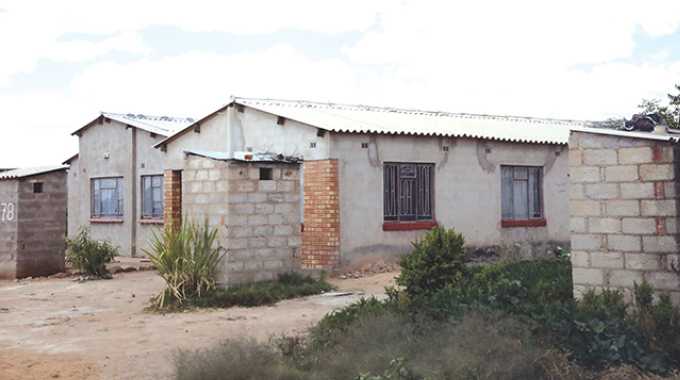
Gibson Mhaka
IN some parts of Cowdray Park, one of Bulawayo’s growing suburbs, flush toilets are a sign of affluence.
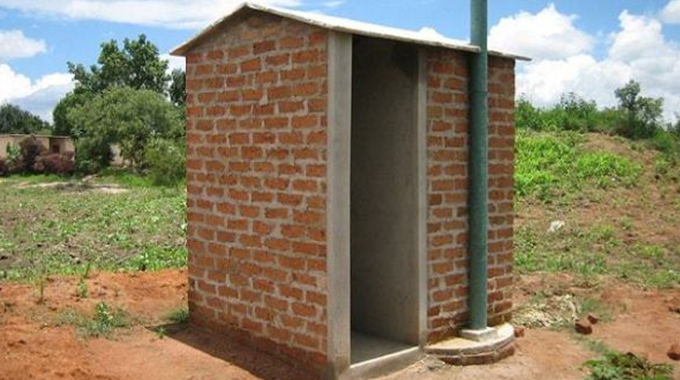
The vast majority of properties rely on Blair toilets, a situation that has now reached a critical point.
With most of these Blair toilets filled to overflowing, they pose a significant risk of disease outbreak and environmental contamination, demanding urgent action from the local authority.
Most of the residents in Cowdray Park still use Blair toilets, with council expected to empty them using vacuum tankers.
The urgent need for the council to construct sewer lines and connect them to the reticulation system was highlighted by Ward 6 Councillor Nkosinathi Hove-Mpofu in the latest council minutes.
“Councillor N H Mpofu noted that most of Cowdray Park properties did not have flush toilets but used Blair toilets. Most of these Blair toilets had filled up. Residents were requesting council to construct sewer lines and connect the sewer reticulation. The residents were willing to assist in the construction of the sewer infrastructure,” the minutes read in part.
Ward 24 Clr Tavengwa Zidya also expressed concern about sewer overflows and bursts in his ward, saying the number of bursts was increasing daily.
He stated that the council was not responding to reports, and reports made in November 2024 with reference numbers had not been addressed.
Ward 2 Councillor Adrian Redan Moyo expressed concern about sewer effluent flowing into the Umguza River.
“This is affecting aquatic life and upstream communities who rely on the river water,” he said.
He also feared that the council would soon be fined by the Environmental Management Agency, adding that the sewer deep section project in Trenance and Lobenvale had taken too long to complete.
Ward 9 Clr Donaldson Mabuto explained that Cowdray Park was initially a Central Government project that had been handed over to the council.
“When council took over the project the residents had been informed about some of the service delivery challenges which included water reticulation. Residents had agreed to contribute US$50 a month to finance some of the service delivery infrastructure. Only a few residents could afford it. The amount was further reviewed to US$15 and still, residents failed to pay,” he said.
In his response, Ward 28 Clr Ntandoyenkosi Ndlovu highlighted that the council lacked adequate equipment to address the significant sewer challenges.
“The council had only 10 sets of drain clearing rods instead of 40. The council’s sewer jetting machine was not functioning and was awaiting repairs at the workshop. Cowdray Park phases 1 to 15 was a self-financing scheme. The council was engaging financial institutions to finance the construction of service delivery infrastructure,” he said.
Mayor Senator David Coltart acknowledged the plight of Cowdray Park residents regarding sewer reticulation and other service delivery challenges.

He assured residents that the council would improve service delivery in the city, including Cowdray Park.
“Most sewer plants were operating at 20 percent below capacity. A lot of vandalism had been done to the sewer infrastructure. The presence of sewer effluent in Umguza River was a serious challenge to the council. This was a health crisis to the communities up stream and along the river,” he said.
He emphasised the need for the council to establish goals for 2025.
These goals should include the completion of the sewer deep section in Trenance/Lobenvale before the end of the year, along with the finalisation of the arbitration case.
The rehabilitation and completion of Aisleby Farm sewer plant sections 1, 2 and 3 should also be prioritised for completion by the end of 2025.
“Finally, the Acumen Contract should be followed up, and the sewer processing equipment should be procured and commissioned during the year.”


 Online Reporter