Online Reporter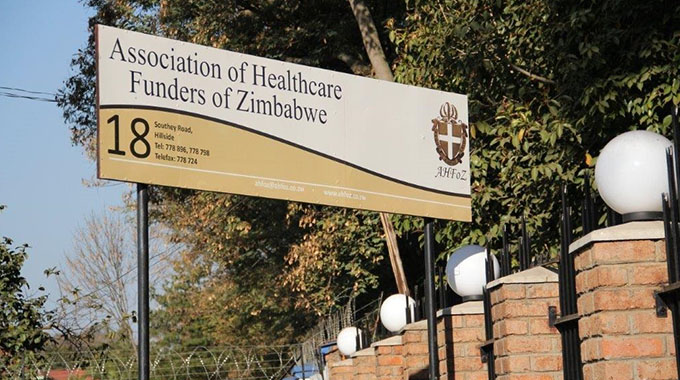
Sunday News Reporter
ZIMBABWEANS who rely on medical aid societies face a growing threat to their healthcare access as “fraudulent activities” within the healthcare sector cast a dark shadow over these institutions, potentially crippling their financial viability and raising concerns about their ability to provide service.
Observations, supported by multiple credible sources, have revealed a disturbing and growing pattern of potential abuse, including increasing instances of over-prescription, alleged collusion between members and medical service providers and reports of questionable referrals by doctors.
While acknowledging potential cases of fraud, some service providers, including medical doctors, have however, accused medical aid societies of “uncompetitive behaviour,” attributing it to poor regulatory enforcement, internal governance deficiencies and other misdemeanours.
Furthermore, the healthcare service providers have alleged an ‘obscene profiteering’ mentality within medical aid societies, asserting that it hinders basic medical insurance cover for their clients.
Still, concerns are mounting over instances where healthcare professionals are prescribing excessive or unnecessary medication and treatments, thus inflating claims submitted to medical aid societies.

Reports suggest some medical aid members are allegedly colluding with healthcare providers to facilitate access to services for individuals who are not registered beneficiaries under their schemes.
Sources also indicate potential unethical practices involving doctors making suspicious referrals to specific medical facilities, possibly driven by personal gain rather than the best interests of the patient.
The combination of these malpractices is understood to have created an unsustainable claims-to-contribution ratio, threatening the viability of societies and potentially leading to cuts in benefits for members.
While such activities have been occurring despite systems being in place to mitigate them, sources within the healthcare sector indicate a significant increase in prevalence, with the Association of Healthcare Funders (AHFoZ) of Zimbabwe warning that the practices would drive up healthcare costs due to depleting pooled funds and necessitate subscription increases.
“This growing prevalence of abuse, even with mitigation efforts in place, points to a dangerous ethical slide that directly translates to increased healthcare costs and threatens the very foundation of our medical aid system,” said an executive with a leading medical aid society.
Medical aid societies are regulated under the Medical Services Act, administered under the Ministry of Health and Child Care, while healthcare providers are regulated under the Health Professions Act.
One of the key aspects of the Insurance and Pensions Commission Amendment (Ipec) Bill is the inclusion of medical aid societies under the regulatory oversight of the commission.
“They are trying (medical aid societies) to eliminate (the practice), but as long as there is an element of connivance, even with checks and balances in place, it will be very difficult,” another source said.
AHFoZ chief Executive Ms Shylet Sanyanga emphasised to this publication that healthcare fraud inflates costs by “depleting” pooled funds, thus inevitably leading to subscription increases.
“This creates a need to increase subscriptions,” she said.
“If funds are depleted through fraud, global limits may be reduced, thereby impacting access to healthcare services for those genuinely in need.”
She, however, said that despite the fraudulent activities, medical aid societies have elaborate control systems which include biometric systems used at the Point of Care and internal claims adjudication processes before payment.
“At AHFoZ level, collective investigations and analytics are regularly carried out,” said Ms Sanyanga.
“Any providers caught committing fraud or abuse are taken off the register and are suspended from doing business with medical aid funders. They are reported to their respective registering bodies.
“In some instances, some are reported to the police. If a member is caught, they are blacklisted. AHFoZ also keeps a ‘blacklist’ register for fraudulent medical aid members so that they are not accepted by unsuspecting medical aid societies after being expelled for fraud.”
However, collusion with cardholders severely limits fraud detection, she said. “Members are expected to protect medical aid funds, not engage in wasteful or fraudulent activities,” Ms Sanyanga added.
Ms Sanyanga outlined several key strategies to combat fraud, including leveraging technology to enhance claim detection and analytics, conducting robust awareness campaigns, capacitating human resources involved in claim assessment, and rigorously prosecuting perpetrators.
Zimbabwe Medical Association (ZiMA) president Dr Kudzai Masinire, nevertheless, blamed medical aid societies for exploiting the lack of proper regulatory oversight, which has led them to stray from their core mandate.
According to Dr Masinire, the inadequate internal governance structures within medical aid societies, demonstrated by the prevalence of fraud and corruption, were fostering an environment conducive to further fraudulent activities.
He asserted that the official regulatory oversight by the Ministry of Health and Child Care was rendered ineffective due to a dysfunctional regulatory unit.
He called upon legislators to carefully examine the IPEC Bill to ensure it establishes robust regulations for effective oversight of medical aid societies. Dr Masinire noted that the majority of medical societies were disregarding existing rules, such as the requirement to convene Annual General Meetings (AGMs) with their members.
He warned that if medical aid societies were left unchecked, the medical ecosystem will soon collapse as members’ frustration escalates. Many members, despite years of contributions, were increasingly questioning the value of their membership due to being denied basic services.