admin
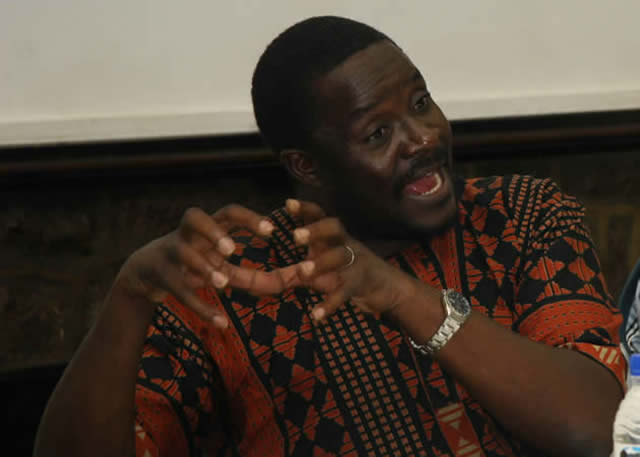
adminBy Dr Lyton Ncube
For the whole week, the mainstream media, social media sites, academics and society at large, unnecessarily found themselves trapped in a contentious debate provoked by emotion wrecking carnivalesque elements witnessed at Babourfields stadium’s popular Soweto stand last Sunday, during a match between Dynamos FC and Highlanders FC.
Having sociologically researched the Dynamos and Highlanders FC rivalry at the highest academic level, I found it necessary to also make my humble submissions to the conversation, and possibly put the matter to rest.
Former French footballer and manager, Michel Platini, remarked “football is a reflection of society. It mirrors not only its values, but also its fears and prejudices.”
Platini’s assertion, aptly captures and confirms worries which became evident in all spheres of the Zimbabwean society, following the titanic clash between Dynamos FC and Highlanders FC in question.
The Dynamos FC and Highlanders FC fixture is undoubtedly, the most popular, but equally the most controversial on Zimbabwe’s Premier Soccer League (PSL) calendar.
In 2004, Robson Sharuko, The Herald Senior Sports editor, dubbed this fixture, the ‘battle of Zimbabwe’, a phrase which often triggers debate amongst football scribes and fans.
However, whether one likes the nomenclature ‘battle’ or not, the Dynamos FC and Highlanders FC fixture, is a ‘battle’ both in the literal and metaphorical sense. The rivalry is contested on and off the pitch, making this fixture a contentious space.
On the African continent, the Dynamos FC and Highlanders FC rivalry mimics Al Ahly vs Zamalek in Egypt, GorMahia vs AFC Leopards in Kenya and Orlando Pirates vs Kaizer Chiefs. In Europe, it mirrors Celtic vs Rangers (Scotland), Real Madrid vs Barcelona (Spain), Manchester United vs Liverpool (England) and AC Milan vs Internazionale (Italy), among other fierce rivalries. Sadly, the Dynamos FC and Highlanders FC rivalry has gone beyond ‘ordinary’ everyday fandom, forcing itself into our newsrooms, such that at times some of our scribes emotionally, ethnically and regionally report events at this fixture, sacrificing facts.
However, despite controversies and contestations surrounding this fixture, football fans in Zimbabwe and even beyond our borders, always look up to this game.
Sunday 11 September 2016, was supposed to be one of those very beautiful days too. It was a day for a high profile derby, almost reflecting the Manchester derby which had been played 24 hours before. The game itself was nerve- wrecking and entertaining, living up to what fans always anticipate from such a high profile fixture. More often than not, these two teams have never disappointed their fans.
However, as Bosso celebrated a rare back to- back league victory over rivals Dembare, in a period almost spanning to ten years, the beautiful script was spoiled by an unnecessary idiotic tribal vitriol on the Shona ethnic group.
Form nowhere, entered the ‘Ultra’!, with a placard insulting what they call ‘a Shona’. The placard was inscribed, “We believe in you Akbay Rest in Peace Mashona Zinja”. To call it controversial is to sanitize and legitimize ignorance and backwardness at a time the country has opened many schools and tertiary institutions to fight these vices. In the actual sense, this banner was not controversial, it was worrisome. It pointed at our failure as a society to educate some of our young men and women at grassroots level about the real culture of fandom. Those who held the banner are the remnants of what Joseph Conrad called ‘the heart of darkness’.
For a start, how does one account for intermarriages that have existed and still continue to exist in Zimbabwe amongst the so called ‘tribes’? In this era where Shona men have been charmed by the ‘beauty’ of ‘Ndebele’ women and vice versa, intermarriages have been ongoing among these groups such that to talk about an ‘original’ Ndebele or Shona is not only chimerical but mythical. What would one call the offspring of an intermarriage between the so called Ndebele and a Shona? How does one explain the myriad of migrations that have taken place over centuries of co-existence in Zimbabwe?
So to talk about Highlanders FC is a Ndebele team and Dynamos FC as a Shona team, is not only mischievous but anachronistic. It is a feeble attempt on resurrecting virtues of old fashioned nationalism and ancient hatreds in football’s great rivalries, in a globalised world.
Highlanders FC, is undoubtedly predominantly constituted by players with ‘Shona’ surnames. Ralph Matema, Peter Muduhwa, Eric Mudzingwa, Simon Munawa, among others, demystifying the ‘Ndebele’ notion.
Above all, Shona is not a homogenous identity, but an amalgamation of various linguistic groups such as the Karanga, Ndau, Zezuru, Korekore, among others?
So who is a Shona then? And who is Ndebele?
Let us take a stroll outside Matabeleland provinces. There is a chiefdom in the midst of the Vahera people, deep down in Buhera, under Chief Gwebu. The community is occupied by predominantly Ndebele speakers. Historical knowledge points to the fact that Gwebu himself, was a senior Ndebele Induna who settled there. Hold your breath! They are not coming back! They will be there because they are in Zimbabwe and they are Zimbabweans. Ian Smith, one of the notorious oppressors in the history of colonialism, never resorted to tribes because he knew it was a hopeless endeavor. Surely for the young generation of this day to raise such an insulting placard is to show sign of existential crisis. It is a failure by those few individuals to define and identify themselves.
The ‘banner people’ at Soweto stand, wanted to justify their existence and they felt an insulting banner was the best way of doing it. Unfortunately, this world has moved far far beyond to even look back and caste an eye on tribal discourses.
The banner was visible to all who had eyes. In fact it was as visible as the ignorance of the people who brought it there! There has always been a perception, which can no longer be justified by facts, that Highlanders FC is an embodiment of Ndebele aspirations, while Dynamos FC is viewed as an embodiment of Shona hegemony.
It is despicable to say the list, to refer to tribes at a time when there more serious challenges we can face together as a nation.
I find it disturbing to find some Zimbabweans continuously defining themselves along ethnic/tribal grounds. After all, Highlanders FC fans sing, ““Bosso (Highlanders) itimuyelizwelonke (Highlanders is a team for the nation/everyone)”. So if Highlanders is a team for the nation, aren’t the Shona ethnic group part of this imagined nation?
Our fans should take a cue from the footballers themselves, who have demystified the ethnic boundaries, embracing professionalism in the game. So my dear comrades, in an era when even the Ultras (‘militant’ fan groups) in countries like Italy, Spain, Portugal and France and the ‘barras bravas’ or ‘hinchadas’ in Latin America, are now preaching tolerance in fandom, its high time we also tolerate each other and shun tribalism. Talking about tribalism is engaging with the past and when we engage with the distant past we will find that we have lost the future!!
Tribalism is too ancient, even the inventors of the word have long forgotten about it. It is a colonial invention that has no room in modern discourses. When you talk about tribalism it works better as a reference to the speaker’s foolishness than as a measure of any form of civilized dialogue.
NO matter how much some desperate people, desperate for recognition, try to bring it up, tribalism is a dead discursive reference. You cannot perfume a dead body. It cannot be resurrected. You cannot put lipstick on a frog, it remains an ugly creature. This is what tribalism is like. Engaging in tribal talk and raising insulting placards is a foolish endeavor. Unfortunately, every society has its fair share of foolish people. We saw our share on Sunday!
Zimbabwe is ethnically diverse but one. The popularity of Dynamos FC and Highlanders FC fixture, must actually unify rather than divide us.
Dr Lyton Ncube is a Post-Doctoral Research fellow in the department of Communication Studies, University of Johannesburg and full time lecturer in the department of Media and Society Studies, Midlands State University. For the past five years, Ncube has been researching Zimbabwean football.
For feedback
Email:[email protected],Whatsapp number 07763333367


 Online Reporter