Online Reporter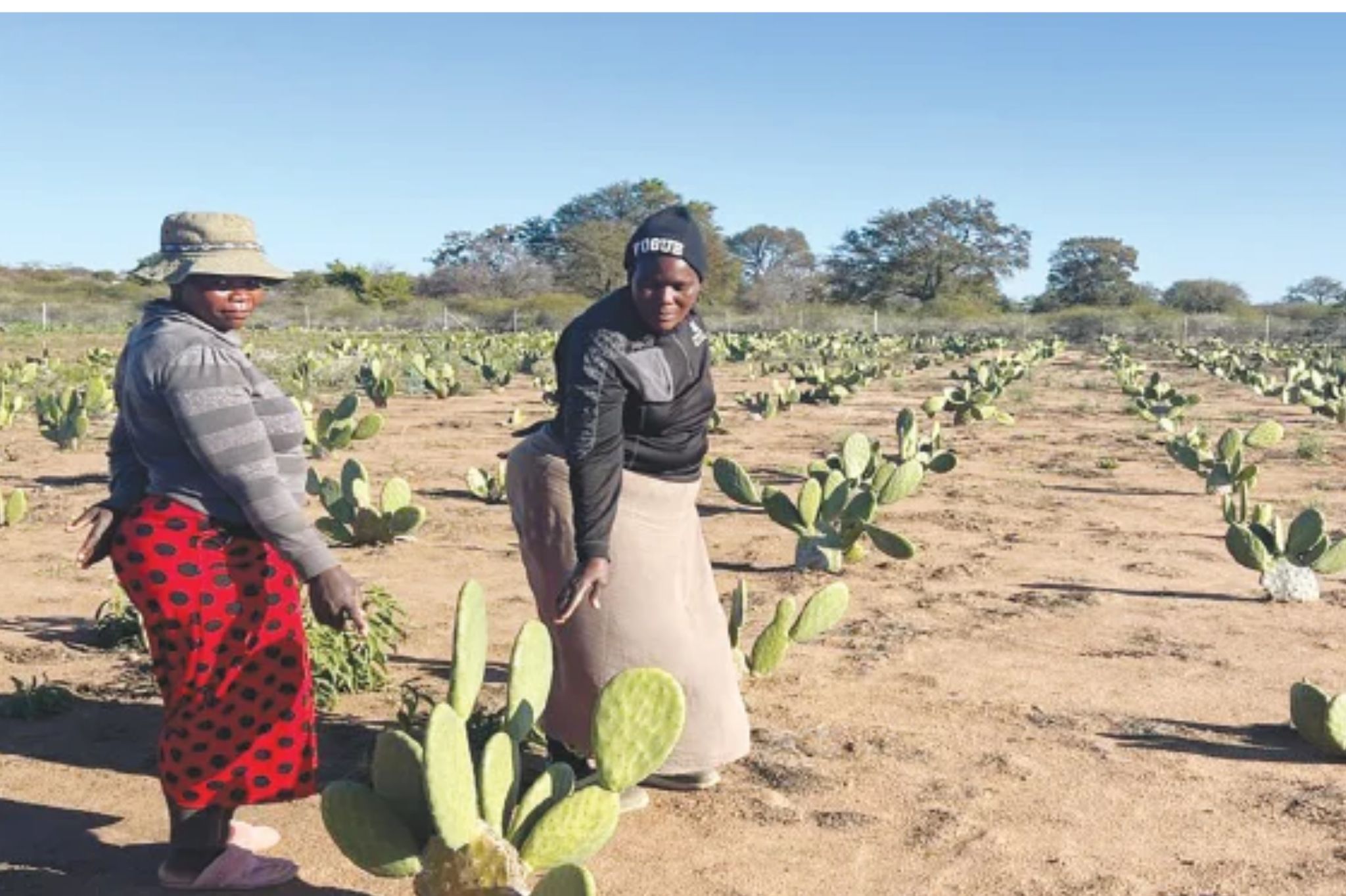
Sukulwenkosi Dube- Matutu [email protected]
LIVESTOCK has long been the backbone of rural livelihoods in Gwanda, but recurring droughts are making it increasingly difficult for farmers to keep their animals alive.
As pastures disappear and water sources dry up, surviving the harsh dry season has become an annual battle.
When grazing lands wither and water sources shrink, cattle and goats are often forced to travel long distances in search of sustenance. The result is predictable: weakened animals, reduced productivity and, in severe seasons, devastating losses for farmers who depend on their livestock for income and food security.
In Magaya Village’s Ward 17, however, a group of farmers believes it has found part of the answer in an unlikely crop, the spineless cactus. At Thuthuka Nutrition Garden, 37 farmers are cultivating the drought-tolerant plant alongside vegetables such as cabbages and chomolia. The aim is simple: to strengthen both livestock and household food security in the face of a changing climate.
For many of the farmers, cactus production is new territory.
“We were used to the production of horticulture crops and other fodder crops and then we were introduced to cactus. We were equipped with knowledge and skills to produce cactus, its importance and benefits.
“We are hopeful that this plant will play a crucial role in preserving our livestock especially this year where the country is expected to experience a super El Niño,” said the project’s treasurer, Thambulo Ndou.
The introduction of cactus farming came after the garden was upgraded through a project implemented by the Edward Ndlovu Memorial Trust (ENMT) with funding from the Canadian Fund for Local Initiatives (CFLI).
A solar-powered borehole, together with newly installed piping infrastructure, has significantly improved water availability at the garden. The development has not only made cactus production possible but has also boosted yields of traditional horticultural crops.
“In addition to the cactus plant we are also producing other horticulture crops. At the moment we have cabbages and chomolia. Our production has improved ever since Edward Ndlovu Memorial Trust came in and capacitated our garden,” said Ndou.
For fellow farmer Ms Prisca Ncube, the changes have been nothing short of transformative.
Before the rehabilitation of the garden, members relied on a hand-operated borehole and spent hours carrying buckets of water to irrigate their crops. Limited water supplies often meant lower yields and restricted production.
Today, those challenges have eased considerably.
The cactus initiative forms part of ENMT’s broader push to promote climate-smart agriculture in vulnerable communities. While the crop may appear unusual, project organisers say it could become a valuable tool for livestock farmers in some of Zimbabwe’s driest districts.
ENMT director Michael Moyo said one of the biggest problems facing farmers was the loss of livestock condition as animals travelled long distances searching for water.
“One of the challenges that we realised under livestock production is that animals lose a lot of weight in search for water. We are saying farmers can feed on cactus as they have abundance of water. Research has shown that animals eat more water than they drink and from cactus they can get the needed water,” he said.
“Adopting the cactus plant will play a crucial role in helping farmers in dry areas to sustain their animals. The plant can be planted during the dry season and does not require lot of water. The cactus plant is also of huge benefit to humans. It can be used to make beverages, medicines and cuisines,” he said.
Importantly, Moyo stressed that farmers are not being encouraged to abandon conventional crops.
Instead, cactus production is being promoted as a complementary activity that can occupy a portion of available land while providing an additional safeguard during drought years.
The initiative was introduced after farmers suffered significant goat losses during the 2024 drought.
Working with specialists from Matopos Research Station, ENMT facilitated training sessions and demonstrations to explore the use of cactus as a feed and water supplement for livestock.
Farmers also received practical training in horticulture production and crop management, ensuring that the project addressed both livestock and crop-based livelihoods.
Beyond its potential as livestock feed, cactus may also provide a new source of income.
Moyo said farmers have been encouraged to sell cactus cladodes, the flattened stems used for propagation, to other farmers interested in establishing their own plots. In this way, the crop could create new business opportunities while helping spread climate-resilient farming practices across the district.
The improvements at Thuthuka Garden were driven by the concerns raised by farmers themselves during a needs assessment.
“As ENMT we carried out a needs assessment in this garden where members explained challenges they faced when conducting their activities and the major challenge was water supply. That is when the project was selected for funding from the CFLI project in 2025.
“The project came in with a 10 000-litre storage tank, tank stand, solar panels, solar panels stand, 100m electric cable, submersible pump, 100m poly pipe and other connection equipment. Members contributed some additional equipment which included 100m poly pipe, 32m electric cable, cement, bricks and labour. Garden members and the entire community contributed additional material and labour for the project completion,” he said.