admin
admin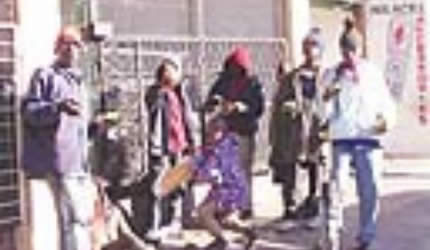
pour on to the streets. There are many classes of street people traversing our streets as the scourge continues unabated. These are the people whom we see on the streets guarding our cars, washing the cars and soliciting for a few coins or spare change. However, there is a new scourge on the streets as we encounter, on numerous occasions, children who solicit for money and food.
The children have also turned nasty as they target hapless women grabbing food and other stuff from the unsuspecting women. On numerous occasions some have been apprehended for shoplifting in supermarkets. Some of them target women’s handbags, phones, jewellery and other personal belongings. The police have also been forced to come hard on the street people as they try to deal decisively with the problem.
While the raids have brought temporary relief to the problem, no lasting solution has been found as the street people emerge shortly after their release. The issue, however, is to understand the source of the problem. It has also become evident that the people who end up living on the streets are not all delinquents as some are forced to seek refuge on the streets by abusive parents or relatives.
Sixteen-year-old Tonderai (not his real name) is a rugged boy with twisted hair, dirty torn clothes while his presence is accompanied by a bad odour emanating from years without a bath. He opened up to The Herald giving his riveting story leading to his life on the streets of Harare. Smoking an obviously scavenged cigarette, Tonderai reveals the horrific realities of living in the streets.
“I was forced to go live on the streets as a result of unfortunate circumstances. After my father passed away, my stepmother treated me with extreme hostility and prejudice while she treated her own children with love and compassion.”
He has also encountered unscrupulous people that take advantage of their current state and sexually exploiting them.
“Some men with big nice cars approach us and promise to give us money for sexual favours.”
Most of the children on the streets tell tales of long lost happy childhood. Girls on the streets are exposed to rape and prostitution and are susceptible to HIV and Aids and other sexually transmitted infections. Statistics are not readily available as some cases of sexual abuse go unreported because of the conditions of living on the streets continue to be bad.
“My friends were taken by men driving a red Toyota Hilux who pretended to be generous people offering us food and money when all they wanted was sex. There was a time when I was forced to sleep with several boys living on the streets. These people move in groups. It’s by God’s grace that I did not fall pregnant from the abuse,” 17-year-old Emily said.
The abuse of children is in direct contravention of the Child Protection Act.
Some of the children are recruited by their relatives to beg for money and food. The children are denied the right to education while pursuing the monetary interests of their handicapped parents especially the blind.
Jacob Majoni of Mbare in Harare called Zimbabweans to desist from giving financial aid to children who are forced by parents to beg for money. He argues that this promotes a begging culture that literally pushes the parents to use their children to beg for money on the streets.
“Such unwarranted actions have a long- term psychological effect that negatively impacts on the unfortunate children who are exposed to the begging syndrome in adult life,” he said.
Childline Zimbabwe spokesperson Mrs Patience Chiyangwa called for authorities to address the problem. She encouraged people to avoid giving the street people money.
“It is important that members of the public desist from giving cash as this encourages them to stay on the streets. Preferably, if they can have more sustainable solutions to the problem that would be welcome. The more there is a feeling of begging as a lucrative exercise, the more we prolong this problem.
“There is need for strategic reintegration and reasonable accommodation in society for the affected people living with disabilities.”
Mrs Chiyangwa also called on the need to have a strong family environment regardless of current economic challenges.
“Parents that beg should have enough love for themselves and their children and try to live within their means. Families ought to cover each other’s backs and look after their underprivileged family members.
“Traditionally, children belong to the community, but some parents are even neglecting their own children.”
A handicapped woman who identified herself as Mai Dube and has children, aged 12 and seven respectively, begging in the streets, said the harsh economic conditions forced her to be on the streets.
“My husband and have been unemployed for a long time. Begging is the only solution to fend for our family, although I am not proud of the current state my kids and I are in.”
Justice for Children Trust programmes director Mr Caleb Mutandwa said there was need to take into cognisance the economic and social factors dictating the situation. Mr Mutandwa said the children were missing out on education, morals and the chance of a better future.
“It is unfortunate that these children are exposed to sexual abuse and diseases on the streets when our organisation only provides legal services. We only follow the lead from the Government.”
He said the civil society had earlier this year met with the police to curb child abuse on the streets and launched an operation to apprehend people who abuse children’s rights. The initiative, however, failed to kick off after Government and the police failed to effectively co-ordinate and co-operate with each other.
The initiative also targeted parents who abuse their children and no arrests were made as authorities also consider circumstances forcing them to beg.
Streets Ahead director Ms Duduzile Sithole said the organisation had launched designated programmes for a holistic approach to issues affecting people on the streets.
“These activities include street visits to initiate contact, develop friendships with and identify new children coming onto the streets. The children are then referred to the drop-in centre operating from the House of Smiles where they receive counselling, bathing and laundry facilities, a hot meal, life skills training as well as recreational activities. All these activities are geared to persuading the children to leave the streets and find alternatives to street life.”
The initiative has group discussions where they talk about topical issues on the streets and possible solutions to them. The children are also referred for medical attention, family tracing and reunification for those willing to go back home while others are put in institutions.
Mrs Sithole was not amused by parents who use their children for begging purposes adding that Streets Ahead would engage the parents appraising them on children’s rights and breaking the law.
While non-governmental organisations have played a big role in trying to ease the problem, some of them have faced serious financial constraints affecting their operations.
This has seen the need for all including Government, NGOs, police, parents and the society as a whole to find a lasting solution to the problems of people living on the streets.


 Online Reporter