Online Reporter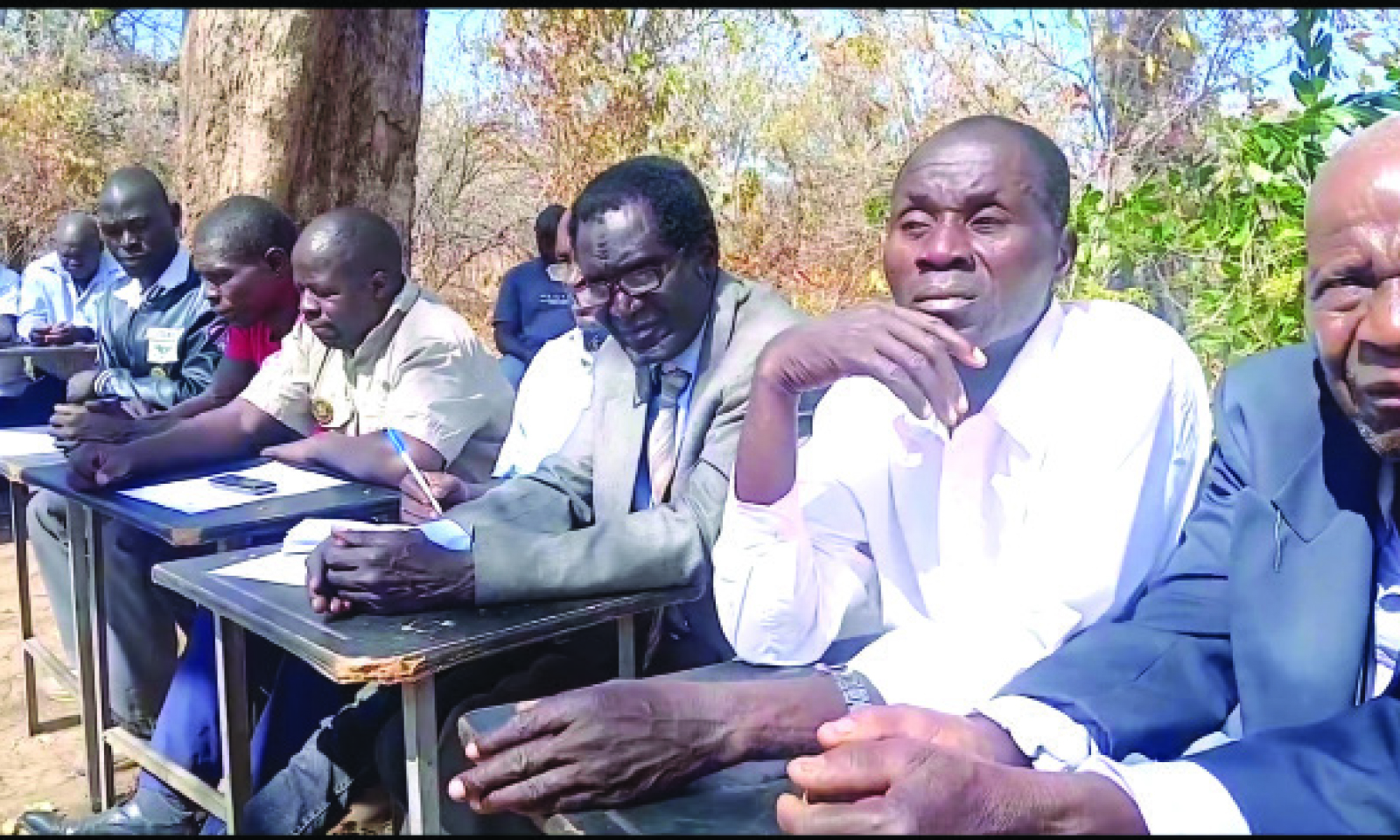
Fungai Lupande-Mashonaland Central Bureau
IN the remote village of Kapururira, in Mbire District, 35-year-old Chipo Madziro wears a tired smile, one that masks the heartbreak of losing her 16-year-old daughter, who eloped with a 17-year-old boy.
But the pain did not end with her daughter’s early marriage.
Her husband, overwhelmed by grief and disappointment, has turned his frustration into emotional and physical abuse.
“Since the day she left, I have known no peace,” Madziro said at a recent Start Awareness Support Action (SASA!) community session.
“Every time my husband returns from drinking, he accuses me of encouraging our daughter to elope.”
Their once quiet home has become a battleground.
The incident has shattered the family’s foundation, and Madziro now lives in fear but stays for the sake of their two younger children.
Seeking healing, Madziro turned to the SASA! sessions, a community-based platform that addresses gender-based violence (GBV) through awareness, support and collective action.
For her, these gatherings have become a refuge, providing emotional support and practical counselling.
With guidance from community leaders and facilitators, the couple eventually underwent a traditional mediation session, which helped to ease tensions and reopen lines of communication.
“I still don’t understand why my daughter ran away at such a young age,” Madziro reflected.
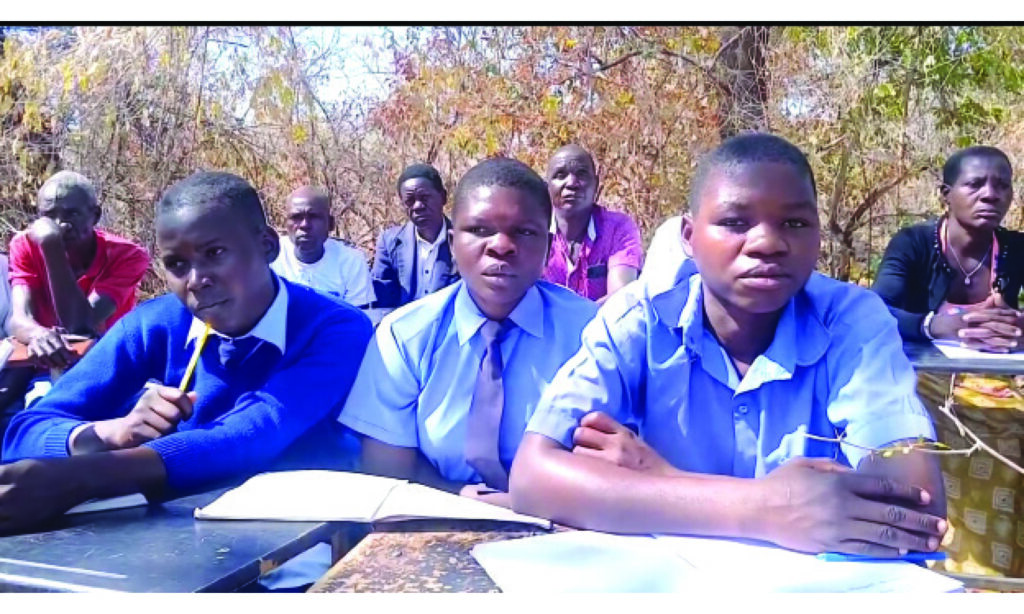
Parents, schoolchildren and over 30 village heads gathered for a sensitisation meeting in Chitsungo Village, Ward 16, Mbire, as part of the Not in My Village campaign by Chief Chitsungo.
“It happened during the farming season, when my husband had moved to the fields, far from home. We visited him occasionally, but sometimes my daughter was left behind to do chores.
“The SASA! sessions gave me strength. I now know it’s not my fault. And I’ve learned how to protect myself and my other children.”
The teenager eloped with a neighbour, and all attempts to bring her back failed.
The matter was reported to the local chief.
Her story mirrors a broader crisis in Mbire District, where child marriages, often peer-to-peer, are common.
Mbire District Development coordinator Mr Richard Maruta confirmed the area is notorious for early unions.
“Unfortunately, these marriages rarely last. The young boy usually returns to school, leaving the girl behind to care for the child, sometimes turning to prostitution for survival,” he said.
Mr Maruta pointed to a combination of poverty, long distances to schools and harmful cultural practices as the root causes.
“In Mbire, the average distance to school is about 10 kilometres. Some girls start Grade One as late as age 10. By then, they’re already behind, exhausted by the walk and vulnerable to dropping out. Many see marriage as an escape.”
He also cited chinamwari, a traditional initiation practice that teaches girls how to please men, as a dangerous influence.
“Once exposed, girls become curious and experiment too soon. We are working with the National AIDS Council (NAC) and Katswe Sistahood to abolish such teachings,” said Mr Maruta.
Through the “Not in My Village” campaign, traditional leaders are being sensitised to report child marriages to the police.
He said awareness campaigns are being rolled out to change community attitudes and increase accountability.
“Importantly, these are not usually cases of older men marrying young girls, but peer relationships driven by culture, poverty and a lack of education,” Mr Maruta added.
For mothers like Madziro, the cost of early unions is devastating, not just in terms of lost childhoods, but also the breakdown of families and the emergence of cycles of violence.
A few kilometres away in Shau Village, Mary Shamhu is still grappling with the trauma of her 13-year-old niece’s rape by a 50-year-old neighbour.
Overcome with guilt and self-blame, she, too, has found healing through SASA! sessions. Shamhu said the perpetrator, a married man, initially sought an out-of-court settlement.
“Knowing the gravity of the crime, I reported the matter. He was arrested,” she said.
Katswe Sistahood, a women’s rights organisation implementing the SASA! Programme in Mbire, stepped in to assist.
“They used their resources to help us travel to the hospital for HIV screening and to attend court hearings,” said Shamhu.
Initially, she struggled to process the trauma. “I kept asking myself, ‘Why did this happen to us?’ I couldn’t accept it. But after joining the SASA! team, I began receiving counselling and started to feel better.”
The man’s arrest marked a turning point in the community that had long ignored cases of sexual abuse.
Today, Shamhu is giving back by supporting other women in similar situations.
Her niece has since relocated and resumed school.
Miss Chengetayi Chininga, head of operations at Katswe Sistahood said the organisation is currently in the awareness phase of the SASA! programme. “This phase is about raising awareness on how to prevent and reduce GBV,” said Chininga.
“We are seeing more communities speaking openly about gender-based violence and reporting cases.”
With support from NAC through the Social Contracting Initiative, Katswe Sistahood is also focusing on demand creation, encouraging communities to access services related to GBV and sexual and reproductive health rights (SRHR).
“We use an outreach model and refer survivors to service providers. This ensures that when someone experiences violence or needs SRHR services, they know where to go for help,” she explained.
The impact has been significant.
“Through our outreach model, more cases are being reported. That means GBV is no longer seen as a private matter, it’s a public concern being openly discussed,” she said.
Chininga highlighted that some of the reported cases have made it through the justice system.
This year alone, two cases resulted in convictions. Both perpetrators received 20-year prison sentences.
She stressed that Katswe Sistahood is not working in isolation. “We are partnering with the justice system to ensure that perpetrators are brought to book,” she said
Although the two women still worry about their daughter and niece, they no longer feel alone.
Names have been changed to protect the identities of survivors.