

 Online Reporter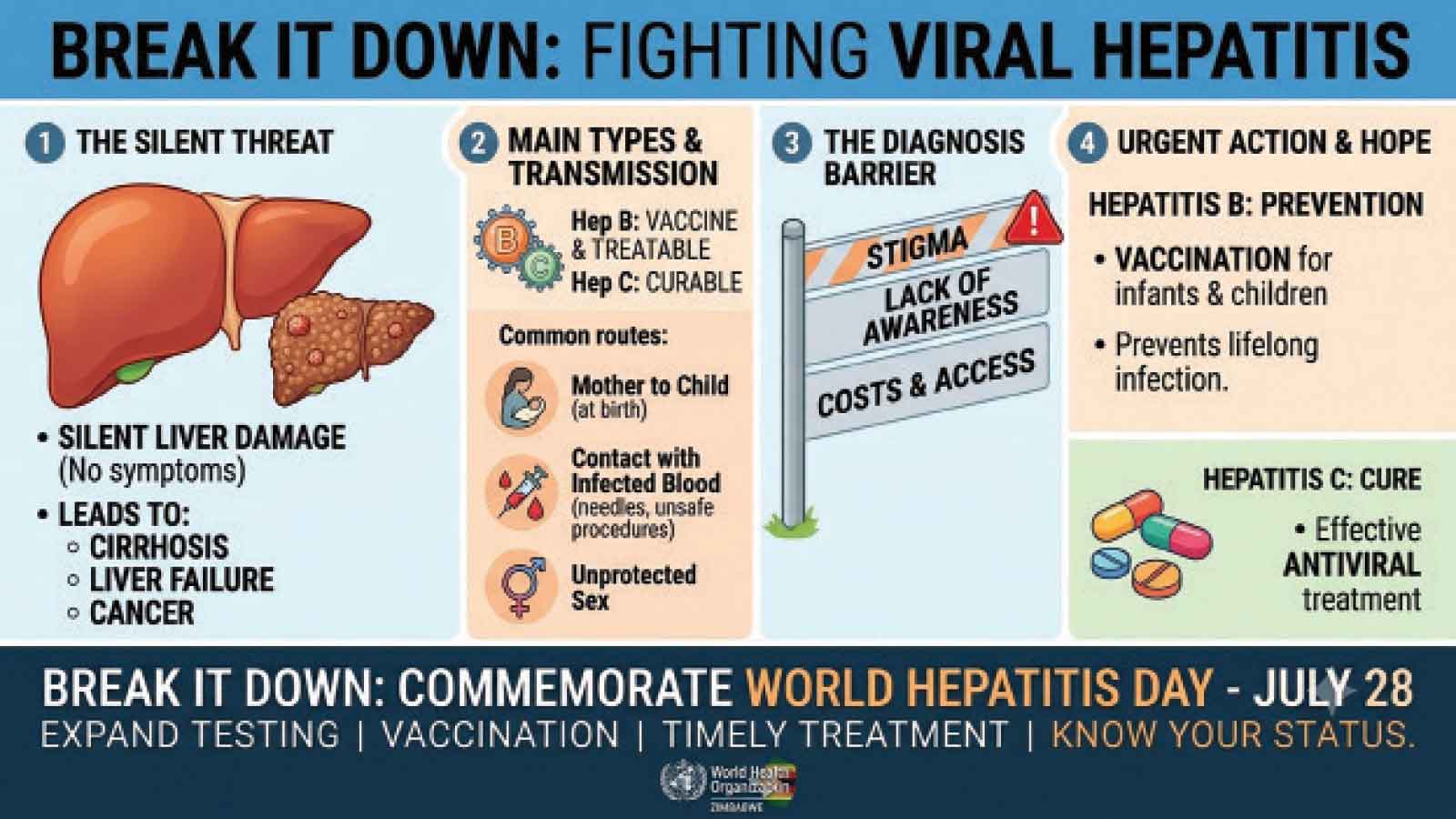
Rumbidzayi Zinyuke
Health Buzz
Every day, millions of people wake up feeling perfectly healthy, unaware that a virus may already be silently damaging one of the body’s most important organs, the liver.
Unlike many infectious diseases that cause immediate and obvious symptoms, viral hepatitis can remain undetected for years while gradually leading to liver cirrhosis, liver failure or cancer. By the time many people seek medical attention, the damage is often advanced.
That silent nature is exactly why health experts are using this year’s World Hepatitis Day, commemorated on July 28, to call for urgent action to expand testing, vaccination and treatment.
The World Health Organisation (WHO) estimates that 287 million people were living with chronic hepatitis B or C in 2024, while 1.3 million people died from hepatitis-related liver disease and liver cancer. Yet many of those infections and deaths could have been prevented through vaccination, early diagnosis and timely treatment.
Hepatitis refers to inflammation of the liver, most commonly caused by viral infections. The five main hepatitis viruses are A, B, C, D and E, although hepatitis B and C account for about 95 percent of hepatitis-related deaths globally because they can develop into chronic infections that eventually cause cirrhosis and liver cancer.
One of the biggest challenges is that the disease often progresses unnoticed.
Many people experience no symptoms for years. Others may develop fatigue, fever, nausea, abdominal pain, dark urine or yellowing of the skin and eyes, but these signs usually appear only after significant liver damage has already occurred.
Globally, only a small proportion of people living with hepatitis B know their status, meaning millions continue to spread the virus unknowingly while missing opportunities for life-saving treatment. WHO estimates that only 27 percent of people living with chronic hepatitis B had been diagnosed by 2024, while treatment coverage remains critically low.
For Zimbabwe, hepatitis remains a significant but often overlooked public health challenge.
Although comprehensive national prevalence surveys remain limited, research analysing blood donor surveillance and population studies estimated an overall hepatitis B prevalence of about 4 percent in the general population after the introduction of childhood vaccination.
Hepatitis C prevalence was found to be much lower, although researchers warned that continued surveillance remains essential. The study also found that hepatitis B prevalence has been declining following the introduction of routine childhood immunisation, demonstrating the impact of vaccination programmes.
Zimbabwe has also stepped up efforts to eliminate mother-to-child transmission of hepatitis B by integrating it into its Triple Elimination strategy alongside HIV and syphilis.
The programme focuses on ensuring that pregnant women are screened during antenatal care and that babies receive appropriate protection immediately after birth.
Globally, however, progress remains uneven. Only 45 percent of newborn babies received the hepatitis B birth-dose vaccine within 24 hours of birth in 2024, leaving millions vulnerable to infection at the very beginning of life. This first vaccine dose is one of the most effective interventions for preventing lifelong hepatitis B infection.
Health experts say vaccination remains the single most effective weapon against hepatitis B.
Zimbabwe introduced the hepatitis B vaccine into its routine childhood immunisation programme years ago, contributing to a decline in infections among younger generations. However, adults born before widespread vaccination remain vulnerable, particularly if they have never been immunised.
The virus spreads through contact with infected blood and body fluids. Common routes include transmission from mother to child during childbirth, unprotected sexual contact, sharing contaminated needles, unsafe medical procedures and unscreened blood transfusions.
Unlike hepatitis B, hepatitis C has no vaccine, but it can now be cured using highly effective antiviral medicines if diagnosed early enough.
Unfortunately, stigma, limited awareness and inadequate access to testing continue to delay diagnosis across many low- and middle-income countries.
WHO says more than 4 900 new hepatitis B and C infections occur every day globally, highlighting the need to expand screening services and integrate hepatitis testing into routine healthcare.
Another major concern is the close relationship between hepatitis and liver cancer.
Chronic hepatitis B and C infections are responsible for the majority of liver cancer cases worldwide. Because liver cancer often has poor survival rates when detected late, preventing hepatitis also means preventing one of the world’s deadliest cancers.
This year’s World Hepatitis Day theme calls on countries to “break it down” by removing the barriers that prevent people from accessing prevention, diagnosis and treatment.
These barriers include stigma, misinformation, high testing costs and inadequate availability of services, particularly in rural communities.
For Zimbabwe, the message is equally relevant. The country has made considerable progress in strengthening maternal and child health services, expanding immunisation coverage and integrating hepatitis B into broader elimination programmes. However, experts say much more needs to be done to improve public awareness, expand access to hepatitis screening and strengthen treatment services for those diagnosed.
People living with HIV, healthcare workers, people requiring frequent blood transfusions and individuals with multiple sexual partners are among those encouraged to undergo hepatitis screening.
Early diagnosis not only improves treatment outcomes but also helps prevent further transmission.
As Zimbabwe works towards achieving global hepatitis elimination targets by 2030, success will depend not only on Government programmes but also on individuals taking advantage of available prevention services.
A simple blood test can detect hepatitis. Vaccination can prevent hepatitis B. Effective medicines can suppress hepatitis B and cure hepatitis C.
The science already exists. The challenge now is ensuring that everyone knows their status and has access to the care they need before this silent disease claims another life.
Feedback: [email protected]



