Chronicle Editor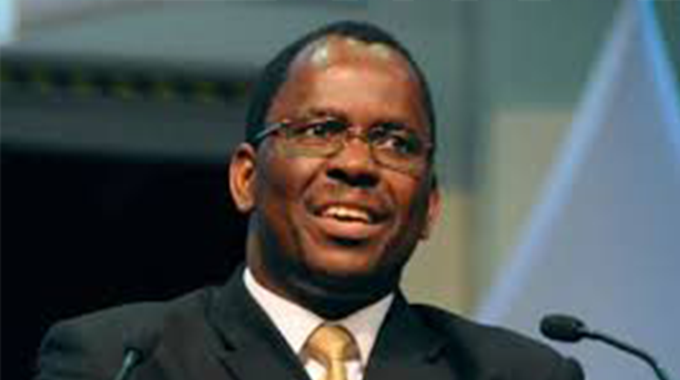
Nqobile Tshili, [email protected]
The country’s universities have been transformed into sustainable economic units through the adoption of Heritage-Based Education 5.0 which has seen all State universities playing an important role in addressing societal problems.
Students from higher and tertiary institutions are involved in ground-breaking innovations that have even attracted the attention of President Mnangagwa.
Zimbabwe is already reaping the benefits of having a university per province as the Government is promoting inclusive access to education with each of the country’s universities involved in projects that are transformational to communities.
The innovations at higher and tertiary institutions have also helped the country withstand some of the negative impacts of the illegal sanctions imposed by the United States and its Western allies.

Chronicle Reporter Nqobile Tshili (NT) engaged Higher and Tertiary Education, Innovation, Science and Technology Development Permanent Secretary Professor Fanuel Tagwira (FT), who unpacked the role of education in national development.
In a wide-ranging interview, Prof Tagwrira takes the nation through strides that the Government has made in the education sector since the coming of the Second Republic.
Below are excerpts from the interview.
NT: What are some of the country’s education achievements in the past years that have enabled Zimbabwe to withstand illegal sanctions?
FT: The Ministry of Higher and Tertiary Education, Innovation, Science and Technology Development stands with the rest of the nation in the fight against sanctions and joins others in the 2024 SADC Anti-Sanctions Solidarity Summit (SASS). Economic sanctions, by their nature, have an impact of depriving the citizenry of human dignity, and the ability to have access to basic needs whenever they want them. Our people have human needs. They want water, shelter, food, innovation, and connectivity for instance. Education must be relevant to fulfil human needs through the production of industries that produce goods and services that answer to people’s needs and bring dignity to people. A good education system should lead to a nation’s well-being.
Our inherited education from a colonial design code-named Education 3.0 fell short of adequately providing for human needs. Through design thinking, we purposely reconfigured our educational system from a consumptive and colonial model of Education 3.0 that focused on the production of job seekers to a Heritage-based Education 5.0 model that focuses on the production of job creators.
NT: Is Heritage-Based Education 5.0 a sanctions-busting mechanism?
FT: This has been one of the greatest achievements in the education sector to withstand illegal sanctions. This Heritage-Based Education 5.0 design provides the capabilities for the production of goods and services through innovation and industrialisation. It is anchored on five elements; teaching, research, community engagement, innovation, and industrialisation and its supporting pillars are; (i) programme infrastructure, (ii) staffing infrastructure, (iii) physical and digital infrastructure, (iv) financial infrastructure, and (v) legal infrastructure.
NT: Why the Heritage-Based Education system?
FT: Our higher and tertiary education institutions emphasise consciousness about our heritage: Who are we? What do we want to become? What human and natural resources do we have? Consciousness is a key factor in the formulation of our strategies for modernisation and industrialisation.
Our philosophical underpinning of heritage-based development emphasises that development shall be routed in our natural endowments including flora, fauna, minerals, water, and human resources. This heritage-based development is aligned with the national critical skills audit findings of 2018 in addition to the national vision and National Development Strategy 1.
Thus, the Ministry through its various policies has created a culture of self-belief, an “I can do” attitude in the minds of our scholars and Zimbabwe is set on a high trajectory of national development where academia will continue to play an important role. This mindset shift or revolution, “Chimurenga chepfungwa” is making academia one of the key players in national development. Our institutions, as enshrined in Section 13 of the Constitution of Zimbabwe are expected to contribute towards national development. This educational philosophy, Heritage-Based Education 5.0 has transformed the educational landscape of Zimbabwe by providing home-grown solutions for local socio-economic challenges through the use of local endowments (flora, fauna, and people).
NT: Infrastructure development — university per province — how is this important in terms of ensuring inclusive access to education?
FT: The physical infrastructure pillar of Heritage Based Education 5.0 has seen the Ministry establish a state university in each province to increase access to quality, equitable, and inclusive education. This dovetails well with the United Nations Sustainable Development Goal four. This strategy entails that we leave no one and no place behind with regard to increasing access to education.

NT: What are some of the milestones that are emerging from the universities?
FT: Not only have our institutions of higher and tertiary education become transformational agents, but they are also becoming sustainable economic units. Through the physical and financial infrastructure pillars of Heritage Based Education 5.0, we have managed to establish innovation hubs, industrial parks, and science parks in our institutions and agencies. Remarkable innovations that resultantly lead to the establishment of startups and employment opportunities are on the increase.
Although we cannot mention all the achievements that are coming from the universities, the following innovations are worth noting;
Bindura University of Science Education
Masawu Juices — Muzarabani
Chinhoyi University of Technology
Medicinal feed factory
Lick block factory
Milking parlour
Artificial insemination bull semen production plant
Great Zimbabwe University
Chivi Drylands
Agriculture Centre of Excellence where new small grain varieties have been established
Simon Mazorodze Medical School
Gwanda State University
Engineering Laboratory and Innovation Complex
Agro-innovation Complex
Chalets
Harare Institute of Technology
National Fuel Management System
Reserve Bank of Zimbabwe payment platform
Local Authorities Digital System (LADS)
Lithium battery manufacturing
Lupane State University
Agro-innovation park
Bingwa Conservancy
Chalets
Manicaland State University
Agro-industrial park and Wildlife park
Midlands State University
National Pathology and Diagnostic Centre
Coal to tar manufacturing plant
Agro-industrial park with the university supplying its orange fruit to the United Arab Emirates
Marondera University of Agricultural Sciences and Technology
Agro-industrial Park
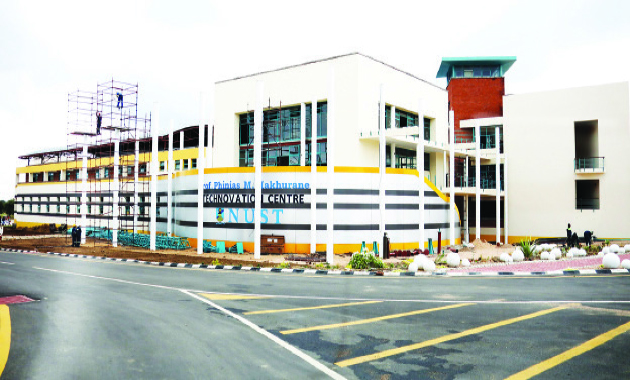
National University of Science and Technology
DNA laboratory
NUST Technovation Centre
University of Zimbabwe
Quinnary Hospital under construction Agro-industrial Park
Zimbabwe Open University
Agro-industrial Park
Ministry agencies involved in the innovative projects include Verify Engineering — medical oxygen (exporting to Mozambique), industrial gases, Finealt Engineering — biodiesel and cooking oil, National Biotechnology Association — Cofsol, Mapfura Wine, Zimbabwe National Geospatial and Space Agency (ZINGSA) — Launched Zim-Sat 1 into space, redefined Zimbabwe’s ecological zones, developed wetlands Master plan for Zimbabwe.
NT: How important is investment in human capital development for the country?
FT: No nation will ever rise beyond the level of its education system. The level of a country’s intelligentsia directly correlates to the level of development of any nation. Zimbabwe’s education sector is developing human capital that is fit for purpose, a relevant people who in their various educational disciplines or interdisciplinary collaboration initiatives develop solutions for the nation. This is to say that a correctly configured education system will have a direct impact on the level of development of its nation.
NT: How is education an important tool for the socio-economic development of the nation?
FT: Our end game as a Ministry is the modernisation and industrialisation of Zimbabwe. This calls for a knowledge and innovation-driven economy to meet the demands of our national Vision 2030 and the dictates of NDS1. The attainment of an upper-middle income economy is our national strategic intent (NSI) which is fulfilled through the enhancement of national capabilities (kuziva, kugona nekuita). National capability is in turn fulfilled by the design and configuration of Human Capital and National Assets (kuronga). It is, therefore, the role of HTEIs to provide our nation with the necessary capability to achieve Vision 2030 of an industrialised and modernised nation through the production of quality goods and services.
Thus, education is important in building the correct capabilities to modernise and industrialise our nation. In turn, the capabilities will assist in the transformation of knowledge learned into goods and services. Science, technology, and innovation will forever remain cornerstones for nation-building.
In order to shape the future of education, we continue to establish innovation hubs, industrial parks, and agro-innovation parks at all our state universities. Our private universities are also part of this educational movement, aligned to the Heritage-Based Education 5.0 model, in which we find more doers than talkers, action-oriented people than mere dreamers, a people with a heart and calling to use our minds, hands, and hearts to shape the destiny of Zimbabwe, the Zimbabwe we want. —@nqotshili



 Online Reporter