Online Reporter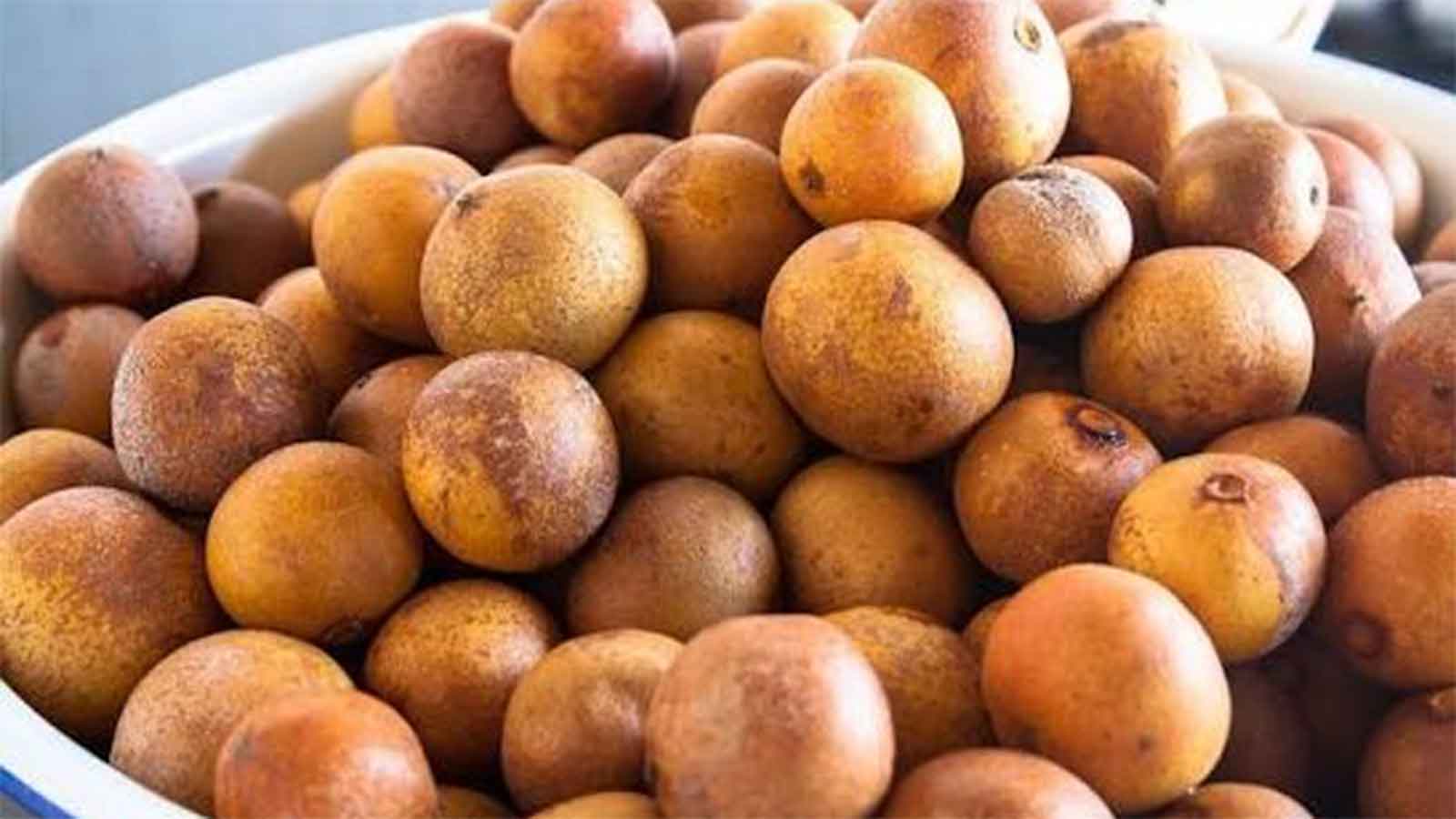
Trade Focus
Allan Majuru
ZIMBABWE’S strongest export opportunities will come from products rooted in what the country already possesses, understands and produces.
Competing successfully in international markets is not always about producing what everyone else produces.
In many cases, the most competitive export sectors are built around resources, knowledge and production systems that other countries cannot easily replicate.
This places heritage-based products among Zimbabwe’s most promising export opportunities.
Indigenous fruits, traditional grains, natural oils, herbs, vegetables and other products that have sustained communities for generations can become important sources of export earnings, rural incomes and industrial development.
This approach is consistent with President Mnangagwa’s development agenda, which places emphasis on heritage, innovation, value addition, rural industrialisation and leveraging local resources to build an empowered upper middle-income economy.
The National Development Strategy 2 (NDS2) further prioritises export diversification, competitive value-added production and stronger participation in regional and global value chains. There is an opportunity, therefore, to place heritage-based products more deliberately within Zimbabwe’s economic diplomacy agenda.
The Ministry of Foreign Affairs and International Trade, working together with ZimTrade and the country’s diplomatic missions, can help build visibility for these products and identify commercial opportunities in markets where demand for natural, authentic and sustainably produced goods is growing.
Doing so will ensure that Zimbabwe’s diplomatic presence abroad increasingly carries products and brands that tell a distinctly Zimbabwean story.
So, there is need for deliberate interventions and support to unlock the potential.
Why heritage-based products?
Zimbabwe has, for example, baobab, marula, zumbani, mufandichimuka, nyimo, traditional small grains, indigenous vegetables, natural honey and several other products whose commercial value remains largely untapped.
These are not products that Zimbabwe must first invent.
These products already exist, are adapted to local conditions and are supported by knowledge passed from one generation to another.
The opportunity is to move them from informal and subsistence markets into organised, researched, certified and branded export value chains.
This is particularly important at a time when global demand is shifting towards natural foods, plant-based ingredients, functional nutrition, clean-label products and sustainably sourced commodities. In such a market, Zimbabwe’s heritage is a cultural asset and a commercial advantage. So, there is need for deliberate interventions and support to unlock the potential.
NDS2 notes that more than 70 percent of agricultural output has continued to be sold in raw form.
It also shows that exports of value-added agricultural products increased from US$74 million in 2022 to about US$106 million in 2023.
This is encouraging, but it points to the room that still exists for Zimbabwe to earn more from what it produces.
Heritage-based exports should become a pillar of Zimbabwe’s export diversification strategy, alongside mining, horticulture, tobacco and manufactured products.
The issue is not that Zimbabwe should move away from established exports.
Rather, it must grow new export lines and retain more value before products cross the border.
Taping into the wave of superfoods
Consumers across the world are paying closer attention to nutrition, natural ingredients, sustainability, traceability and the cultural origin of food.
Although “superfood” is a marketing description rather than a formal scientific classification, it has become an important commercial category for nutrient-dense products.
Grand View Research estimated the global superfoods market at US$193,3 billion in 2024 and projects it to reach US$276,5 billion by 2030.
Growth is being driven by health-conscious consumers and wider use of nutritious natural ingredients in foods, beverages, cosmetics and wellness products. This places Zimbabwe in a favourable position because many heritage foods already possess the qualities global consumers are seeking. For example, baobab is one of the clearest examples.
Scientific studies have reported vitamin C levels in baobab pulp ranging from about 126 milligrammes to more than 500 milligrammes per 100 grammes, depending on origin, variety and testing methods.
Raw commercial oranges, by comparison, contain about 53 milligrammes per 100 grammes.
Even at the lower end of the reported baobab range, the fruit can provide more than twice the vitamin C found in oranges.
Baobab pulp is also recognised as a source of fibre, calcium, potassium and antioxidant compounds.
Marula presents similar possibilities.
Some studies report between 54 and 194 milligrammes of vitamin C per 100 grammes of marula pulp, in addition to minerals such as calcium, iron and zinc.
Other studies have recorded even higher levels, demonstrating why Zimbabwe must conduct its own testing across different production areas.
Small grains also deserve greater export attention.
The Food and Agriculture Organisation of the United Nations reports that some finger millet varieties contain between 294 and 390 milligrammes of calcium per 100 grammes.
Finger millet is naturally gluten-free and contains fibre and phenolic compounds, creating opportunities in breakfast foods, baking mixes, snacks and specialised health-food markets.
These figures show that the solution for Zimbabwe is not to sell tradition only, but also nutritional value supported by science.
Zimbabwe’s advantage cannot be copied overnight.
The nutritional case leads to an equally important trade argument; that is, heritage products give Zimbabwe a comparative advantage that is difficult to reproduce.
For example, baobab is a drought-resistant wild fruit tree adapted to the arid and semi-arid areas of Sub-Saharan Africa.
Mature trees in nature produce fruits under low-input conditions and are not dependent on irrigation and routine agrochemical applications in the same way as conventional commercial orchards.
Other countries can import seed and establish plantations, but they cannot immediately reproduce Zimbabwe’s mature trees, climatic suitability, biodiversity and community knowledge.
That natural advantage must now be strengthened through research, processing, certification and a protected Zimbabwean identity.
This is an advantage that nature has given Africa and Zimbabwe in particular.
However, the resource is not unlimited.
Commercialisation must be accompanied by regeneration, sustainable harvesting, community ownership and biodiversity protection.
The strongest heritage export sector will be one that rewards communities for conserving the trees and landscapes from which the products come. The advantage, therefore, is not simply possession of baobab or marula.
It also lies in combining the resource with knowledge, research, processing, certification and a protected Zimbabwean identity.
This is where lessons from other countries become useful.
Lessons
South Africa has demonstrated what can be achieved through rooibos.
Rather than allowing it to remain an anonymous herbal commodity, the country built quality systems, protected its origin and promoted it internationally.
Rooibos is sold in more than 50 countries, and the industry produces over 20 000 tonnes in an average year, roughly half for export, and supports thousands of jobs.
It also became the first African food to obtain Protected Designation of Origin status in the European Union.
The major lesson is that value is not only in the tea, but also in the name, origin, standards and story attached to it.
New Zealand followed a related route with mānuka honey.
As international demand grew, the government worked with industry and scientists to develop a formal scientific definition and testing requirements for exported mānuka honey.
Morocco’s argan oil offers perhaps the closest lesson for Zimbabwe’s rural communities.
Traditional knowledge held by women was linked to cooperatives, improved processing, traceability, food-safety standards and geographical-indication protection.
This helped argan oil move into higher-value culinary and cosmetic markets.
It also shows that modern standards do not have to displace traditional knowledge.
When properly designed, standards can protect that knowledge and create stronger market access for the communities that hold it.
The message from these cases is straightforward.
Natural inheritance creates an opportunity, but premium returns come when a country defines the product, proves its qualities, protects its identity and organises its producers.
This also puts an argument on why heritage-based products will make it easy to integrate rural communities into the mainstream export business.
The quickest route to rural participation
This model is particularly relevant to Zimbabwe because heritage-based products offer a practical route for bringing rural communities into mainstream exports.
Communities know where trees grow, when fruits mature, which varieties are preferred and how products are stored or processed.
This knowledge is an existing form of capital.
Women are often central to harvesting and preservation.
Young people can bring digital marketing, design and modern processing.
Universities can provide testing and product development, while exporters supply market intelligence, certification and distribution.
The task is not to turn every collector into an individual exporter.
It is to build organised value chains in which communities become reliable and rewarded suppliers.
The good thing is that Zimbabwe is not starting from zero.
For example, national trade development and promotion organisation ZimTrade’s cluster development work provides a practical foundation on which a larger heritage-based export programme can be built.
Through its Export Cluster Development Programme, ZimTrade has been organising small producers into coordinated groups capable of aggregating volumes, improving consistency, meeting standards and engaging formal buyers.
The next stage should be to scale these interventions from individual projects into a connected national system.
For example, a successful baobab cluster in Mudzi should not remain an isolated example.
Similar models can be established around marula in Matabeleland South; masau in Mashonaland Central; honey in Manicaland; traditional grains in Masvingo and Midlands; and indigenous vegetables across the country.
Each cluster must be linked to a dependable commercial chain consisting of researchers, laboratories, processors, packaging companies, financial institutions, logistics providers and identified buyers.
The cluster should be the point at which rural production enters the formal export economy.
Turning potential into a national export programme
For this opportunity to reach scale, Zimbabwe requires a coordinated national approach.
The starting point should be a National Heritage-Based Export Strategy that identifies priority products by province and district.
The country must establish where the resources are, the quantities that can be harvested sustainably, the communities involved and the most promising uses in food, beverages, cosmetics and natural ingredients.
Mapping must be followed by research and development.
Universities, innovation hubs and research centres should identify the nutrients, oils, flavours, bioactive compounds and industrial properties contained in each product.
Zimbabwe requires its own food-composition and natural-products database.
Exporters should not depend entirely on findings from samples tested elsewhere.
The results should also identify differences among varieties, harvesting periods and processing methods.
Research must then become commercial products.
Linkages between learning institutions and producers should result in export-ready heritage-based products.
This is where Heritage-Based Education 5.0 must become visible in factories, brands and export orders rather than ending with academic reports.
Shared facilities will be required for drying, milling, cold pressing, extraction, grading, testing and packaging.
Locating them close to producing communities will lower transport costs, improve quality and retain more value in rural districts.
Zimbabwe must also protect the names and knowledge associated with these products.
Geographical indications, collective trademarks, community protocols and benefit-sharing arrangements can prevent local heritage from becoming a cheap input for foreign brands.
Communities that conserved the resources and knowledge must receive a fair share of the value created.
The final requirement is a sustained global marketing campaign.
Zimbabwean heritage products should be positioned where nutrition, culture, sustainability and international trade meet.
Trade missions, embassies, tourism operators, chefs, retailers and the diaspora should carry one coherent national message.
Zimbabwe must be present at specialised natural-products, food-ingredient, cosmetics and wellness exhibitions, supported by scientific data, attractive packaging, traceability and a clear story of origin.
Allan Majuru is the chief executive officer of ZimTrade.