Online Reporter
Development and progress being made under President Mnangagwa has now ceased to be merely a matter of domestic political argument, but has begun to acquire external validation.
For years, the country’s economic story was dominated by words such as hyperinflation, currency instability, debt distress, arrears, policy uncertainty, isolation and fragility.
Zimbabwe became a familiar example in international economic discussions of what could go wrong when monetary instability, fiscal pressures, institutional weaknesses and external shocks combine.
But today, everyone is using a different vocabulary when it comes to describing the country’s massive progress under the Second Republic.
International institutions and financial organisations are now acknowledging Zimbabwe’s macroeconomic stabilisation, stronger growth, improving currency conditions, declining inflation and renewed economic momentum.
Citigroup, the leading global bank for institutions with cross-border needs and a global provider in wealth management, recently described the turnaround as happening faster than many people realise.
The World Bank last week exited Zimbabwe from the list of fragile economies.
Passing the World Bank’s Country Policy and Institutional Assessment (CPIA) benchmark served as a global vote of confidence, validating the country’s administrative and fiscal capacity.
The World Bank also reported that tighter monetary policy helped improve inflation dynamics and stabilise the Zimbabwe Gold (ZiG) currency.
The International Monetary Fund has reported that Zimbabwe’s 2025 recovery was stronger than anticipated and that its 2026 Staff-Monitored Programme was broadly on track at the first review.
These are not insignificant observations.
They matter because international institutions do not normally rewrite their assessments of a country simply because of political speeches.
Their assessments are based on economic indicators, policy implementation, fiscal and monetary developments, foreign-exchange conditions, production statistics and institutional performance.
And this is where the significance of Zimbabwe’s recent trajectory becomes difficult to ignore for everyone.
Since the advent of the Second Republic under President Mnangagwa, the country has been pursuing a development strategy centred on macroeconomic stabilisation, infrastructure development, investment attraction, mining expansion, agricultural recovery, industrialisation, value addition and re-engagement with the international community.
The development strategy should be measured not only by where the Second Republic wants to take the country to, but also by how far it has travelled.
And by that measure, Zimbabwe has travelled considerably.
President Mnangagwa deserves credit for providing the overarching direction of the Second Republic and for maintaining the emphasis on economic stabilisation, investment, re-engagement and development.
The recent international assessments give substance to the argument that the policy direction has produced measurable gains.
From fragile-state label to resilience
Zimbabwe’s changing of position within the World Bank’s framework on fragility deserves careful consideration.
For years, the country appeared on the World Bank’s Harmonised List of Fragile Situations, but in July this year, the bank removed the country from that list.
Zimbabwe’s progress in macroeconomic stability, economic activity and resilience must, therefore, be viewed as part of a longer transition away from the crisis conditions that once defined the country’s international economic image.
The real achievement is not escaping the label, it is on how the economic fundamentals that produced the label in the first place have been totally reversed by the Second Republic.
That is precisely why Zimbabwe’s economic performance under President Mnangagwa deserves attention.
Citi sees a turnaround that is happening faster
Perhaps one of the most striking recent assessments came from Citi, which noted this month that Zimbabwe’s economic turnaround since 2025 has been happening faster than many realise.
That assessment from the financial group is significant for a simple reason.
Citi is not a political organisation seeking to defend the Zimbabwean Government – it is one of the world’s major financial institutions, whose analysts are concerned with economic performance, markets, investment risks and financial returns.
Citi’s assessment suggests that the narrative for Zimbabwe is now fast changing and the significance of that observation goes beyond public relations.
A country perceived as unstable attracts fewer long-term investors, while that perceived as stabilising can begin to attract investors willing to make longer-term commitments.
That is why international perceptions matter to development.
Investment decisions are made not only on the basis of mineral deposits, factories or markets, they are also made on perceptions of currency risk, inflation, policy consistency, fiscal discipline and the credibility of economic management.
The IMF endorsement
The IMF provides another important measure of Zimbabwe’s changing economic circumstances under President Mnangagwa.
In July this year, the institution’s staff reached agreement with Zimbabwe on the first review under the country’s 10-month Staff-Monitored Programme.
The IMF reported that programme implementation through March 2026 was broadly satisfactory, with all quantitative targets met and most indicative targets observed.
This is important because Zimbabwe’s relationship with the IMF has historically been complicated by debt arrears, economic instability and questions surrounding policy credibility.
The IMF now reports that Zimbabwe’s economy grew by 8,3 percent in 2025 and that growth was continuing in early 2026, supported by agriculture, mining and favourable gold prices.
It projects growth of about 5 percent this year, slowed down by the envisaged El Nino conditions that are expected to result in drought.
An economy does not move from hyperinflationary conditions to low single-digit inflation overnight. It requires difficult policy decisions.
The IMF specifically points to the role of tight monetary policy and the Reserve Bank of Zimbabwe’s efforts to contain inflation and reduce pressure on the foreign-exchange market.
It also notes the cessation of monetary financing and the stabilisation of the exchange rate.
This is where the Second Republic’s economic policy choices deserve recognition.
Currency stability: the most visible sign of economic normalisation
For ordinary citizens, macroeconomic stability is not an abstract concept, it is whether prices remain predictable and whether a salary retains its value from one month to the next.
It is whether a business can price goods without constantly recalculating replacement costs and whether an importer knows approximately how much foreign currency will cost tomorrow.
Farmers are happy if they can plan, and a manufacturer gets down to the real business of producing goods if they can prepare a production budget.
In that sense, currency stability is one of the most important achievements of the current economic programme being implemented by the Government.
After experiencing multiple episodes of extreme inflation and repeated currency disruptions, the introduction of the ZiG in 2024 was itself a response to the need for a more credible monetary framework.
What matters is what followed this bold launch of the ZiG.
Tighter monetary policy, reduced central-bank financing and stricter control of domestic liquidity helped stabilise the exchange rate and bring inflation sharply down.
The annual inflation rate fell sharply into single digits, dropping from 15 percent in December 2025 to a historic low of 2,9 percent by August 2026
That is an extraordinary change and is precisely the type of change that can create the foundation for development.
Falling inflation changes the development equation
Inflation is sometimes discussed as a technical economic indicator, but for households it is about survival and planning.
For companies, it is about investment, while for Government it is about budgeting. Pensioners view inflation in terms of purchasing power, while for workers it is about whether wage increases actually improve living standards.
Therefore, when the World Bank says Zimbabwe’s tight monetary policy has improved inflation dynamics and the IMF says inflation has remained low amid relative exchange-rate stability, these observations have significance far beyond monetary policy.
Low and stable inflation creates the conditions under which economic actors can plan.
While roads, bridges, power stations and factories are visible infrastructure, a stable monetary environment is equally important economic infrastructure.
Without it, physical investment becomes more expensive and risky.
Mining: from extraction to an engine of foreign-exchange generation
The mining sector provides another major reason for optimism for Zimbabwe.
Mineral exports reached approximately US$3,4 billion in 2025, up from US$2,9 billion in 2024.
But the broader IMF data tell an even more compelling story.
The IMF reports that Zimbabwe’s merchandise exports increased by 31,3 percent to US$10,2 billion in 2025, from US$7,8 billion in 2024.
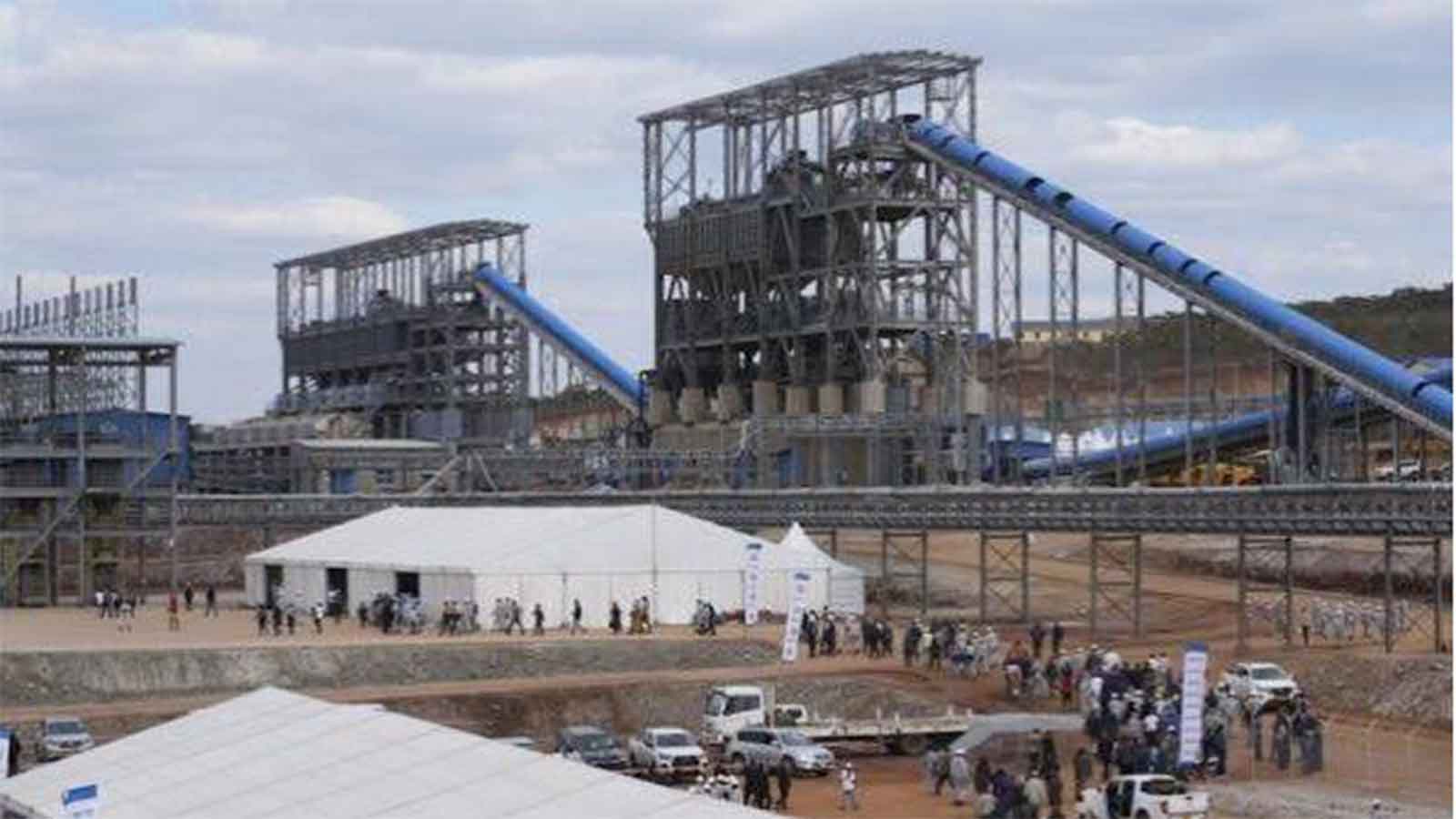
Mineral exports rose by 39,4 percent to US$8,2 billion, while gold exports increased by 67,7 percent to US$4,2 billion.
Platinum-group-metal exports increased by 23,8 percent to US$1,88 billion, while lithium exports increased by 19,4 percent to US$642,8 million.
These are not merely mining statistics, they are development statistics.
Every additional dollar generated through legitimate exports can contribute to foreign-exchange availability, fiscal revenues, investment and economic activity.
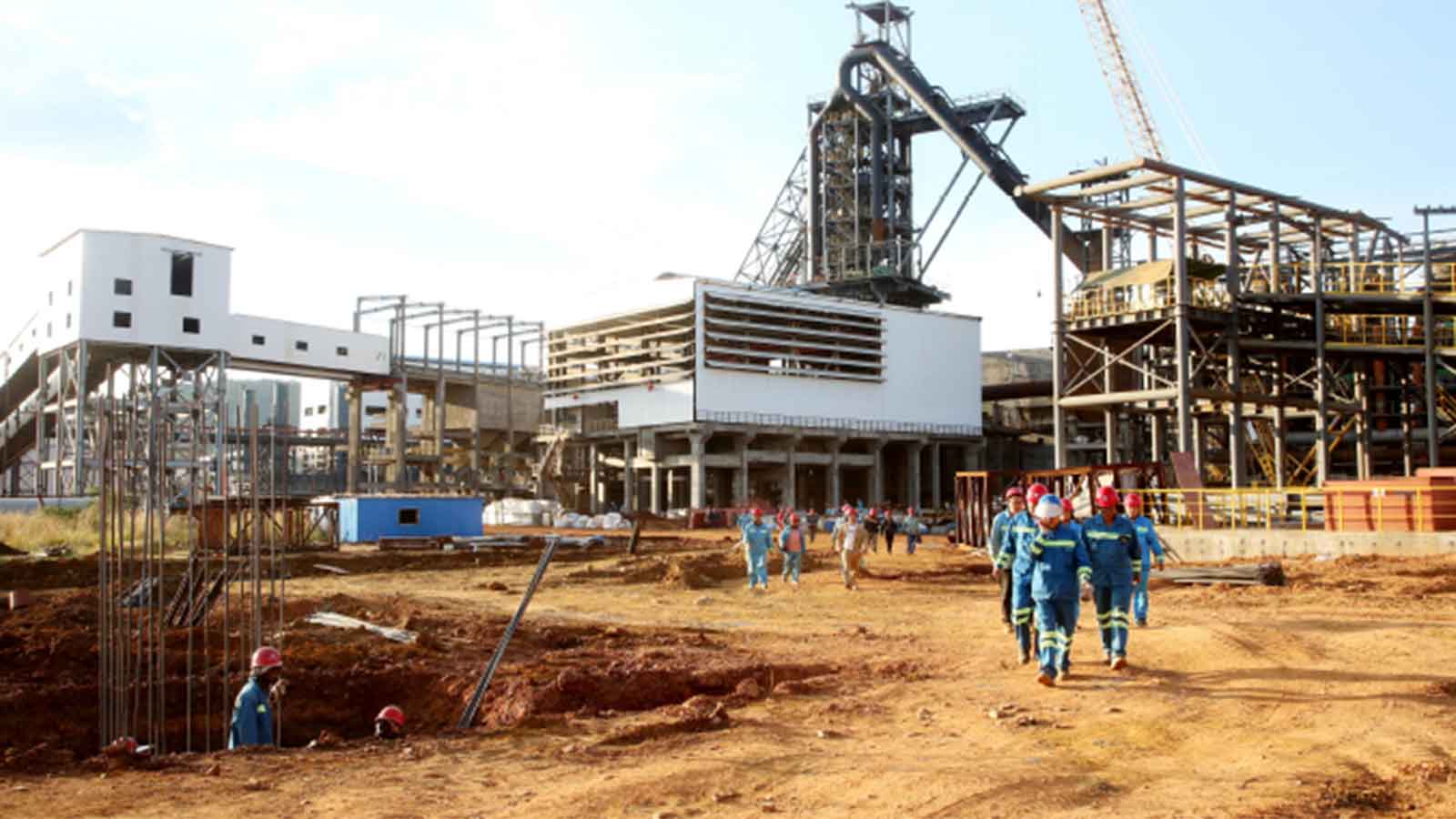
Gold, platinum, lithium, chrome and other minerals have become central to Zimbabwe’s development prospects.
The lithium story is particularly important because it illustrates how Zimbabwe can participate in the global energy transition.
The next challenge, which the Second Republic under directive from President Mnangagwa has to deal with is not simply to produce more minerals.
It is to capture more value from them though beneficiation and value-addition policies.
The country cannot permanently remain an exporter of raw materials while importing finished products made from those same resources.
The long-term development objective aims to transform mineral wealth into industrial capacity.
Lithium should eventually support chemical processing and battery-material industries, while platinum should support downstream industrialisation.
Chrome should support ferrochrome and stainless-steel value chains, with gold strengthening the financial and reserve architecture of the economy.
Mining is becoming a bridge from natural-resource wealth to industrial development.
The Second Republic and the development agenda
The question naturally arises: how should these developments be politically and economically interpreted?
The answer lies in the policy direction established under President Mnangagwa’s Second Republic.
Since 2017, President Mnangagwa has consistently presented the economic programme around modernisation, industrialisation, investment attraction, infrastructure development, re-engagement and the attainment of an upper-middle-income economy by 2030.
The launch of the National Development Strategy 1 and subsequently National Development Strategy 2 (NDS2) provided the policy framework for that ambition.
The significance of the Second Republic is not simply that certain economic indicators have improved, it is that Government has moved the economy from crisis management towards development management.
There is an important distinction.
Crisis management asks: How do we survive the next economic shock?, while development management asks: How do we build an economy capable of absorbing shocks while creating jobs, industries and prosperity?
The Second Republic is answering the second question with distinction.
Lovemore Chikova is the Deputy Editor of The Sunday Mail with interests in development, strategic communication and the media