Lloyd Makonya
Correspondent
AS the country advances its Vision 2030 ambitions, harnessing indigenous knowledge, cultural heritage and intellectual property can unlock new business opportunities, create jobs and strengthen Zimbabwe’s competitiveness in regional markets.
Zimbabwe’s rich cultural heritage is increasingly presenting opportunities beyond historical preservation, with the potential to become a productive asset in the country’s economic transformation, industrialisation and job creation agenda.
The country possesses a wealth of resources that can support new enterprises, expand exports and improve livelihoods, particularly among women and young people.
The opportunity resonates with Zimbabwe’s broader development philosophy, which places emphasis on harnessing indigenous resources, building local capacity and ensuring that citizens actively participate in the country’s economic transformation.
Under the mantra: “Nyika inovakwa nevene vayo”, President Emmerson Mnangagwa has consistently emphasised the importance of home-grown solutions, domestic resource mobilisation and the productive use of the country’s natural and human resources.
This philosophy is closely linked to the Heritage-Based Development approach, which recognises that Zimbabwe’s history, cultural identity, indigenous knowledge systems and accumulated experiences can provide a foundation for modern innovation and economic development.
It is a development perspective that looks beyond the preservation of the past to explore how inherited knowledge and resources can be applied to address contemporary economic challenges.
The President has previously highlighted the importance of integrating Zimbabwe’s heritage with science, technology and innovation, particularly through the Heritage-Based Education 5.0 model, which seeks to produce graduates capable of creating goods and services rather than relying solely on conventional academic qualifications.
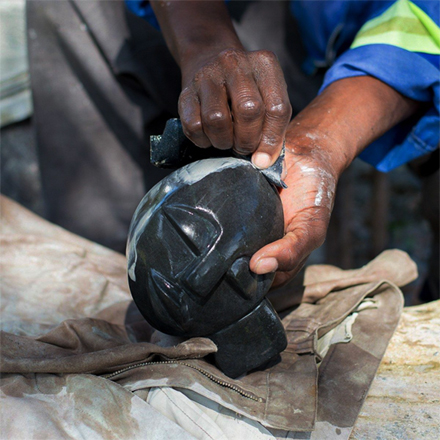
The model’s emphasis on teaching, research, community engagement, innovation and industrialisation provides an important link between education, indigenous knowledge and productive economic activity. In practical terms, this means that traditional knowledge, local materials, artistic skills and cultural practices can become starting points for research, product development, entrepreneurship and industrial production.
The economic argument is therefore, not simply about preserving Zimbabwean identity, but ensuring that the knowledge, skills and resources embedded in that identity contribute to national productivity.
This opportunity comes into sharper focus following Zimbabwe’s hosting of the 25th Common Market for Eastern and Southern Africa (COMESA) Summit in Harare on October 22, which brought regional economic integration, investment and industrialisation into focus.
Held under the theme: “One Market, One Future: Advancing Inclusive Industrialisation, Investment and Regional Integration in COMESA”, the summit provided a platform for discussions on strengthening regional value chains, investment and cross-border trade.
For Zimbabwe, these ambitions present an opportunity to look beyond conventional exports and explore how cultural and creative products can also participate in regional and international markets.
The country’s cultural products, artistic works, designs and creative services can contribute to this wider economic agenda if they are properly developed, protected and marketed.
Indeed, the global creative economy is becoming an increasingly important component of international trade. According to the United Nations Conference on Trade and Development (UNCTAD), global exports of creative services reached US$1.4 trillion in 2022, representing a 29 percent increase from 2017. Exports of creative goods reached US$713 billion during the same period.
These figures demonstrate that creativity is no longer simply a cultural pursuit, but an increasingly important economic activity.
Zimbabwe has considerable potential to participate in this growing market, drawing on its established cultural identity and the entrepreneurial capabilities of its people.
However, translating this potential into measurable economic returns requires more than the availability of cultural resources. It requires deliberate investment in production, business development, intellectual property protection, financing and access to markets. The opportunity also aligns with the country’s National Development Strategy 2 (2026–2030), which seeks to advance economic diversification, value addition, innovation, entrepreneurship and job creation as part of the journey towards an empowered and prosperous upper-middle-income society by 2030.
The strategy’s emphasis on science, technology, innovation, youth entrepreneurship and the development of creative and cultural industries provides an important policy foundation for unlocking the economic potential of heritage-based enterprises. At continental level, the African Union’s Agenda 2063 similarly recognises the importance of cultural identity, common heritage and shared values in building a prosperous and integrated Africa.
Aspiration Five envisages an Africa with a strong cultural identity, common heritage and shared values, while the continent’s development ambitions also recognise the role of creative arts in economic transformation. For Zimbabwe, these commitments provide an opportunity to position its cultural heritage within the broader industrialisation and economic diversification agenda.
Zimbabwe’s cultural heritage, therefore, should not be viewed merely as a record of where the country has come from, but also as a resource for determining where it is going. As the country advances its Vision 2030 ambitions and deepens its participation in regional markets, the challenge is to transform indigenous knowledge and cultural wealth into competitive products, sustainable businesses and decent employment.
The ultimate measure of heritage-based development will not only be how well Zimbabwe preserves its past, but how effectively it converts the knowledge, creativity and resources of its people into opportunities for present and future generations.
Heritage economy: Zimbabwe’s next frontier for growth