Online Reporter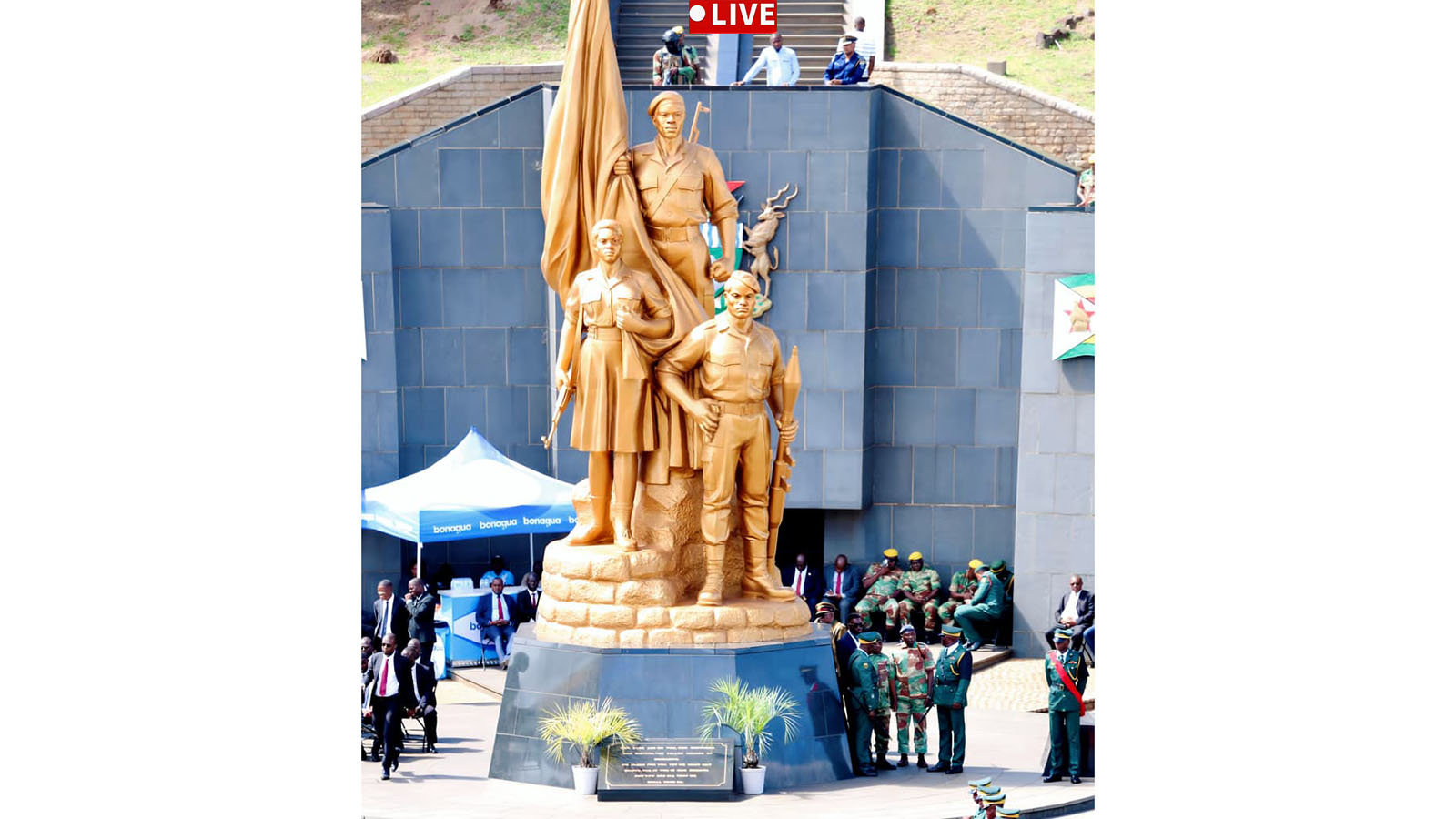
Gibson Mhaka
Zimpapers Politics Hub
EVERY year, Zimbabwe pauses to commemorate Heroes Day, a solemn occasion dedicated to remembering the men and women whose sacrifices secured the country’s independence.
Across the nation, flags fly at half-mast, wreaths are laid at the National Heroes Acre and provincial shrines, and stories of courage, resilience and patriotism are retold to a new generation.
The day remains one of the country’s most important national commemorations because it reminds Zimbabweans that freedom was neither accidental nor free.
It was won through immense sacrifice by thousands of sons and daughters who chose the difficult path of armed struggle over submission to colonial rule.
Yet, while the nation rightly honours those who made the ultimate sacrifice and those whose earthly journeys have come to an end, Heroes Day also presents an opportunity to reflect on another important constituency, the living heroes whose contributions to Zimbabwe’s liberation and nation-building continue long after the guns fell silent in 1980.
The liberation struggle did not simply produce heroes for history books. It produced men and women who survived the war and returned to build schools, establish Government institutions, strengthen communities, mentor younger generations and safeguard the ideals for which independence was won.
Their stories remain living chapters of Zimbabwe’s national narrative.
Indeed, one of the greatest advantages of having living liberation veterans is that they provide a direct bridge between the country’s past and its future.
Unlike history preserved solely in archives, textbooks or museums, living heroes offer first-hand testimony of the sacrifices that birthed modern Zimbabwe.
They provide context that no written document can fully capture.
As time inevitably advances, the number of those who directly participated in the liberation struggle continues to diminish.
That reality places an even greater responsibility on the nation to engage them while their experiences, wisdom and institutional memory remain accessible.
Heroes Day, therefore, should not only be viewed as a day of remembrance but also as an occasion to celebrate continuity.
Recognising living heroes does not diminish the sacred status accorded to departed national heroes.
Rather, it complements that recognition by acknowledging that the values of patriotism, sacrifice and national service did not end at Independence but continue to find expression through those who remain active in national development.
Many liberation war veterans continue to play important roles in community development, youth mentorship, agriculture, local governance, environmental conservation and peace-building initiatives.
Others devote their time to documenting liberation history, ensuring that future generations understand both the costs and responsibilities of sovereignty.
Their contribution has evolved from fighting for independence to helping consolidate it.
This transformation reflects an important truth about heroism.
Heroism is not confined to the battlefield.
While the liberation struggle remains Zimbabwe’s defining chapter, nation-building is itself an ongoing patriotic responsibility.
The schools that educate future generations, the roads that connect communities, the hospitals that save lives, the farms that feed the nation, the security institutions that safeguard sovereignty and the public servants who uphold constitutional governance all contribute to strengthening the independence that was won through sacrifice.
Heroes Day, therefore, offers an opportunity to appreciate not only those who liberated the country but also those who continue preserving and advancing its founding ideals.
The younger generation, many of whom were born decades after independence, stand to benefit immensely from closer interaction with living heroes.
Today’s youth understand the liberation struggle largely through classroom instruction, documentaries and commemorative speeches.
While these remain invaluable educational tools, they cannot substitute the impact of listening directly to individuals who crossed rivers under enemy fire, survived detention camps, organised underground political structures or sacrificed years of their lives in pursuit of national freedom.
Such engagements transform history from abstract dates into lived human experience.
They also reinforce patriotism at a time when societies across the world increasingly recognise the importance of preserving national memory.
Countries that successfully safeguard their history often do so by ensuring that veterans remain active participants in national life rather than becoming distant historical figures.
Zimbabwe possesses a similar opportunity.
The liberation struggle is one of the country’s defining national assets. Preserving its history requires more than annual commemorations. It demands sustained interaction between generations.
That is why initiatives involving war veterans in schools, universities, community dialogues and national development programmes continue to carry strategic value.
They ensure that the liberation ethos is transmitted through authentic voices rather than becoming diluted over time.
Equally important is recognising that national service extends beyond the liberation generation.
Heroes Day should inspire all Zimbabweans to embrace the spirit of selfless service in whatever sphere they occupy.
Teachers shaping future leaders, healthcare professionals serving remote communities, scientists developing local innovations, farmers enhancing food security, members of the uniformed services protecting national sovereignty, entrepreneurs creating employment and artists preserving Zimbabwean culture all contribute to the broader national project.
Their work demonstrates that patriotism is expressed not only during periods of conflict but also through everyday dedication to national development.
This broader understanding strengthens social cohesion because it reminds citizens that building Zimbabwe remains a collective responsibility.
Recognition, however, should always be grounded in genuine national service, sacrifice and measurable contribution to society.
The integrity of Zimbabwe’s honours system depends on ensuring that heroism continues to reflect exceptional commitment to the nation rather than popularity or personal prominence.
Maintaining that standard preserves the dignity attached to Heroes Day and reinforces public confidence in national institutions.
The significance of recognising living heroes also extends to national reconciliation and historical preservation.
Many liberation veterans possess unique knowledge of historical events, military operations and community experiences that have never been comprehensively documented.
Encouraging them to record memoirs, participate in oral history projects and contribute to educational programmes ensures that valuable national knowledge is preserved before it is lost to time.
History becomes richer when those who lived it are afforded opportunities to tell it.
In many respects, Heroes Day is not simply about looking backwards.
It is equally about charting the nation’s future.
The values celebrated during the commemorations, patriotism, unity, resilience, courage, sacrifice and national service, remain as relevant today as they were during the liberation struggle.
Modern challenges may differ from those faced during colonial rule, but the commitment required to overcome them remains fundamentally the same.
Economic transformation, technological innovation, climate resilience, food security, infrastructure development and social cohesion all require citizens willing to place national interest above personal convenience.
In that regard, living heroes become more than custodians of history.
They become mentors for future generations.
Their experiences demonstrate that enduring national progress is built through discipline, perseverance and unwavering commitment to a common purpose.
Their continued presence provides Zimbabwe with an invaluable reservoir of experience capable of inspiring future leaders and strengthening national identity.
As Zimbabwe prepares once again to commemorate Heroes Day, the nation will rightly honour those who paid the ultimate price for freedom and those whose distinguished service earned them a place among the country’s immortal heroes.
At the same time, the occasion offers an opportunity to celebrate the living custodians of that liberation legacy, men and women who continue to embody the values upon which modern Zimbabwe was founded.
Honouring the fallen and valuing the living are not competing ideals.
They are complementary responsibilities.
One preserves memory.
The other preserves wisdom.
Together, they ensure that the sacrifices of yesterday continue to inspire the achievements of tomorrow, strengthening national unity and safeguarding the enduring legacy of Zimbabwe’s liberation struggle for generations to come.