admin
admin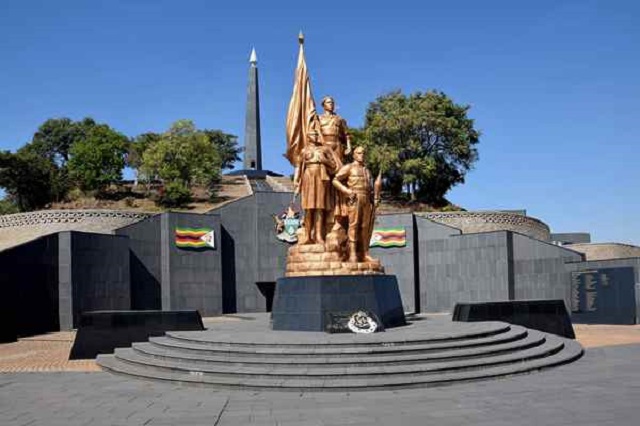
Micheal Mhlanga
Like any other August past and vanished, we have celebrated one of the most important days of our lives. Tightly attached to 18 April, Heroes Day emblems the scent of liberation, freedom; with a combination of sorrow and national introspection we remember those young people who gave up their studies and family to martyr themselves for us only to celebrate an uncontrolled breath of liberty.
Some of them, we have no idea of their names except their kith and kin who shed a tear or two on that day when we mention the tomb of the unknown soldier, knowing pretty well that the un-chanted names are of their sons and daughters, no one has profiled or even remembers.
Documentaries narrate ordeals and the names usually uttered are of those who are remembered. I try to imagine the grief grandmothers, fathers and sometimes children who wish one interviewee would share battle moments with about one of theirs, but I doubt if I can fathom the burning and bruising pain they endure yearly when none mentions that son, daughter, niece and nephew they saw leaving the homestead, convinced that his actions will one day be witnessed and service the interest of his conviction. Many died. Many lost. Many are in gruesome pain all for this land. They are those we celebrate and thank in memory every August on that “dreadful and confusing” day we call Heroes Day.
You may be wondering why I said “dreadful and confusing”, it is because I have never finally concluded if we have to bewail or celebrate or at least venerate that day. In our jubilation, remember, many are in grief. In our thanksgiving, throngs are profusely sobbing. They blame the struggle for swallowing their loved ones. They are orphans, widows and childless all because of the belief their loved ones had: They believed in freeing Zimbabwe — Zimbabwe is now free — then what?
“What?” is the big question in their minds and hearts, when others are remembered by their names and others still alive, “what” of theirs? Should we then celebrate or mourn? Of course we celebrate 18 April, but on Heroes Day what should we do when we remember the gallant sons and daughters. I feel more should be done for and on that day. The day in itself is not enough. Yes, it marks our national memory but it still does not zoom in to the bereaved families who grieve in silence, bitter, cursing (perhaps) only wishing just for the mention of their one and only daughter’s name. Literature has a lot to uncover in that aspect — probably we need the names of the “unknown soldier” — for the matter of interest, a name gives life to the imagination and memory, it is a sign of dignifying the humanness in a person and having the name soothes the pained heart and the unsettled memories of those remaining.
Heroes debate continues . . .
I fear straying from my intended idea this week —Heroes Day: Let’s start creating others. As I wrote last week about the (un)making of heroes, I discovered that this is a lengthy discussion we might have so I shall try to be as brief as possible and articulate my ideas as they are — raw.
Let me remind my faithful readers that the space does not make one a hero, it’s what you have been doing, continue and die doing which impacts the society such that we feel influenced by your actions and vow to protect and defend your legacy and name. However, straying does not eliminate your history; it massively denounces you from being quickly remembered and having a powerful impact in our lives.
I shall again remind you that the National Heroes Acre is a sanctified space, reserved for the brave women and men who played a decisive role in liberating and defending those gains until they gasped — so do not assume the propensity of the absurd when you cease to exist, demanding that you be laid to rest among those loyal to “gwara reZimbahwe” we do not want to be selective when describing that space — spare us the frost.
The big task ahead
Here I am today, reflecting on this year’s Heroes Day. I thought to myself how it should be different from any other I have witnessed as a toddler, a child, teenager and now a young adult. In that soliloquy, I was convinced that our Heroes Day remembers the fallen ones from the Second Umvukela/Chimurenga. I then asked myself if the Umvukela/Chimurenga ended and I discovered that we would be lying to ourselves if we think we won the war — what we won was a battle — a battle of Black man leadership — with much more battles yet to be fought.
It is evident of the Third Umvukela/Chimurenga, another battle we won with repossession of our land. Ignore the criticism, focus on the principle behind it and the normative it achieved — we won that Umvukela/Chimurenga we have land now.
Be that as it may, it was led by survivors of the Second Umvukela/Chimurenga with those who were still teething in the 2nd battle becoming sponsored critics of it, sadly, being used is being abused — they were enemies of progress like some of the men spoken of in history who after enjoying the white man’s coffee decided to take peanut treaty and were easily disposed by the same white man, Some of them “vakatongwa nevanhu” (judged by the masses), through the ballot box of course. The sequence of our battles lost and won affirmed that we have Imvukela/Zvimurenga — a multiplicity of battles for liberations.
Be that as it may, today we face the Fourth Umvukela/Chimurenga — the battle of knowledge, commerce, religion and culture. Our liberation from the white man in 1980 is arguably an administrative emancipation where we expelled all white systems of national administration and its follies. We succeeded in de-constructing a management hegemony which created racial socialisation which was premised on Black subjectivity and submissiveness. It is the Black administrators who today have repeatedly chanted a total emancipation from all forms of “whiteness” but to no avail from the subjects of this clarion call.
Us, the liberated have been pilgrims of white monopoly in all our systems and behaviours. We are still religious to ordinances of white knowledge, culture, religion and commerce. At one point I wrote about the hegemony and racism of knowledge — how our institutions of higher learning are distant learning fraternities of Harvard and how complicit and complacent we are to that battle. Well, this is not the article to remind you of that, but my argument is that we have young people who are now fighting that battle and they will win — just like those who fought in the Second and Third Umvukela/Chimurenga.
I strongly believe that they are all heroes worth a mention in the placards of our beautiful nation. I am also convinced that everyone who contributes immensely to any of our Imvukela/Zvimurenga is a hero and one day in our Heroes day memoir we shall mention and document them.
With the current battle undergoing, this year’s Heroes Day, to me and believably, to all of us marked the need to create and remind ourselves that there are more heroes to emerge. At one point, later in life we shall ask ourselves: The champions of the 2nd battle are remembered, what of those who sacrificed their lives in the Third and Fourth Umvukela/Chimurenga, where are their graves, who are they and when do we mourn or commemorate them? This is the truth and everyone, regardless of your political affiliation will ask themselves and our children will demand answers we cannot give — how shaming it will be.
In our quest to build Zimbabwe, let us not forget that we cannot evade the inevitable-death. It is only a fool which thinks that it can buy life with two cups of gaari to satisfy the eternal hunger. They also say, he who thinks death is folklore is like a tortoise which thinks it can sprint — fate will catch up with all of you reading this and you will cease to exist – the existing infrastructure will be full of us and where will our children be? Are we saying they won’t have heroes or they won’t be qualified enough to defend the interests which were created by those before us and by us? What have we done or are doing to inculcate the spirit of resonating with our national interest and identities such that they are not swayed like reeds on a windy day?
Who will be to blame when they fail to defend the fruits of the revolution? Aren’t we to? Should we not create tomorrow’s heroes today; then when?
The battle we fight today is commercial, religious, intellectual and cultural and its weapons are different from the 2nd’s and probably the 3rd’s and definitely we have a new set of soldiers, some we will never know their names but some should be documented and they should also have their space which resembles their indelible contribution to yet another won battle — Imvukela/Zvimurenga continues.
Aluta Continua . . .
Follow@mhlanga_micheal


 Online Reporter