Online Reporter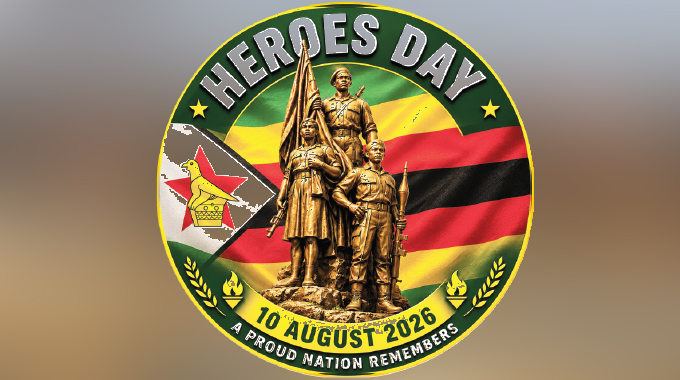
Gibson Mhaka, [email protected]
AS Zimbabwe draws closer to the solemn observance of Heroes’ Day on August 10 under the theme, “Lest We Forget,” the nation pauses to honour the gallant sons and daughters who made the ultimate sacrifice in the liberation struggle that ushered in the country’s freedom.
It is a day etched deeply into the country’s collective memory, reminding Zimbabweans that the freedoms enjoyed today were won through immense sacrifice, resilience and unwavering patriotism.
Yet, as the nation remembers its fallen heroes, history also invites Zimbabweans to acknowledge another important chapter of the liberation struggle – the unwavering solidarity extended by friendly nations whose political, diplomatic, military and material support proved indispensable in the fight against colonial rule.
Zimbabwe’s liberation was never fought in complete isolation. While the courage of freedom fighters remained the decisive factor, the struggle was strengthened by countries that opened their borders, trained combatants, supplied arms, provided diplomatic backing and sacrificed their own security to ensure that Zimbabwe attained self-rule.
Among these countries, China, the former Soviet union (now Russia), Zambia, Mozambique and Angola occupy a special place in Zimbabwe’s liberation history.
Their contribution remains an enduring testament to Pan-African solidarity and international cooperation against colonialism.
China: A revolutionary partner
Few countries have maintained as enduring a relationship with Zimbabwe as China.
Long before diplomatic ties matured into today’s Comprehensive Strategic Partnership, China stood firmly alongside Zimbabwe’s liberation movement when many Western governments continued supporting colonial administrations.
One of the defining moments came in September 1963 when China accepted the first group of Zimbabwe African National union (ZANU) cadres for military training.
According to renowned historian Phyllis Johnson, the first five recruits were led by President Mnangagwa, who underwent six months of military instruction in China.
A second group followed in 1965 after completing basic military training in Ghana.
Perhaps the most significant training mission occurred in 1966 when the legendary Commander Josiah Magama Tongogara led 11 cadres to the Nanjing Military Academy, where they received advanced instruction in military strategy, guerrilla tactics and, importantly, mass political mobilisation.
Johnson notes that Tongogara returned convinced that victory would ultimately depend not merely on military strength but on winning the confidence and support of the people.
That philosophy later became the cornerstone of the Zimbabwe African National Liberation Army (ZANLA)’s liberation strategy.
Chinese instructors later travelled to Tanzania to assist in training Zimbabwean fighters at Itumbi and Mgagao camps.
Former recruits recalled that Chinese military doctrine emphasised political consciousness above military hardware.
As one former cadre famously remembered: “The decisive factor was not the weapons but the people.”
That lesson became one of the defining principles of Zimbabwe’s liberation struggle.
Today, the strong political and economic ties between Harare and Beijing are often viewed as an extension of a friendship forged in the trenches of the liberation war.
The Soviet union and Russia: Equipping the Liberation Forces
While China played a central role in supporting ZANLA, the Soviet union became the principal international supporter of the Zimbabwe People’s Revolutionary Army (ZIPRA), the military wing of ZAPU.
From the early 1960s, the USSR provided military training, sophisticated weaponry, logistical assistance and strategic support to ZIPRA combatants.
Many former fighters still vividly recall their military education in Soviet academies, where they acquired expertise in conventional warfare, engineering, communications and military leadership.
During exhibitions commemorating liberation history, former ZIPRA combatants frequently speak nostalgically of the discipline and professionalism instilled during their training in the Soviet Union.
Military historians have long acknowledged that Soviet support significantly strengthened ZIPRA’s operational capabilities and enhanced its ability to confront the Rhodesian security establishment.
Today’s cordial relations between Zimbabwe and the Russian Federation continue to draw inspiration from those historic bonds established during the liberation struggle.
Zambia: The Frontline State that paid the price
No discussion of Zimbabwe’s liberation would be complete without recognising the extraordinary sacrifices made by Zambia under the leadership of the late President Kenneth Kaunda.
Following Zambia’s own independence in 1964, the country became one of the principal Frontline States committed to dismantling colonialism across Southern Africa.
Zambia opened its territory to Zimbabwean liberation movements despite becoming an immediate target for Rhodesian military aggression.
Training camps, refugee centres and operational headquarters were established on Zambian soil.
Thousands of Zimbabwean recruits passed through Zambia before proceeding for military instruction or deployment to the battlefront.
These activities came at an enormous cost. Rhodesian forces repeatedly bombed Zambian territory, targeting liberation camps and infrastructure in attempts to weaken the liberation movements.
Yet President Kaunda refused to abandon Zimbabwe’s freedom fighters.
His government continued offering sanctuary despite the economic and military consequences.
That courage cemented Zambia’s place as one of Zimbabwe’s most dependable allies during the liberation struggle.
Mozambique: The gateway to victory
While Zambia became the northern sanctuary, Mozambique emerged as the eastern gateway through which much of the liberation war was prosecuted.
Following Mozambique’s independence in 1975 under FRELIMO, President Samora Machel immediately aligned his government with Zimbabwe’s liberation cause.
The long and porous Mozambique-Zimbabwe border became strategically important.
Liberation fighters infiltrated Rhodesia through Mozambique, while training camps operated deep inside Mozambican territory.
Entire communities in Mozambique endured repeated attacks from Rhodesian forces because they supported Zimbabwean freedom fighters.
President Machel remained resolute despite these attacks.
His administration believed that Mozambique could never enjoy lasting peace while colonial rule persisted in neighbouring Zimbabwe.
The close relationship forged during those difficult years continues to shape bilateral relations between Harare and Maputo.
Angola: Strengthening regional solidarity
Angola’s contribution to Zimbabwe’s liberation struggle formed part of the wider regional campaign against colonial domination.
Following its own independence in 1975, Angola joined the growing coalition of Frontline States committed to supporting liberation movements across Southern Africa.
Working alongside countries such as Tanzania, Botswana and Zambia, Angola provided political backing and military cooperation that strengthened regional efforts to dismantle white minority rule.
The shared experiences of armed struggle helped cultivate enduring diplomatic relations that continue today through regional organisations such as Sadc.
The frontline states: Africa’s collective sacrifice
Zimbabwe’s liberation also represented a triumph of African unity.
The Frontline States, Zambia, Mozambique, Angola, Tanzania and Botswana accepted enormous political, economic and military risks by supporting liberation movements.
These countries accommodated refugees, established military camps, facilitated diplomatic engagements and defended liberation movements at international forums.
Their collective stance demonstrated that the struggle against colonialism transcended national borders.
For these countries, Zimbabwe’s independence was viewed as part of the broader mission to free Southern Africa from colonial domination and racial oppression.
Liberation Was Built on International Solidarity
Beyond Africa, Zimbabwe also benefited from diplomatic support at the United Nations and other international institutions, where friendly nations consistently condemned colonial rule and called for majority governance.
The liberation struggle therefore became both a national revolution and an international campaign for justice.
While Zimbabwe’s freedom was ultimately won through the courage and sacrifice of its sons and daughters, that victory was reinforced by friends who stood shoulder to shoulder with the liberation movements during some of their darkest moments.
Preserving the full story of liberation
As Zimbabwe prepares to commemorate Heroes’ Day, remembering these international allies does not diminish the heroism of Zimbabwe’s own freedom fighters.
Rather, it enriches the historical narrative by acknowledging that liberation was achieved through both domestic sacrifice and international solidarity.
Heroes’ Day therefore remains not only a tribute to those who fought and died for Zimbabwe but also an opportunity to recognise the countries that chose principle over convenience, standing with oppressed people in pursuit of justice and self-determination.
The enduring friendships Zimbabwe enjoys today with China, Russia, Zambia, Mozambique, Angola and other former Frontline States are rooted not merely in diplomacy, but in shared sacrifice.
As President Mnangagwa has often observed, Zimbabwe’s foreign policy is anchored on the “friend to all and an enemy to none” philosophy.
That philosophy resonates strongly during Heroes’ Day, when the nation reflects not only on the bravery of its liberation heroes but also on the steadfast friends who helped transform the dream of independence into reality.
In remembering the fallen, Zimbabwe also honours those nations whose solidarity became part of the country’s liberation story.
Their contribution reminds future generations that freedom was won not only through the courage of Zimbabweans, but also through the enduring support of friends who believed that the cause of Zimbabwe’s independence was inseparable from the broader struggle for Africa’s liberation.