Online Reporter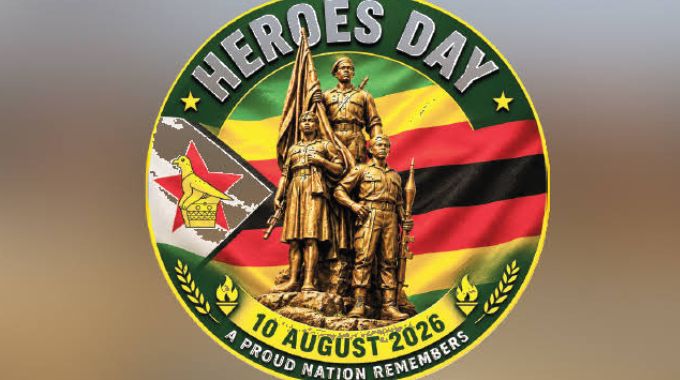
Gibson Mhaka [email protected]
THE resounding victory by Zanu-PF in the Victoria Falls municipal by-elections has assumed significance beyond the electoral numbers. Coming barely a week before Zimbabwe commemorates Heroes Day under the theme, “Lest We Forget”, the outcome has been interpreted in political circles as a reaffirmation of the liberation values that gave birth to an independent Zimbabwe and continue to shape the country’s national identity.
By sweeping all three contested wards in Victoria Falls and securing Ward 3 of Mutare Municipality, the ruling party not only consolidated its political foothold but also strengthened the narrative that the ideals championed by the country’s liberation heroes and heroines continue to resonate with the electorate.
For many observers, the timing of the victory is particularly symbolic.
Heroes Day is more than an annual public holiday.
It is a national moment of reflection that reminds Zimbabweans of the sacrifices made by thousands of men and women who abandoned their education, careers and families to wage the liberation struggle against colonial rule.
This year’s theme, “Lest We Forget”, carries an even deeper message.
It challenges Zimbabweans, particularly the younger generation, to preserve the country’s liberation heritage and ensure that the sacrifices of the heroes and heroines are never reduced to mere historical references.
Against this backdrop, the Victoria Falls by-election results provide a political dimension to the national commemorations.
The electorate in the tourism city handed Zanu-PF decisive victories in Wards 9, 10 and 11, while the party also emerged victorious in Ward 3 of Mutare Municipality, extending its electoral gains in local authorities.
Political analysts argue that while local authority elections are primarily about service delivery, they also reflect broader political sentiment, particularly when they are held on the eve of nationally significant commemorations such as Heroes Day.
For the ruling party, the victories are likely to be interpreted as public confidence in a Government that continues to place the liberation struggle at the centre of national development.
Since assuming office, President Mnangagwa has consistently maintained that Zimbabwe’s liberation history should remain the foundation upon which future generations build the nation.
His administration has sought to preserve that legacy through a range of initiatives, including recognising previously overlooked liberation stalwarts, conferring National Hero status on deserving cadres, preserving liberation heritage sites and ensuring that younger Zimbabweans appreciate the country’s revolutionary history.
The recent decision to confer National Hero status posthumously on four liberation war stalwarts Cdes Saul Gwakuba Ndlovu, Brigadier-General Gibbs Kachana, Herbert Zaba Sambo and Professor Sheunesu Mupepereki, whose remains have been reinterred at the National Heroes Acre, reflects the Second Republic’s philosophy that national gratitude has no expiry date.
In many respects, therefore, the Victoria Falls outcome complements the broader message of Heroes Day.
The theme “Lest We Forget” is not merely about remembering the past through speeches and ceremonies.
It also calls upon citizens to safeguard the values upon which the nation was founded.
Those values include patriotism, sovereignty, self-determination, unity and the defence of Zimbabwe’s independence.
Supporters of the ruling party argue that voting for Zanu-PF represents an affirmation of those ideals because the party led the liberation struggle and remains the custodian of the country’s revolutionary heritage.
Whether viewed politically or historically, the by-election results inevitably become part of the broader conversation about preserving the liberation legacy.
What stands out from the Victoria Falls polls is that voters delivered a decisive verdict despite facing a crowded field of independent candidates.
Rather than fragmenting the vote, the electorate produced clear outcomes in all the contested wards.
Such results inevitably strengthen the perception that many Zimbabweans continue to identify with the liberation movement’s historical values, particularly as the nation prepares to honour those who sacrificed for independence.
The importance of the victory extends beyond Victoria Falls itself.
The additional victory in Mutare Municipality, together with gains in other local authority by-elections, suggests that the ruling party continues to consolidate support across different parts of the country.
This geographical spread gives added political weight to the results and reinforces the perception that the liberation narrative continues to command public resonance decades after independence.
The significance of these victories also lies in the changing demographic landscape.
Zimbabwe’s population is predominantly youthful, with many citizens born long after independence in 1980.
This reality presents an ongoing challenge of ensuring that liberation history is effectively transmitted from one generation to the next.
The Second Republic has repeatedly emphasised that preserving the liberation heritage cannot be left to commemorative events alone.
Instead, it requires continuous civic education, the preservation of historical institutions, recognition of liberation veterans and programmes that cultivate patriotism among young people.
Heroes Day therefore serves not only as a remembrance ceremony but also as an educational platform through which Zimbabweans reconnect with their national story.
The Victoria Falls results can thus be viewed within that wider context.
They suggest that liberation history continues to influence political consciousness, even among communities that increasingly confront contemporary issues such as economic development, employment creation, tourism growth and infrastructure expansion.
Importantly, the ruling party has consistently linked these developmental aspirations to the unfinished mission of the liberation struggle.
The argument advanced by the Government is that political independence created the foundation upon which economic transformation must now be built.
Vision 2030, infrastructure development, devolution, rural industrialisation and community empowerment are therefore presented as extensions of the liberation project rather than departures from it.
It is within this framework that supporters interpret the Victoria Falls mandate.
For them, the electorate was not simply electing councillors.
Rather, it was reaffirming confidence in a political movement whose identity remains inseparable from Zimbabwe’s liberation history.
This year’s Heroes Day theme therefore acquires additional meaning.
“Lest We Forget” is both a historical reminder and a contemporary political message.
It calls upon Zimbabweans to remember the immense sacrifices that secured independence while encouraging them to preserve the values of patriotism, unity and national sovereignty that defined the liberation struggle.
As thousands gather at the National Heroes Acre and provincial shrines across the country, the Victoria Falls by-election outcome is likely to feature prominently in political discourse as evidence that the liberation ethos continues to find expression through democratic participation.
Ultimately, elections and national commemorations serve different constitutional purposes.
However, when they occur in close succession, they often reinforce one another in shaping the national conversation.
The decisive victories recorded by Zanu-PF in Victoria Falls and Mutare have therefore become more than electoral statistics.
They have become part of the broader narrative surrounding Heroes Day, a narrative that emphasises remembrance, continuity and the enduring relevance of Zimbabwe’s liberation ideals.
As the nation pauses to honour its heroes and heroines, the Victoria Falls verdict provides a timely reminder that, for many Zimbabweans, the ideals fought for during the liberation struggle remain central to the country’s political identity.
In that regard, the message carried by this year’s Heroes Day theme resonates strongly: Lest We Forget.