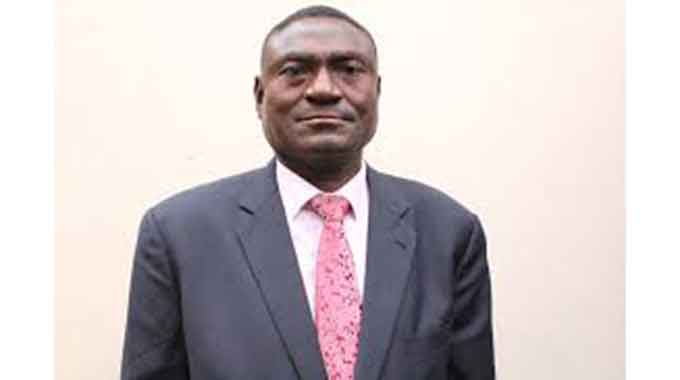
Vusumuzi Dube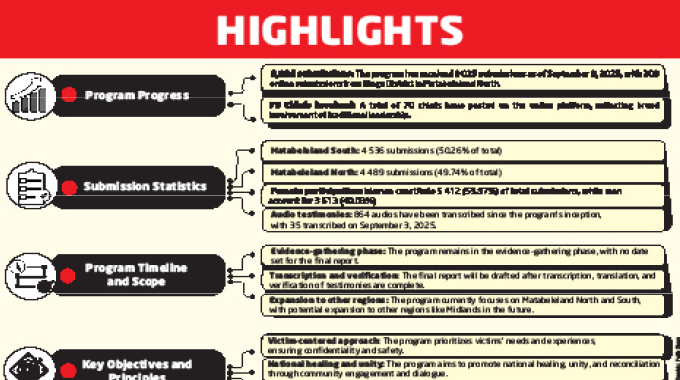
Gibson Mhaka, Zimpapers Politics Hub
CONFLICT and its devastating impacts are a global reality, with women and girls often bearing the heaviest burden.
Despite being disproportionately affected, they are frequently marginalised in peace processes, while those who ignite conflicts are invited to the negotiating table.
This exclusion is a significant missed opportunity, as studies have shown that peace agreements with women signatories have higher implementation rates and tend to last longer.
The ongoing Gukurahundi Hearings in Matabeleland region exemplify the importance of women inclusion as a testament to sustainable conflict resolution initiatives.
The process is demonstrating the vital role of gender in reconciliation and healing, highlighting that when women are given a platform to speak, they contribute positively to more peaceful and stable situations.
According to statistics gathered by Zimpapers as of 3 September 2025, the data shows a strong female participation rate.
Out of the total submissions, women constitute 5 412 (59,97 percent), compared to 3 613 from men (40,03 percent).
This strong female participation is not only a sign of the trust women have in the process but also a testament to their crucial role in rebuilding post-conflict societies.

Their overwhelming participation in the ongoing Gukurahundi Hearings is not merely a statistic, it’s a powerful demonstration of women’s strong commitment to facilitating lasting healing and reconciliation.
By stepping forward in significant numbers to share their experiences and truths, they are actively contributing to a process designed to bring closure to past conflicts.
This aligns directly with President Mnangagwa’s vision of nation-building, which emphasises inclusivity and a united national identity, moving away from historical divisions.
Addressing the strong majority of female participants, Attorney-General Mrs Virginia Mabiza, who heads the secretariat of the Matabeleland Peace-building Outreach Programme, said the Secretariat has put specific measures in place to handle their unique needs.
“We have ensured that the members of the chiefs’ panel are trained to handle delicate testimonies, including cases involving trauma,” explained Mrs Mabiza.
“Safe spaces have been created for women to share their experiences confidentially, and psychosocial support and counselling are being provided directly by a trained member of the chiefs’ panel.
“These measures guarantee that women’s voices are fully captured in a manner that is respectful, protective and responsive to their specific needs.”

National Chiefs Council president, Chief Mtshane Khumalo, who is leading the traditional leaders in the process, commented on the high turnout of women, stating they are coming forward because they are the ones who carry the deepest wounds and therefore, have the greatest desire for the truth to be told and for the healing to begin.
“In our tradition, the woman is the holder of the family’s memory and the keeper of its pain,” he said.
“When we speak of ubuntu, it is often the women who embody it most, as they are the ones who must pick up the pieces and raise the children in the aftermath of tragedy. They are the ones who can truly bring the community back to a state of peace.”
This high level of female engagement is crucial for achieving genuine and sustainable peace. Women’s unique perspectives on the impacts of conflict, which often include the loss of family, community disruption and economic hardship, are essential for comprehensive reconciliation. Their voices ensure that the healing process is holistic and addresses the multifaceted trauma experienced by communities.
Ultimately, their active involvement is key to fostering the unity required to build a stronger, more resilient nation for future generations.
The strong participation of women in the Gukurahundi Hearings is a powerful validation of their role as agents of peace and healing, and a clear signal of the community’s trust in the process. Their willingness to come forward is not just a personal act of courage but a collective one, laying the groundwork for a comprehensive national conversation.
By ensuring their voices are heard and their needs are met, the process is setting a new standard for inclusive peace-building, demonstrating that true reconciliation can only be achieved by embracing every part of society, especially those who have suffered the most.
This inclusive approach to reconciliation sets a precedent for how Zimbabwe will address historical divisions moving forward.
By placing women at the centre of the healing process, the nation is acknowledging that their unique insights are indispensable for building a truly united and resilient society.
Their active involvement is a cornerstone of President Mnangagwa’s vision, as it directly embodies his philosophy of leaving no one and no place behind.
The Gukurahundi Hearings, therefore, are not just about addressing a painful past, they are a living example of how the Second Republic is ensuring that every voice, particularly those of the most vulnerable, is heard and respected in the journey towards a stronger and more unified nation.


 Online Reporter