

 admin
admin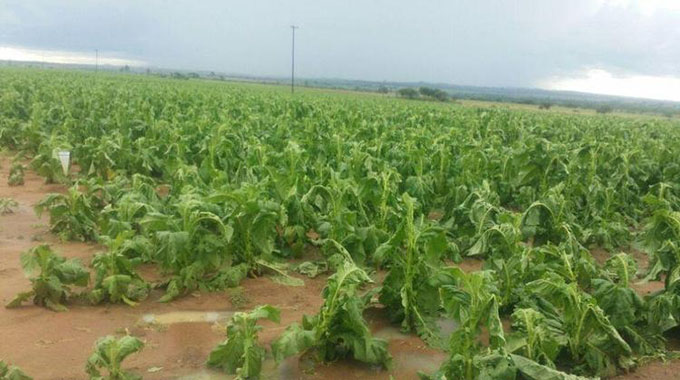
Elita Chikwati Senior Agric Reporter
Natural disasters have often affected the agriculture sector, with most farmers, especially smallholder farmers, incurring huge losses as they would not have insured their crops, livestock and property.
Insurance provides peace of mind in the event of the occurrence of an eventuality through restoring the insured to the previous position before the insured event occurred.
It is prudent for farmers to insure their crops, livestock and property to ensure that they are covered against risks like theft, fire, hail, epidemic attacks, damages and loss.
However, lack of knowledge on the importance of agriculture insurance and the unaffordability of cover premiums have resulted in low policy uptake by smallholder farmers.
Most small-scale farmers do not insure their crops and properties as they see the facility as a waste of money, while others, especially tobacco growers, have had bad experiences with some bogus companies, forcing them to abandon the facility and take the risks as they come.
According to the Insurance Council of Zimbabwe (ICZ), agricultural insurance used to be a major
business and it was now rebounding.
ICZ head of operations Mr Nicholas Sayi said long back, commercial farmers used to insure their crops
because they had financial support. He said this was not the case with most smallholder farmers who did not have adequate funding and enough knowledge on the insurance facility.
He said former commercial farmers used to insure tobacco, maize, cotton timber, plantations and macadamia nuts among other crops because they had proper structures of funding.
“Farmers are now at a smaller-scale, while others, especially tobacco growers, are mostly contracted. Some farmers have also lost confidence in insurance because of their past experiences,” he said.
“There are some farmers who still insure their crops, for instance those in horticulture, who produce flowers for export.”
Mr Sayi said few farmers were insuring their crops, livestock and properties because there were no structures in place for smallholder farmers.
“It becomes difficult to insure them as individuals. There is no coordination among the farmers. Lack of clubs to encourage collective assistance is not helping much,” he said.
“There is also lack of knowledge and appreciation of the benefits of insurance.”
The ICZ official said farmers were taking a communal approach in production, while the absence of mechanisms to enforce insurance was also resulting in few farmers willing to get the facility.
He said some farmers would want to insure their livestock, but could not meet the requirements. For instance, a farmer wanting to insure his livestock against theft has to meet the requirements such as fencing and ear tagging.
Branding is another requirement among other technicalities. In crops, the farmers will be required to follow good agronomic practices for them to qualify and also benefit if they suffer from any eventuality.
“For smallholder farmers, there is need for robust structures such as unions, farmer organisations and the public private partnerships to ensure farmers access insurance facilities.
“ICZ guides members on compensation issues,” he said.
In a response to The Herald, the Insurance and Pensions Commission(IPEC) said there has been a steady increase in insurance uptake for maize while tobacco growers were insuring against hail and fire.
The commission said for maize, the main insured risk was crop failure or inadequate rain.
“Generally, there still exists lack of knowledge on the importance of agriculture insurance among small-scale farmers.
“Affordability of insurance premiums may also explain the low insurance penetration among communal farmers. The market has suitable insurance policies for different scales of agricultural production. However, there is scope to improve on customer-centric products,” the commission said.
IPEC is running a number of consumer education programmes in both print and electronic media.
“We have been participating in most major agricultural shows where we meet and educate farmers on the importance of agricultural insurance,” said IPEC.
The organisation said pursuant to the 2020 National Budget Statement, they were working on the development of weather indexed-based insurance framework to support agricultural insurance.
Zimbabwe Commercial Farmers Union president Mr Wonder Chabikwa confirmed that farmers did not see the benefit for insuring their crops, livestock and property and said others were discouraged after having bad experiences with some firms.
“Farmers do not appreciate the need to insure their properties. Farmers have had bad experiences with some insurance firms, and most ended up losing faith in the institutions,” he said.
Mr Chabikwa said some farmers signed contracts with insurance firms without proper understanding, and this resulted in challenges when the farmer made claims.
Local insurance consultant Mr Max Uzande urged farmers to insure their crops and livestock so that they could have peace of mind and safeguard themselves against unknown misfortunes such as natural, social and economic risks which may affect crops, livestock and property.
He said most small-scale farmers did not have the financial capacity and lacked knowledge of the importance of taking up agricultural insurance.
“There have been no suitable insurance facilities for smallholder communal farmers. The current existing traditional agricultural insurance products readily available are designed to target and promote commercial farmers.
“Once an asset is inherently exposed to terminal risks, both its value in use and value on disposal are compromised,” Uzande said.
“We hold outreach and awareness programmes on the importance of agricultural insurance targeting smallholder communal farmers especially, women and youths in agriculture.
He also said it was important to educate farmers to clearly understand their needs, both individually and collectively.
“Agriculture insurance acceptance and awareness for all smallholder and communal farmers farming activities becomes a loss mitigation measures. The acceptance and use of insured livestock as collateral leads to more effective agricultural financing options.
“Weather index-based insurance calculates and identifies pay outs on insured crops affected by weather,” he said.
Mr Uzande said inclusion of smallholder and communal farming communities’ activities participation in the mainstream financial service will reduce burden on the fiscus.
This, he further said, could promote financial inclusion and boost national economic growth and turnaround, in line with vision 2030.



 Online Reporter