

 admin
admin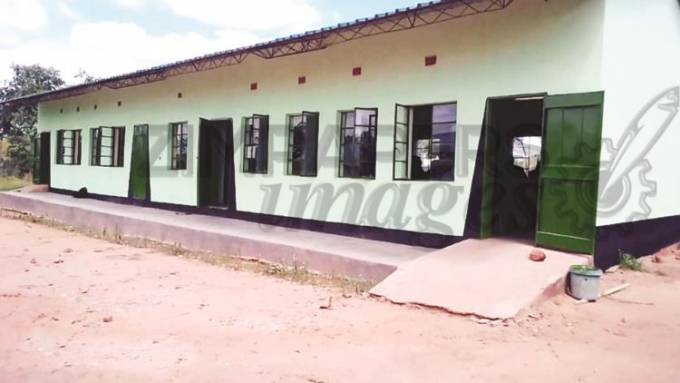
Walter Nyamukondiwa and Admore Mbonda
From just one standard classroom and pole-and-dagga sheds that exposed the 231 learners to the vagaries of weather, Manhanga Primary School in Kariba now boasts new classrooms.
The school, which is about 158km from Karoi along the Karoi-Binga Road, now has three classroom blocks and solar-powered teachers’ quarters and a perimeter fence that were built through a US$89 000 grant from Japan through the Grant Assistance for Grassroots Human Security Projects.
Furniture for the Early Childhood Development (ECD) block was also bought through the grant.
This new infrastructure is expected to improve the standard of education and ensure that the school, which has recorded poor pass rates in the past few years, starts producing positive results.
Apart from infrastructure challenges, the school’s failure to produce results has been worsened by the fact that children have to walk many kilometres to the nearest examination centre since the school is not registered as an examination centre.
Generally, teachers have shunned the school because of distance from service centres and lack of accommodation.
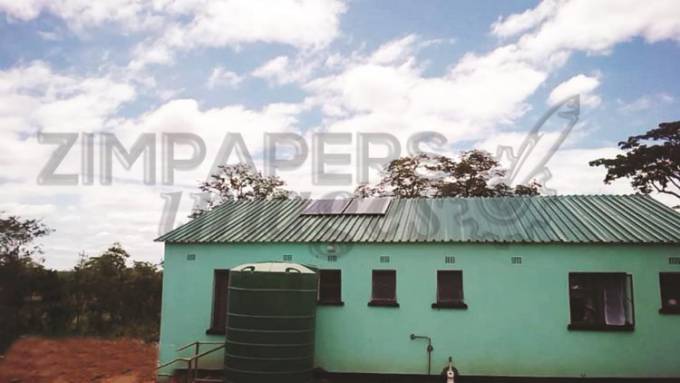
The school has eight teachers, while learners are drawn from nearby villages, with the furthest distance that learners have to walk to school being 8km.
Transporters have also been shunning the road that passes through the school, which is, however, now being upgraded by the Government through the District Development Fund (DDF).
At the handover of the new infrastructure, deputy head of mission at the Japanese Embassy Mr Kenichi Kasahara hoped the new facilities would help boost morale at the school.
Mr Kasahara said the facelift was expected to arouse interest in learning and improve enrolment.
“I hope that with the help of the improved education environment, the students at Manhanga would become more interested in school and the moral of the teachers would improve to attain good results,” he said.
Tony Waite Organisation, which implemented the project on behalf of the Japanese Embassy, said the community chipped in with labour, bricks, transport and river sand.
Mashonaland West Provincial Affairs Minister Mary Mliswa-Chikoka bemoaned the poor pass rate at the school and blamed the headmaster for failing to register the school as an examination centre.
She said the school should repay the good gesture by the Japanese Embassy by working hard to produce good results before warning that there would be a shake-up if results do not improve.
Mashonaland West provincial education director Mr Gabriel Mhumha said Kariba District faced a plethora of challenges which needed urgent attention.
“The Japanese Embassy must be applauded for the life-changing project they have undertaken in the district.
“My plea is that the minister (Mliswa-Chikoka) facilitates availability of transport from Karoi to Siakobvu as most teachers failed to turn up for work at their various stations.
“This time around Mola was hard hit as only four out of the 28 teachers reported for duty, with the rest failing due to the unavailability of transport,” said Mr Mhumha.



 Online Reporter