Online Reporter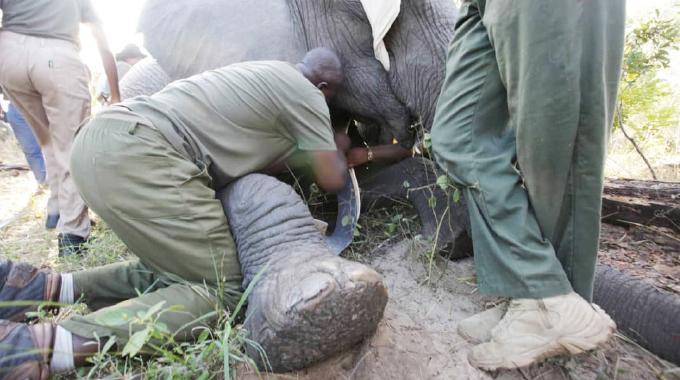
Rutendo Nyeve
THE sunrise at Hwange National Park is truly a breathtaking spectacle, a serene blend of the African wilderness’s raw beauty and the gentle glow of dawn. Yet, on this particular Tuesday morning, the landscape’s usual splendour took a clear back seat as all ears turned to a crucial briefing ahead of an elephant collaring exercise.
This wasn’t merely a routine procedure; it was a highly dangerous undertaking, demanding utmost precision and courage from every individual, given the immense power and unpredictable nature of the world’s largest land mammals.
This was no ordinary gathering; it was a carefully coordinated session, meticulously designed to ensure the utmost safety for both the dedicated team and the majestic animals involved.
Team members received precise instructions to wear dark, neutral coloured clothing — specifically greens, browns, or blacks — to perfectly blend into the bush and avoid startling any wildlife. Bright colours, they were reminded, could easily agitate animals or make individuals dangerously visible during any close encounters.
Furthermore, they were advised to move quietly, avoid sudden gestures, and diligently follow hand signals to minimise disturbance to the sensitive environment.
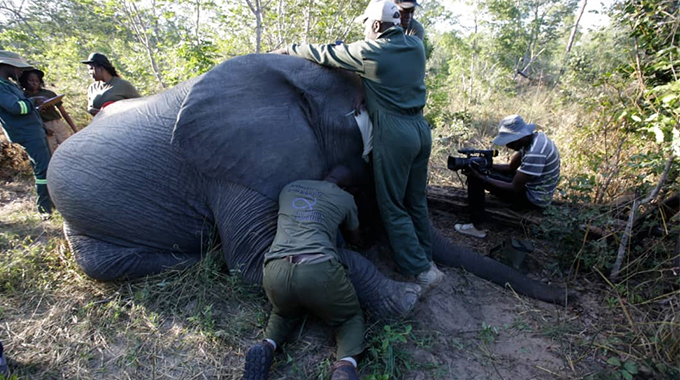
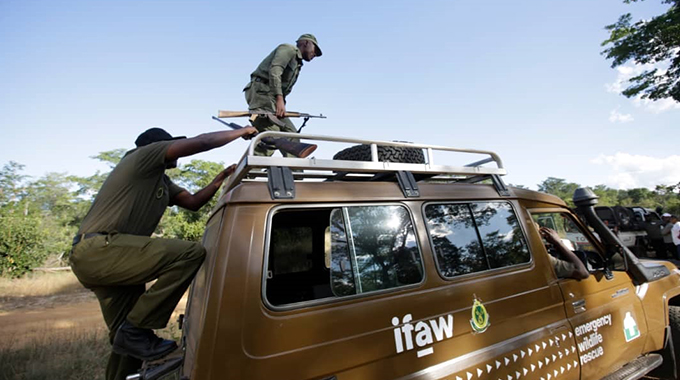
The operation was led by ZimParks veterinarians, who held the vital responsibilities of darting the elephants, meticulously monitoring their vitals, and expertly fitting the tracking collars. Complementing their efforts, a dedicated security and protection unit was also strategically deployed. Their critical role was to deter any curious or potentially aggressive animals and to maintain a secure perimeter throughout the sensitive procedure.
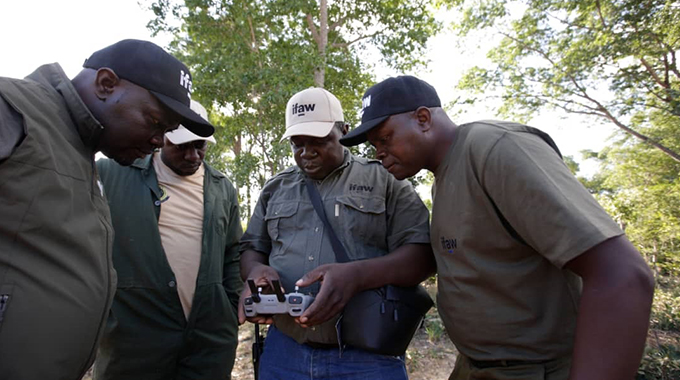
Before the team’s departure, a thorough inspection of all essential gear was conducted. This included dart guns, the collars themselves, comprehensive medical kits, and cameras, ensuring every individual was properly equipped for the task ahead. A final, pertinent reminder was issued:
“Stay alert, stay quiet, and follow instructions — this is wild territory,” said Augustine Gomba, the International Fund for Animal Welfare (IFAW) assistant landscape manager.
This marked the beginning of what would become a long and utterly exhausting day, as part of a highly collaborative team undertaking a critical elephant collaring operation.
Journalists had the rare privilege of joining a dedicated team comprising ZimParks veterinarians, expert rescue personnel, and representatives from IFAW. Together, they embarked on a demanding yet vital mission to collar elephants within the vast Ngamo and Sikumi forests.
These expansive forests, meticulously managed by the Forestry Commission, serve as crucial buffer zones between the iconic Hwange National Park and surrounding communities. They play an indispensable role not only in biodiversity conservation but also in fostering sustainable resource management within this delicate ecosystem. The Forestry Commission’s oversight also extends to other vital woodlands in the region, such as Fuller, Kazuma, and Pandamasuie — some of which wonderfully double as critical wildlife habitats and burgeoning eco-tourism destinations.
On this particular Tuesday, the objective was precise: to locate and safely collar a matriarch from a herd that had not yet been tagged. However, the search itself proved exceptionally challenging.
After what felt like endless hours of tracking through the dense bush, the team encountered one or two herds, only to discover, to their mild frustration, that these magnificent animals had already been collared in previous operations.
Undeterred by the setbacks, the team pressed on with unwavering determination, resolute in their quest to find a suitable, uncollared matriarch. Eventually, their persistence was magnificently rewarded when they successfully located a promising herd, clearly led by a dominant female.
The moment arrived. The vet, with utmost precision, carefully darted the matriarch. As the sedative began to take effect, the team cautiously moved in to commence the collaring procedure. But just as they were about to begin their critical work, two fiercely protective calves — almost certainly her offspring — charged forward in an instinctive, aggressive defence of their mother. The sudden, raw aggression forced the team into an immediate and necessary retreat to safety, deftly avoiding a potentially perilous confrontation.
Once at a secure distance, the team regrouped swiftly. Utilising their deep expertise and understanding of elephant behaviour, the team gently yet firmly drove the protective calves away, ensuring the safety of both the human team members and the young elephants themselves. With the protective calves temporarily deterred, the operation proceeded swiftly and efficiently.
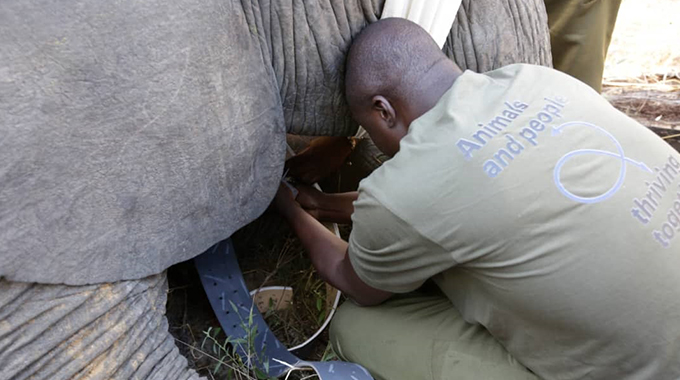
The matriarch was quickly and expertly fitted with a crucial tracking collar, vital biological data was meticulously collected, and the reversal drugs were administered to gently rouse her.
As the majestic matriarch gracefully re-joined her herd, the exhausted but profoundly satisfied team celebrated a truly hard-earned success. The newly fitted collar will now provide critical data for ongoing conservation efforts, playing a pivotal role in helping to protect both the elephant populations and the human communities that share this vast landscape.
The operation, as ZimParks Director General Professor Edson Gandiwa explained, is anchored by the authority’s strong conviction that all conservation efforts should be rigorously science-driven.
“Together with our partner, IFAW, we strongly believe that conservation should be grounded in solid science. We are confident that this initiative will ensure that conservation decisions are informed by robust scientific data, allowing for more effective protection strategies and fostering a harmonious coexistence between people and nature,” said Gandiwa.
According to Phillip Kuvawoga, IFAW’s Senior Director of Conservation Programmes, the operation was also strategically designed to reduce escalating human-wildlife conflicts.
“The Hwange-Matetsi-Zambezi landscape is a key part of the landscape for IFAW’s Room-to-Roam initiative, which aims to reconnect fragmented habitats and allow wildlife to migrate along their ancient routes. With the information set to be generated from the GPS collars, we can now focus our efforts on protecting areas where elephants need to be and developing informed interventions to guide human-wildlife mitigation interventions.”
The journalists, having witnessed the raw drama and immense dedication first-hand, departed with a far deeper and more profound appreciation for the intricate challenges and incredible commitment required in wildlife conservation.
@nyeve14