

 admin
admin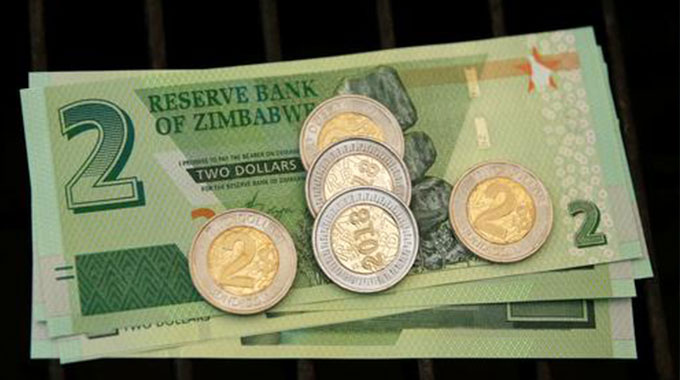
Zvamaida Murwira, Harare Bureau
Government will soon unveil higher denominations of the Zimbabwe dollar but has to do so with caution to avoid inflationary pressures, Secretary for Finance and Economic Development, Mr George Guvamatanga has said.
Economic analysts warn that large denomination notes were unnecessary but that moderately higher denominations would expand convenience to the transacting public.
Mr Guvamatanga made the announcement yesterday while fielding questions from journalists during a media briefing that was convened by Finance and Economic Development Minister Professor Mthuli Ncube.
Zimbabwe has $2 and $5 notes and some coins but the public has since raised concern as they now have to carry huge wads of notes and coins when they want to make large cash transactions, although most people do this through electronic transfers.
“On why we have the $2 and $5 notes, it is an issue of divisibility. There are other larger denominations that are on the way, but you have to manage money supply. You do not start by bringing in $500 notes and throw in $1billion of that money in the market. We know that the money in the market is not adequate to meet demand and hence the long queues, but that will be for a limited time and will be addressed,” said Mr Guvamatanga.
“Those coins ($2 coins) had already been minted. Instead of throwing them away when we have a shortage of notes we decided to bring them so that they work alongside the $2 and $5 notes while we bring in the bigger denominations. As we bring in bigger denominations some of the coins and even bond notes will start to be withdrawn.”
Economic analyst, Mr Eddie Cross said it made sense to introduce higher denominations. “I am a member of the Monetary policy committee and it is an issue that was brought under discussion. It makes sense to bring higher notes but probably we do not need necessarily to bring huge notes but slightly higher denominations,” said Mr Cross.
Another analyst, Dr Gift Mugano supported the idea saying it was actually expensive to print smaller denominations. “Higher denominations have economic benefits. There is a lot of loss in printing smaller denominations. There is what we call seigniorage which is the difference between a currency and the cost of producing it. Central banks the world over make money from printing money so in our case we were making loss by printing smaller denominations,” said Dr Mugano.
“Another issue is that bigger notes brings convenience to the transacting public.”
Another analyst, Dr Prosper Chitambara concurred saying there was a lot of convenience in printing higher denominations. “As economist we support the idea. It was long overdue. It brings convenience to transacting public who no longer need to carry wads of notes and coins,” he said.
Modern practice around the world is to be wary of very high denominations, to make it harder for criminals and tax cheats to move large sums around as cash, but to ensure that there are adequate quantities of notes of suitable denominations for ordinary cash transactions.



 Online Reporter