Richard Muponde, Zimpapers Politics Hub
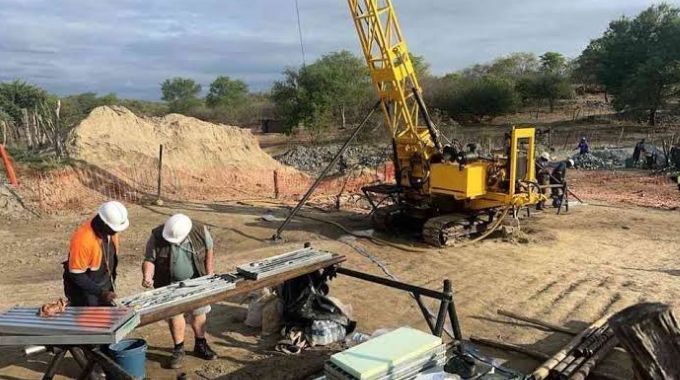
KAVANGO Resources’ commissioning of a 50-tonne-per-day gold processing plant at Hillside, Gwanda, adds valuable processing capacity, technology and investment to Matabeleland South.
It offers a potential platform for upper-middle-income enterprise creation. As the Second Republic pursues an upper-middle-income economy by 2030, projects turning mineral resources into productive activity serve as vital building blocks.
The Ministry of Mines and Mining Development’s Matabeleland South office declared the processing plant and its Tailings Storage Facility (TSF) commissioned on October 30, following the successful completion of the concept phase.
The pilot plant is designed to test Kavango’s processing flowsheet, establish how the Hillside orebody performs under actual operating conditions and generate technical evidence to guide decisions on commercial-scale expansion.
With an initial capacity of 50 tonnes a day, it should be understood as a proof-of-concept facility rather than a fully developed, large-scale producing mine.
Technology before expansion
Mining success is not measured simply by announcing a deposit or erecting infrastructure. It depends on reliable geological data, metallurgical recoveries, manageable operating costs, environmental safeguards and robust financing.
Hillside’s pilot phase allows Kavango to test these critical variables before committing capital to a larger plant. The company projects gold recoveries of 90 to 93 percent, a figure that must now be demonstrated consistently during operations.
Kavango chief executive officer, Mr Jasper Musadaidzwa, captured the significance of the milestone, stating:
“Achieving statutory commissioning of the processing plant and TSF is a significant milestone for Hillside and an important step towards commercial-scale operations.
“The concept phase plant enables us to optimise processing performance, confirm metallurgical recoveries under operating conditions, and further refine our understanding of the orebody ahead of larger-scale development.
With expected gold recoveries of 90 percent to 93 percent from Hillside, we believe the project has the potential to become a meaningful and scalable gold production centre within our
portfolio.”
Mr Musadaidzwa added that alongside the commissioning, the company is continuing to upgrade site infrastructure to support future growth and expansion.
“Our focus is now on improving operational efficiencies and generating the technical and operating data required to support the design and development of a commercial-scale processing facility. Through this work, we are establishing the foundations to unlock the full value of the Hillside gold project,” he noted.
The chief executive’s statement identifies the immediate task: translating pilot performance into dependable evidence for further investment.
The next phase should be evaluated against throughput, recoveries, operational costs, safety, environmental compliance and tangible local benefits.
Sustaining sector growth requires ongoing exploration, new mines, efficient processing, formal marketing channels and predictable regulation. However, production remains exposed to global gold price fluctuations, energy constraints, capital costs and illicit trading.
Government ambitions for the mining sector have included a US$12 billion mining industry target for 2023, a US$40 billion sector ambition by 2030, and more recent policy messaging referring to a US$12 billion mining economy target by 2030.
These represent distinct policy benchmarks aimed at expanding output, attracting investment, promoting value addition and increasing exports.
Hillside enters a sector whose contribution to the national economy has strengthened under the Second Republic. Gold deliveries rose from approximately 24,8 tonnes in 2017 to 36,48 tonnes in 2024 and reached a record 46,7 tonnes in 2025 — a 29 percent year-on-year increase. This growth reflects sustained deliveries from both large-scale producers and artisanal and small-scale miners.
In 2025, mining and quarrying accounted for 15,9 percent of Zimbabwe’s Gross Domestic Product (GDP), underlining the sector’s crucial role in driving national income.
Artisanal miners must share the gains
These economic opportunities should be structured transparently to ensure artisanal miners are neither displaced nor pushed into unsafe working conditions.
Government, Kavango and miners’ representatives could explore lawful ore-purchasing or toll-treatment arrangements, technical training, geological support, safety programmes and cooperative partnerships, subject to licensing and due diligence.
Better recovery technology and formal market access can help small-scale miners retain more value while improving traceability and curbing gold smuggling.
Formalisation protects livelihoods while making mining safer, more productive, and accountable — widening the tax base, boosting official gold deliveries and ensuring communities alongside mineral wealth share in its returns. Environmental protections, including tailings management, water preservation, land rehabilitation, and the elimination of hazardous practices, must remain central.
For local artisanal miners, proximity matters. Localised processing facilities reduce transport distances and costs, while reliable buyers encourage legal deliveries.
However, the pilot plant is not automatically open to third-party ore; any future arrangement will require clear eligibility rules, fair weighing systems, transparent pricing, and adequate capacity so smaller operators do not carry operational risks while larger players capture all the returns.
Matabeleland South’s mineral endowment can anchor regional growth where economic opportunities are otherwise constrained by distance from major industrial centres.
Complementary investments in roads, electricity, water, and telecommunications will help Hillside and neighbouring enterprises operate competitively, leaving behind durable infrastructure that serves local communities and households across the province.
Nyika inovakwa nevene vayo/ Ilizwe lakhiwa ngabanikazi balo: No one and no place left behind
The national philosophy “Nyika inovakwa nevene vayo / Ilizwe lakhiwa ngabanikazi balo” should remain practical rather than rhetorical. Zimbabwe’s natural resources must be developed with active Zimbabwean participation, with host communities recognised as primary stakeholders.
Leaving no one and no place behind dictates that development capital must reach districts outside traditional industrial hubs.
Gwanda stands to benefit directly as residents acquire technical skills, decent employment, business opportunities, and improved civic infrastructure.
Processing ore locally represents a definitive step beyond exporting raw materials, though Hillside’s current facility remains a pilot whose scale should not be overstated.
If exploration confirms resource potential and commercial expansion proves viable, further investment will deepen local processing, boost state revenues, and fortify the national gold value chain.
That outcome relies on disciplined execution and responsible stewardship.
Achieving Vision 2030 requires productive enterprises, foreign currency generation, technology transfer, job creation, infrastructure development and broad-based economic participation.
While Hillside alone cannot deliver an upper-middle-income economy, its significance lies in establishing tested processing capacity with a clear expansion pathway.
The commissioning marks a beginning rather than the finish line. Kavango must now demonstrate its anticipated gold recoveries while maintaining safe, environmentally sound operations.
Concurrently, the Government should maintain transparent regulation to ensure artisanal miners and host communities are fully integrated into the value chain.
If these conditions are met, Hillside will make a lasting contribution to Gwanda’s mining economy and Zimbabwe’s investment-led growth.
Eventually, the Second Republic’s development agenda will be strengthened by productive mines, host communities sharing in returns, and mineral wealth generating enduring national value.
Hillside’s success must be measured not only in tonnes processed or gold recovered, but in livelihoods improved, local businesses nurtured, and tangible progress made toward Vision 2030 across Zimbabwe.