Patrick Chitumba, [email protected]
GOVERNMENT has stepped up the distribution of agricultural inputs and mobilisation of farmers under the Presidential Pfumvudza/Intwasa Programme in the Midlands Province as the country prepares for the 2026/27 summer cropping season amid forecasts of a potential El Niño-induced drought.
The Second Republic is intensifying efforts to safeguard national food security through early distribution of inputs, promotion of climate-smart agricultural practices and crop diversification, with farmers encouraged to prioritise drought-tolerant traditional grains suited to their respective agro-ecological regions.
With forecasts pointing to below-normal rainfall, prolonged dry spells and high temperatures, the Government is strengthening measures to ensure farmers maximise every drop of rain and sustain agricultural production despite anticipated challenging weather conditions.
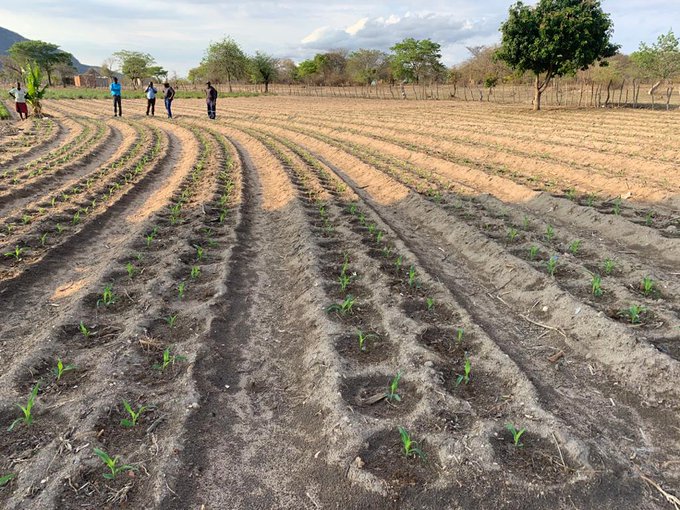
The strategy places Pfumvudza/Intwasa at the centre of efforts to protect household food production, conserve soil moisture and strengthen resilience to climate change.
The Midlands provincial launch of the programme took place at Chirape in Gokwe North at the homestead of Mrs Layza Munyuki, popularly known as Gogo Chandanga, a renowned Pfumvudza/Intwasa smart agriculture farmer.
Nationally, the Government is targeting three million farmers, 16 million Pfumvudza plots and one million hectares during the 2026/27 agricultural season.
Agricultural and Rural Development Authority (Arda) figures show that more than 3,7 million farmers have already prepared over 9,4 million plots, reflecting progress in preparations for the coming season.
Arda Midlands provincial director Ms Busiso Olga Mavankeni said farmers in Natural Regions Three, Four and Five, which cover much of the province, were being encouraged to prioritise sorghum, millet and sunflower because of their resilience under low-rainfall conditions.
“The farmer has already made 14 plots. These include cotton and traditional grains. In Natural Regions Three, Four and Five, which cover most of the Midlands, we are promoting sorghum, millet and sunflower because they are better suited to these conditions,” she said.
Ms Mavankeni said the Pfumvudza/Intwasa model was critical in helping farmers adapt to changing weather patterns through minimum soil disturbance, mulching, precise spacing and water harvesting.
“We are confident that, as a province, we can make a significant contribution towards mitigating the effects of El Niño and achieving our production targets. The Presidential programme is providing fertiliser, lime and pesticides, while farmers are encouraged to mechanise plot preparation and diversify production,” she said.
Midlands Provincial Affairs and Devolution Permanent Secretary Dr Edgar Seenza said traditional leaders were playing a critical role in mobilising communities and ensuring farmers embraced climate-smart agricultural practices.
“Traditional leaders have been conscientised and are cascading the same information to headmen, village heads and their communities. We must maximise whatever rainfall we receive, conserve water, protect livestock and safeguard food security,” he said.
Dr Seenza said Pfumvudza/Intwasa was part of a broader six-pillar National Response Plan to mitigate the anticipated drought, which also covers food reserves, livestock protection, agricultural financing, imports and early-warning systems.
“Pfumvudza/Intwasa is central to that effort. I am happy that farmers are preparing. Through intensified preparations, the Government is seeking to ensure that farmers are not caught off guard by the anticipated drought, while strengthening the country’s resilience and sustaining progress towards food security under the Second Republic,” he said.
Gokwe-Nembudziya legislator Honourable Flora Buka commended the Government for supporting farmers through the programme, urging communities to embrace crops suited to their local climatic conditions.
“We want to thank the President for this programme; our people are already prepared, especially for livestock, so that they get enough water. Villages are being trained; they should value crops that suit our environment,” she said.
Farmers said conservation agriculture techniques promoted under Pfumvudza/Intwasa were helping them prepare for the season and improve their prospects of harvesting despite anticipated dry conditions.
Ms Agness Moyo said mulching and other moisture-conservation practices were being adopted to ensure limited rainfall was used efficiently.
“We are grateful for the lessons we are getting here. We are mulching and preparing these plots, and we are confident of beating this El Niño. We are doing maize, small grains and cotton, all under Pfumvudza,” she said.
Another farmer, Mr Thomas Chauke, said timely access to agricultural inputs would strengthen their capacity to increase production and contribute towards national food security.
“With Pfumvudza, there is a chance for us. We are prepared, and with inputs coming, we can get somewhere,” he said.