Prosper Ndlovu in Moscow, Russia
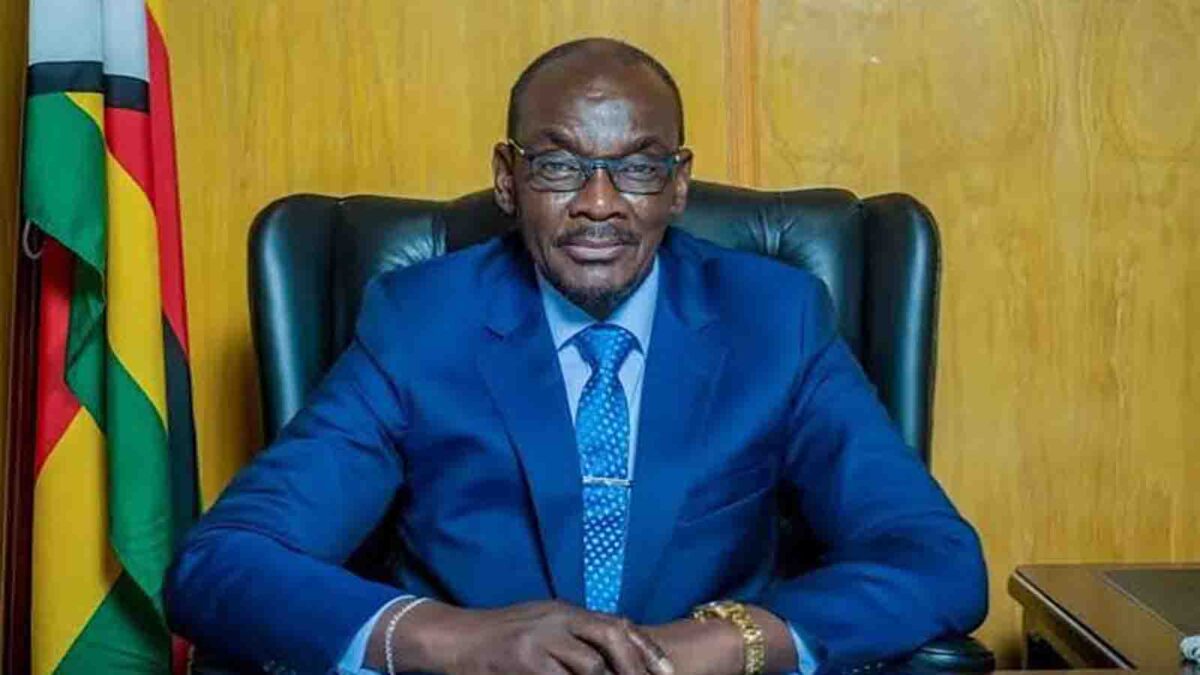
VICE-PRESIDENT Kembo Mohadi is expected to visit Moscow to fine-tune implementation of a partnership agreement on health services delivery, building the momentum on President Mnangagwa’s recent visit to Russia where Zimbabwe secured fruitful engagements for deepening economic synergies between the two friendly countries.
Zimbabwe and Russia enjoy cordial political and diplomatic relations dating back to the days of the liberation struggle and focus is now on expanding the relationship on the economic front,
Zimbabwean Ambassador to Russia, Cde Mark Grey Marongwe, said here yesterday.
In an interview at the Zimbabwean embassy, he confirmed VP Mohadi’s visit, saying his engagement was a culmination of some of the positive outcomes from last week’s visit by President
Mnangagwa who attended the Russia Africa Summit, met his counterpart, President Vladimir Putin and held several meetings with potential investors, the Zimbabwean diaspora community and students.
“What the Vice President is coming to address is implementation, we are at the implementation level of the Memoranda of Understanding across the whole economy.
“He will visit a company that manufactures drugs and medical equipment to see how and what we can be able to achieve,” said Amb Marongwe.
“So, we will have our Zimbabwean experts and Russian company experts sharing ideas on what is it Zimbabwe wants, what is it they can provide, what will be the manner for exchange and so forth.
“So, the VP has not come for just talk, he has come to supervise one of the many exchanges we have facilitated by signing Memoranda of Understanding. Basically, we have done all the Memoranda of
Understanding and it’s time to translate into tangible benefits that people can see and that the economy of Zimbabwe can feel that there is change.”
He said VP Mohadi was expected to arrive in Moscow today and kickstart business engagements for the next few days. Reflecting on the recent Russia-Africa Summit, Amb Marongwe said beyond physical engagements by the President and his delegation, the biggest work starts with transferring everything into documentation that spells out the manner through which both parties cooperate.
“These sometimes take a long time to extract. Everyone moves into a negotiation trying to protect their own interests, and it takes a long time to agree,” he explained.
“What we’re doing now is to get those components where an agreement has been achieved and is turned into actual practice for mutual benefit. What I mean here is, we are not looking at a situation where Russia is going to come to our markets with goods they’ve produced in Russia and sell them and from us, they just extract raw materials. “
“So, we are not looking at the continuation of such a relationship. We are saying, yes, you want our raw materials, but what is it in the process that leads us to having a finished product? What can be localised in the source country of the raw materials? We can say, okay, you are in the metallurgical business, dealing with metals, what is it you do with the chrome that you get from Zimbabwe?”
Amb Marongwe emphasised that Zimbabwe’s economic diplomacy drive was anchored on unlocking higher value addition and beneficiation of its resources as the country marches towards
Vision 2030, which targets achieving an upper middle-income status.
“We are simply saying, we are at a commercial table, discussing on behalf of our people. Let’s arrive at a position where both sides benefit. We are saying, yes, we are friends, let’s work together with mutual benefit, that is sustainable on either side. If the population deduces what is happening as something that is undervaluing their resource, they can cause the creation of instability,” he said.
“So, the relationship must be one where we also strengthen sovereignty by ensuring that the people who are led can see what they are benefiting.”
Amb Marongwe said Russia was a strategic ally for Zimbabwe given its advances in many development aspects including in medicine as the country produces high-tech medicines and equipment to deal effectively with diseases such as cancer.
“They are the leaders actually in cancer (treatment). I would say 100 percent of the medicines you want, you will find here, without any fake or some that are ‘genuine fakes’. They are leaders in that respect.
“In the cyber world, they are also leaders. We are talking here particularly about artificial intelligence. They are way, way ahead,” he said.
“So, in those highly technical areas, we need to engage on both sides so that we extract the best deal for our people. There are areas also such as agriculture, there are new technologies in agriculture.
We want to be part of it, not just as buyers, we want to establish relations with Russia,” said the Ambassador.
“We produce a lot of minerals that are used in the manufacture of agricultural equipment. We are looking at the situation where it is possible because the chrome or the iron and steel is there, they do components in Zimbabwe. We then bring in parts to complete whatever it is we manufacture.”