admin
admin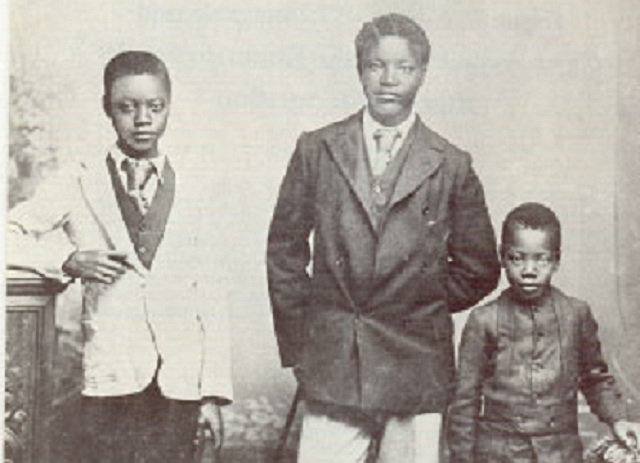
Fungai Muderere
It has been told over and over again, but the history of Zimbabwea��s oldest football club is stuff of legend.
For the benefit of younger generations of supporters who have an abstract knowledge of the club and even the old who are romantically linked with the club; like a housewife who keeps repeating her favourite movie and always cries when it comes to the moving scene, B-Metro takes you down that route again.
Highlanders Football Club was formed in 1926 by the descendants of King Mzilikazi Khumalo of the Ndebele State.
The founders were the grandsons of King Lobengula Khumalo who succeeded his father.
The two, namely Albert and Rhodes Khumalo, were children of Njube who was Lobengulaa��s son.
Their first interaction with football was when they were sent to study agriculture at Lovedale Institute in South Africa.
While there, brothers developed a love for the game. However, back home in present day Zimbabwe football had started sometime in 1890 and the game can be traced to the police in Causeway, Salisbury, now Harare.
The Khumalo brothers had changed their lifestyles in South Africa. They could not cope with the a�?slowa�? life back home because their age mates were still glued to traditional games like hunting.
The brothers then moved to Bulawayo where they bought a house in Makokoba. While in Bulawayo Highlanders was formed.
Some of the cluba��s earliest players, before World War 2 were the likes of James Chilongotsha, Peter Lufumo, Samule Mlilaya and Dan Gasela.
The team played in a local league that somewhat became semi professional in the 1950s. In cup games such as the Osborne Trophy they clashed with representative teams from Gweru, Harare and Mutare.
But before then, around 1937 the team changed its name from Lions Football Club to Matabeleland Highlanders Football Club.
The Khumalo brothers at some point left Bulawayo for Pupu on the outskirts of Nkayi. The club was left struggling with no leadership and finance.
Doom was at its doorstep but one Nsele Hlabangana received a letter from the Khumalo brothers who told him to come see them.
When he got there, they gave him gold pieces to sell and raise money for the club.
However, club CEO Ndumiso Gumede said there was no way the club was going to get broke because it was a social club.
a�?I was not born yet but I know the club was not going to shut down because of money. It was a social club,a�? he said.
The teama��s progress like all other sports teams was affected by the Second World War in 1939 a�� 1945 as natives fought alongside the British troops. (Source: N. Hlabangana 18 September 1997).
A�To be continued next week…



 Online Reporter