Chronicle Editor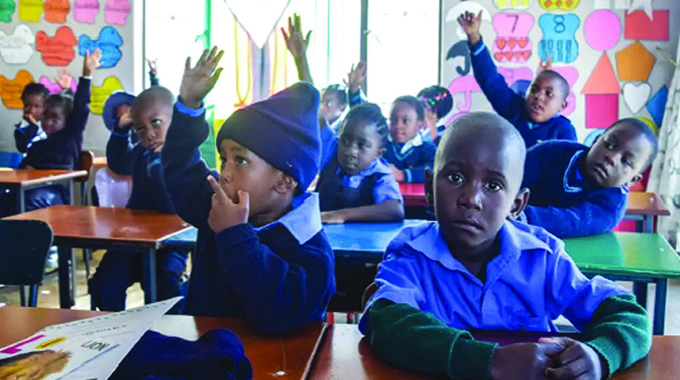
THE end of the second school term has come. Parents and their children alike are looking forward to the holiday. It is good enough for them to come together and relax. Schoolchildren are anxiously looking forward to relax and rest after sweating it out in a term which was unfriendly at times in terms of the chilly weather. Those who love sleeping surely will get longer hours to do that.
Examination classes are also given a resting period but should not totally forget their books. Examinations will be starting very soon and you do not want to be found wanting. Play as much as you like but spare a thought you will be deciding your future. Of course, we have come through hard times where some parents have adopted new cultures and want their children to be treated with kids’ gloves even where they need correction.
Teachers, who spend more time with children, have become powerless at schools. The backlash they get from the parents and the parent ministry has frustrated many teachers who had the zeal to see children passing. They have developed a negative attitude toward their work.
Teachers work with children to help them pass by explaining difficult concepts to them. There is no more corporal punishment at schools except for a few instances reported by the media in general or social media. This has been talked against and almost everybody knows the repercussions.
Parents and guardians should take care of their children during these school breaks. The world has changed. It is unlike before. Children are no longer safe outside the home. People cry loudly when damage has been done.
Discipline needs to be enforced both at home and at school. Students without discipline do not do well at school. This is an undeniable fact which parents and guardians should accept. Allow students to be corrected. Correction of students does not mean beating them up. There are many ways of correcting children at school. This paranoia of always thinking that teachers beat up students should stop.
Have trust in teachers and believe your children are in safe hands at school. Teachers are not animals that they resort to the stick all the time they deal with students.

It is all well that there is a general awareness of children’s rights across the nation. However, abuse of those rights has at times led many students and parents astray. Teach students their rights, but remember that over-reliance on them might back fire leading to a breakdown.
Many parents and guardians have lost control of their children because children have taken advantage of too much relaxation and proceeded to take drugs and other stuff along those lines.
As you relax you might like to go over these troublesome words: ain’t — Ain’t is never used in formal speaking or writing unless you are quoting the exact words of a character or real person. Instead of using ain’t, say or write am not, is not, or use contractions. I’m not, she’s not, she isn’t, they aren’t. Lulu is not going to the dance.
Anxious, eager: Anxious means uneasy or worried about some event or situation. Eager means having a keen interest or feeling impatient for something expected. James is anxious about the outcome of the trial. Debra is eager to see her grades because she knows she did well. Being as, being that –
Although the expressions being as and being sometimes replaced because or since in informal conversation you should always avoid them in formal speaking and writing. Because she made excellent grades, Lerato skipped a year in school. Since Robert is already at home, let’s visit him there. Can, may — Can implies the ability to do something. May implies permission to do something or the responsibility of doing it.
You may go to the movie if you can pay the price of a ticket. Can’t hardly, can’t scarcely – Can’t hardly and can’t scarcely are considered double negatives, since hardly and scarcely by themselves have a negative meaning. Do not use hardly and scarcely with not or –n’t. Lindiwe can hardly reach the shelf. Ronald can scarcely believe that he won the context.
Complement, compliment – A complement is something that makes a thing complete. A compliment is an expression of praise or admiration. The teacher’s compliment pleased Rachel. The library is a complement to what happens in class. Compose, comprise. Compose means “to form by putting together” Comprise means to “contain, embrace.” Water is composed of hydrogen and oxygen. This company comprises three branches. For views link with [email protected] or sms to 0772113207.



 Online Reporter