admin
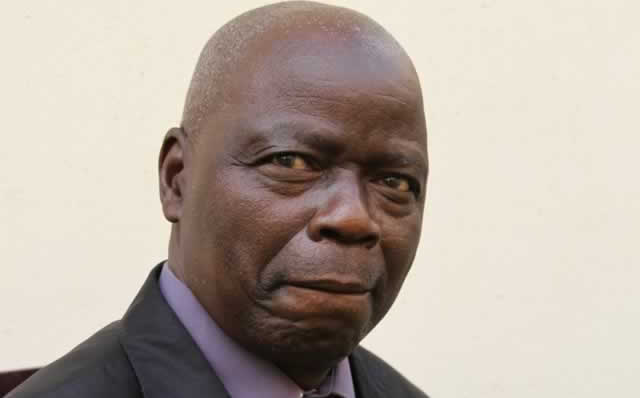
adminProf Innocent Chirisa
For example, getting into town during weekends towards schools’ opening is a terrible experience. Traffic is very slow. Kombis are bad when you are not on them.
On 20 April, I set to get from Mt Pleasant (my work station) to Glen Norah around two o’clock in the afternoon.
I wanted to be at a Conference Venue in Glen Norah before half past two.
I was not driving. Someone dropped me at NSSA and I walked to Market Square to get onto a commuter omnibus.
For a long time, I had not had such a walk experience through town.
I got to Market Square and boarded a kombis to Glen View 7 via Amalinda Road.
From Market Square into Charter Road and into Simon Mazorodze Road, the kombi driver exhibited extraordinary and dangerous driving skills to outmanoeuvre the traffic jam that was already beginning to build up.
It was very hot and uncomfortable being in the kombi but everybody aboard seemed absorbed and stuck onto their phones and no one really cared about the heat.
The kombi windows were dead shut.
We got to ZBC Mbare and the driver said was going through industry (via Southerton) because the jam was just serious after ZBC.
We were getting somewhere close to Harare Hospital after the diversion when it proved that it was just going to be impossible to beat the jam pressure in less than an hour.
‘Vabereki, we have to go back and reconnect through Adbernie Road via Mbare Musika,’ said the driver.
For sure, he reversed and got back. We then reconnected Mazorodze via a road that passes Stodart Hall.
I arrived at the venue of the Conferences after about 50 minutes. If it was not the kombi, I could have been struck in the road for two to three hours.
Some of the conference delegates later relayed to me such a nasty experience which they experienced especially when trying to get to the venue for the evening events.
Connecting to the Southern and Western sides of Harare, from the city centre is becoming a horrible experience.
It includes specific times of the day, especially the rush hours and specific periods of the month or major events.
For example, getting into town during weekends towards schools’ opening is a terrible experience. Traffic is very slow.
Kombis are bad when you are not on them.
Because when you are using them they can speed up your movements far ahead the private and major buses travelling in the same direction.
Nonetheless, should anything happen in the event of outmanoeuvring others then it is really pathetic.
What I have observed is that the jungle of traffic challenges which used just to affect the city centre is spreading into the whole ‘body’ of the city.
As an empiricist planner, I will hasten to tell my fellow planners in the City of Harare to sit down and consider the situation.
They can call for a roundtable engagement so that, we see and consider together what we need to do, at least from the angle of crafting sound policy advise to Government.
I have experience really bad traffic situations in Nairobi.
In Nairobi, a taxi driver is taking you to Jomo Kenyatta International Airport.
Along the way, you experience serious jam.
You are so worried that you may miss the plane. At one point, the jam gets so grim that the driver is impelled to even turn off the engine.
Some planners, engineers and architects are beginning to whisper to the fact that congestion will worsen provided services, housing and transportation are not provided in a coordinated manner. Harare has experienced a lot of infill and beyond-old-city-boundary housing developments in the past decade or so.
This is a city which was developed to house a population of about 300 000 inhabitants. Official statistics for the city put the population at 2.2million.
The combined Greater Harare population is around 4 million. (We acknowledge that these figures can really be a source of contestation and debate).
Officially, some areas on the borders of Harare including parts of Glen View, Granary and such like are actually portions of Zvimba Rural District Council.
These developed into Harare and exhibit some parasitic tendencies on the city.
The idea of having the 1991/2 Harare Combination Master Plan (HCMP) was towards creating a vehicle through which issues exerted by other abutting local authorities (Zvimba, Goromonzi, Mazowe and Manyame) could be discussed.
Such issues include transportation, pollution abatement, water and sewer management, development of trunk infrastructure and housing.
They are really thorny on Harare.
The new housing developments are pressing unforeseen demands on Harare which is struggling to bring adequate services to its inhabitants.
The 2013 Constitution of Zimbabwe provides for the creation of Metropolitan Councils.
So far, Zimbabwe has Harare and Bulawayo as Metropolitan Provinces.
If the Harare Metropolitan Council was now up and running, some of the challenges affecting the metropolitan region could have started to be discussed with options sought to create a manageable space.
They could seek to find way to review and make the HCMP speak to metropolitan goals.
Two weeks ago, I learnt that Lusaka in Zambia is getting a rebirth.
The rebirth of mega cities like Harare will not come if people are simply trying to add stick stuff to a leaking roof.
As an empiricist planner, my duty is to observe, experience, learn, exclaim and charge whoever is supposed to take the necessary action to change the situation.
If Lusaka are doing it, we can also do it. But, it begins with realising that where we stand is collapsing and thus we need to do something.
Suffice it that the President of the Republic has already told us the ‘Zimbabwe is open for business’. He has given us the charge. We must now act.
I have shared with my students that we are encouraged to pray, but prayer does not change things. Prayer changes the one praying. Because after prayer, you have got to action.
Planners can discuss and generate options to get our city out of the quagmire surrounding it.
Citywide approaches and holistic approaches are needed.
A comprehensive approach with good coordinative strategies will bring together all the permutations that make a city.
Prof Innocent Chirisa is University of Zimbabwe Department of Rural and Urban Planning chairperson. He wrote this article for The Sunday Mail.


 Online Reporter