Peter Tanyanyiwa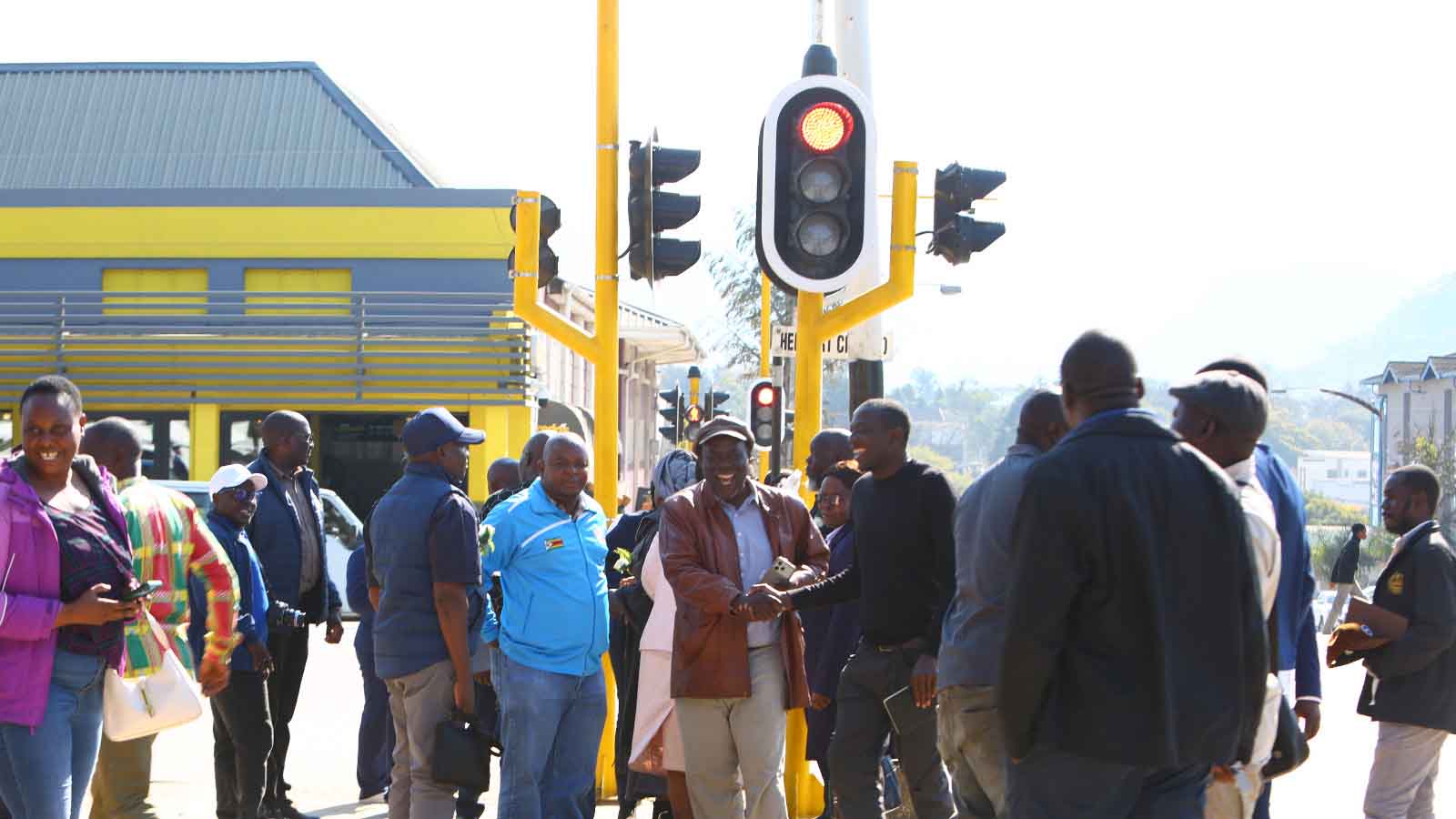
Herald Reporter
ZIMBABWE has taken a major step towards modernising its road transport infrastructure with the unveiling of a locally developed Hybrid Smart Traffic Control System in Mutare, which is expected to improve traffic flow, strengthen road safety and reduce reliance on imported traffic management technologies.
The state-of-the-art smart traffic lights, designed and built by Kwekwe Polytechnic, automatically monitor traffic volumes and adjust signal timings in real time, reducing congestion and cutting unnecessary delays at busy intersections.
The system was officially unveiled recently at a ceremony attended by Manicaland Provincial Affairs and Devolution Minister Advocate Misheck Mugadza, Permanent Secretary in the Ministry of Higher and Tertiary Education, Innovation, Science and Technology Development Professor Fanuel Tagwira, senior Government officials, City of Mutare officials, principals of tertiary institutions, staff and students.

Unlike conventional traffic lights that operate on fixed time intervals, the new system uses intelligent sensors to detect vehicle density and regulate traffic according to demand, allowing roads with heavier traffic volumes to receive longer green-light phases while minimising waiting times on less busy roads.
The smart traffic lights are also equipped with modern surveillance technology that includes high-definition cameras, automatic vehicle counting and classification, number plate recognition and the detection of motorists who violate red traffic lights.
To ensure uninterrupted service, the system operates on a hybrid power platform that combines electricity from the national grid, solar energy and battery backup.
The traffic lights can continue operating for up to 20 hours during power outages and can function independently under favourable solar conditions.
Speaking during the unveiling ceremony, Professor Tagwira said the project demonstrated Zimbabwe’s growing capacity to develop world-class engineering solutions that address local challenges.
“The fruits of Heritage-Based Education 5.0 are now evident through innovations such as this Hybrid Smart Traffic Control System,” he said.
Professor Tagwira said the locally developed traffic lights reflected the Second Republic’s philosophy of Nyika inovakwa nevene vayo by proving that Zimbabwean institutions have the expertise to produce advanced technologies that were previously imported.
He applauded the City of Mutare for choosing a home-grown solution instead of importing traffic control systems.
“I would like to commend the City of Mutare for believing in the capabilities of our local institutions,” he said.
“This project is a practical example of import substitution. Every locally developed solution that replaces imported technology saves foreign currency, creates jobs, strengthens local industries and contributes to national economic growth.”.
Professor Tagwira challenged other local authorities to embrace locally developed technologies by partnering universities, polytechnics and innovation hubs to solve urban infrastructure challenges.
The smart traffic lights were conceived in 2022 by Kwekwe Polytechnic’s Electrical Engineering Department after engineers identified the need for a traffic management system capable of addressing increasing congestion while remaining operational during frequent electricity outages.
A prototype was first showcased at the 2023 Zimbabwe International Trade Fair, attracting interest from local authorities.
Following further exhibitions at the Zimbabwe International Trade Fair and the Zimbabwe Agricultural Show, the City of Mutare signed a Memorandum of Understanding with Kwekwe Polytechnic in 2024 before awarding the institution the project in 2025 through a competitive bidding process.
Installation of the first phase was completed in April this year ahead of last week’s official commissioning.
Developed through collaboration between the Polytechnic’s Electrical Engineering, Mechanical Engineering, Civil and Construction Engineering, Automotive Engineering, Information Technology and Business Development departments, the project showcases the country’s expanding engineering and manufacturing capabilities.
Beyond easing traffic congestion, the smart traffic lights are expected to improve road safety, enhance compliance with traffic regulations and provide accurate traffic data to support future urban planning.
The successful deployment of the system marks a significant milestone in Zimbabwe’s drive to develop locally engineered infrastructure solutions, with the project expected to pave the way for similar smart traffic management systems in cities and towns across the country.



 Online Reporter