Online Reporter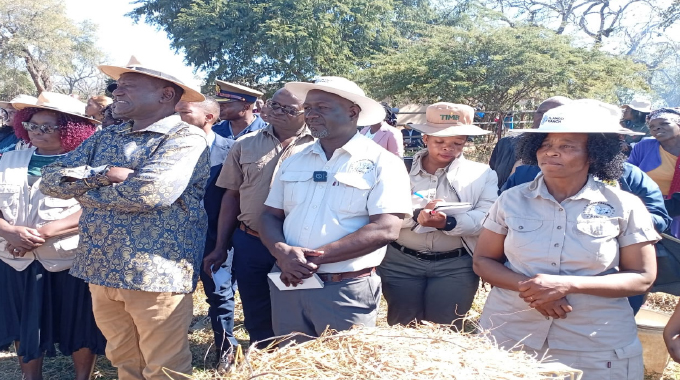
Raymond Jaravaza, [email protected]
ACROSS the dry plains of Umzingwane District in Matabeleland South Province, livestock farmer Mr Jairos Mahlangu has found a simple but effective way of keeping his farming business profitable — producing his own stock feed.
At his homestead in Irisvale Village, Mr Mahlangu is using silage production to cut feed costs, improve the health of his cattle and strengthen the future of his growing livestock enterprise.
For many livestock farmers, buying stock feed is one of the biggest expenses. For Mr Mahlangu, feeding his Brahman pedigree cattle and dairy cows entirely from commercial feed would consume more than 55 percent of his monthly budget.
Instead of relying on expensive feed supplies, he decided to produce his own silage using Bana grass and maize grown on his farm.
Bana grass is a fast-growing fodder crop that is drought-tolerant and rich in protein.
Together with maize, the crops are harvested while still green, chopped into small pieces and stored in large pits covered with plastic and soil for four to six weeks to produce silage.
The system has helped Mr Mahlangu reduce costs while maintaining healthy animals.
By producing feed on a five-acre plot, he has managed to increase profits and reduce his herd’s exposure to diseases, as the cattle spend more time feeding in paddocks instead of communal grazing areas.
His success has attracted attention from both farmers and agricultural experts.
On Thursday, scores of villagers from Irisvale and surrounding communities gathered at the Mahlangu homestead for a field day organised to showcase the silage project.
The event was attended by Matabeleland South Minister of State for Provincial Affairs and Devolution Albert
Nguluvhe, officials from the Agricultural Advisory and Rural Development Services (ARDAS), traditional leaders, representatives from agricultural companies and schoolchildren.
Umzingwane District livestock officer Mrs Velile Ndlovu said silage production was an affordable practice that could be adopted by farmers regardless of land size.
“The host farmer Mr Mahlangu has over the years become an expert on producing his own silage by growing Bana grass and maize, which he harvests when the two crops are still green, cuts into pieces and puts into pits.
“It’s important for a farmer producing silage to make sure that the Bana and maize stalks pieces weight 100 kilogrammes when they are put into a pit are compacted to avoid the build-up of air into the pit otherwise the mixture will turn into compost instead of silage.
“That process must be repeated until each pit is full, which is then covered in plastic for between four to six weeks and the silage is ready for feeding animals,” said Mrs Ndlovu.
She said silage production could help farmers reduce dependence on expensive commercial feed.
“Depending on the number of animals that a farmer owns, silage can be produced from Bana grass and maize grown on an acre of land and can feed tens of cattle for months, thereby, significantly reducing money that could have been spent on stock feed from established outlets.”
Minister Nguluvhe praised the Mahlangu family for building a diversified farming project supported by silage production, dairy farming and poultry production.
“Of notable interest is the silage production initiative that witnessed today. Feed shortages remain one of the major constraints affecting livestock productivity in our region so farmers who invest in fodder production and feed conservation are better positioned to maintain healthy and productive animals throughout the year.
“Investment in farm feed lowers cost which is huge cost driver in beef and milk production. The vision of rural industrialisation is alive in Matabeleland South Province and we are witnessing increased efforts to move beyond
primary production into value addition, processing and commercialization of agricultural projects. This is key in creating jobs, improving incomes, and uplifting livelihoods across our communities,” said Minister Nguluvhe.
He said dairy farming remained one of the country’s biggest opportunities for rural farmers.
“Dairy farming is a game changer for our economy and rural communities. Zimbabwe requires increased milk production to meet national demand and every livestock farmer has an opportunity to be part of this journey. By investing in dairy, beef, goats, poultry, and fisheries, farmers can contribute significantly to national food security, employment creation, and economic growth,” he said.
Villagers attending the field day were particularly interested in how Mr Mahlangu had expanded his dairy business from just two cows to seven within a short period.
“I always encourage first time milk production farmers to buy a cross breed between a Nguni and Jersey or Holstein Friesian breed because it is not susceptible to diseases and is easy to manage.
“The cows that we have at Hlango Ranch are cross breeds and produce on average of 14 litres a day, which translates to nine litres in the morning and another five in the evening so when a farmer starts with just one cow they can easily grow their herd and produce more milk,” said Mr Mahlangu.
He said silage production had become central to the success of his farming operation.
“The issue of silage production can’t be over emphasised as it cuts on stock feed costs leaving more money in the farmer’s pocket. Here at Hlango Ranch we can produce about 100 tonnes of silage in a single pit, which is enough to feed our herd while we grow more Bana grass and maize for the next batch of silage,” he said.