


 Sundaymail Editor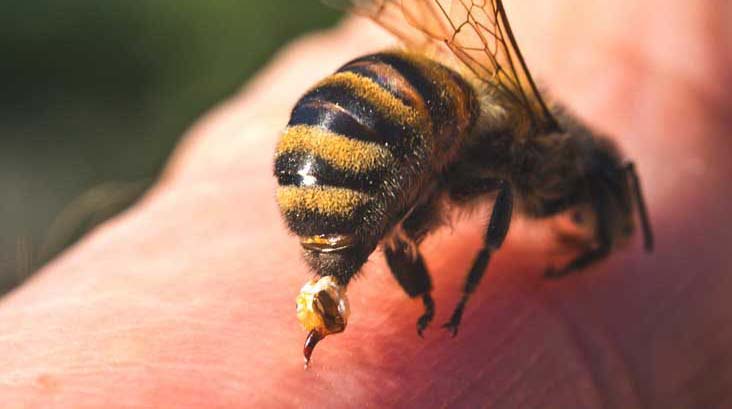
BEFORE using any remedies, inspect the sting site. If the bee’s stinger is still in the skin, remove it by wiping the area with gauze or scraping it with a fingernail. Do not squeeze the stinger by hand or with tweezers. Honey bees can only sting once, because they leave their stingers behind them. Removing the stinger and its venom sac from the skin will prevent further irritation. Below, we describe home remedies that relieve swelling and pain caused by bee stings.
Ice
Soon after a bee sting, wash the area thoroughly to remove any remaining bee venom. Proceed to apply ice to reduce pain and swelling.
◆ Wrap an ice pack, a bag of ice or frozen vegetables in a cloth
◆ Place the bundle against the site of the sting
◆ Hold the bundle in place for several minutes
◆ Repeat as needed
Always use a piece of cloth to protect the skin from the ice. Ice can damage the skin if it touches it directly.
Essential oils
A number of essential oils have antiseptic, antibacterial or antifungal properties. Oils from the following plants are often used as home remedies: tea tree, witch hazel, lavender, thyme and rosemary.
Before applying essential oil to the skin, mix it with a neutral carrier oil such as olive oil. Typically, the mixture is about one drop of essential oil for every four or five drops of the carrier oil. It is important to note that essential oils can cause allergic reactions.
Aloe vera gel
This is a plant-based gel that naturally soothes and moisturises the skin. According to a 2015 study, aloe vera extract has anti-inflammatory and antibacterial properties. Spreading a little gel on the bee sting site can reduce swelling and help prevent the spot from becoming infected.
Calamine lotion
People often use calamine lotion to relieve itchy skin. It may also help reduce pain and itching caused by a sting from a bee or wasp. If the site of the sting becomes itchy, try rubbing on a little calamine lotion.
Honey
Honey contains compounds that combat inflammation, so it may help reduce swelling. The natural antibacterial agents in honey may also help prevent infection and speed up healing. For these reasons, some medical professionals use honey extracts in wound dressings. Try spreading a small amount of honey on the sting site. Do this indoors so that the smell of the honey does not attract more bees.
Apple cider vinegar
Apple cider vinegar is used for a wide range of health and wellness purposes, from improving skin conditions to helping manage diabetes. Some people believe apple cider vinegar can neutralise bee venom, prevent infection and lower inflammation. You can also wet a bandage or cloth in the vinegar and then apply it to the sting site. Stop this approach if it causes irritation.
Toothpaste
One unconventional home remedy involves spreading alkaline toothpaste on the site of the sting to neutralise the venom. At any sign of a reaction, rinse off the toothpaste right away.
When to see a doctor
A person who has any of the following symptoms after a bee sting should receive emergency medical attention: hives, swelling of the tongue or throat, a rapid heart rate, vomiting, diarrhoea, pale skin, loss of consciousness, dizziness, severe itchiness and trouble breathing. – Wires



 Bongani Ndlovu
 Online Reporter