admin
admin

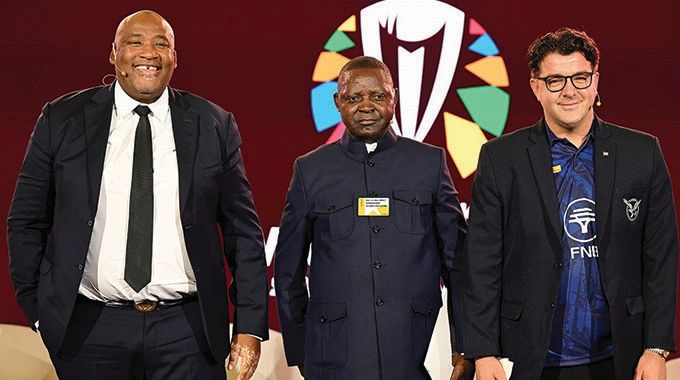
GIBSON Homela, a former Zimbabwe Saints player and coach who also starred for the national team from the 1960s to 1982, gives us his analysis of the Warriors’ performance at the Chan tournament.The Warriors finished fourth after qualifying for the knockout stage of the event for the first time in three attempts.
Homela is a member of the Zimbabwe high performance committee. He has also coached the senior national team on numerous occasions and is rated among the highest qualified coaches in the country.
He is a Caf and Fifa instructor. Below he gives us his analysis as an individual:
Now that the Chan tournament has come and gone, it is time to make a comprehensive analysis of the national team that participated in that tournament.
First and foremost let me remind Zimbabweans that as a nation, we are a member of Fifa to compete and win games. I was therefore surprised to see the soccer fraternity celebrating failure.
I will now try to give a tactical analysis of the whole team, starting with the team selection.
Affording the local player an opportunity to excel internationally and the choice should have been within a certain age restriction (under 24 years).
Playing system (1-4-4-2 or 1-4-5-1)
Definition: A tactical framework or organisation within which each player has his own positional area of play and duties according to defending and attacking.
Defensive tactical strategies
Strategies will systematically arrange the movement of players defensively and offensively. Defensively we combined collectively, efficiently, effectively and cohesively. Our defence system organisation was based on a combination of zonal marking, man-to-man marking or mixed marking whichever was suitable.
The defensive lines were resolute.
Pressing:
a) Offensive third, attackers were able to pressure as soon as ball possession was lost in the offensive third.
- The attackers turned defenders, with initial challenges, pressurising and containing, recovering back into their own half quickly.
b) Middle third
The middle third was characterized by a congested midfield with aggressive personnel that was determined to win the ball.
- The team maintained numerical advantage defensively.
- Defensive lines were always on side.
c) Defensive third
- The team was compact and jealously guarded their goal.
The entire team had the zeal to win the ball.
- The defence was able to pressurise, intercept, contain in areas, delay marking, covered for each other, tracked down opponents, retreating into defence, recovering and re-organising each other.
Offensive tactical strategy
Transition from defence to attack was very poor.
Defenders: There was never a clear cut intention of defenders to move forward and attack, to create space, spreading out side to side, end to end.
- Never played to pattern with rhythm.
- The counter attack plan was never put to use.
- The build-up attack was quickly broken by the opponents.
- The quick attack was rarely used.
- Flank defenders were supportive in attack.
Midfielders: Midfield is the source of strength defensively and hence should be the source of strength offensively.
- The transition from defence to attack was an eyesore.
- We were found wanting in possession pattern play with short, long or diagonal passes with change of pace and tempo into areas of penetration.
- Rear defenders did not run balls to central or flank positions to penetrate the opposition.
- No quick counter attack.
- No counter attacks and build up attacks.
- No urgency of support in attack.
- Very few shots at goal.
Strikers: Strikers were poor in the occupation and exploitation of space in flanks and central positions.
- There was little distinction between the free role or the lead role.
- They lacked the ability to receive the ball under pressure and closely marked.
- Lacked in short wall passes, dribbling, shooting and accurately from any angle.
- Physically the strikers were fearless, tough, courageous but selfish, poor in finishing as a result of technique.
Psychologically they were determined to some extent and aggressive at times.
Set play was not properly rehearsed.
In conclusion, a game of football is about defending and attacking.
- Strategy to address the transition from defending to attack
- Use of quick counter attacks
- Avoiding costly mistakes
- Use of influential and versatile players
- Use of individual players who can create chances and take chances without the assistance of others.
Go Warriors Go


 Online Reporter