Chronicle Editor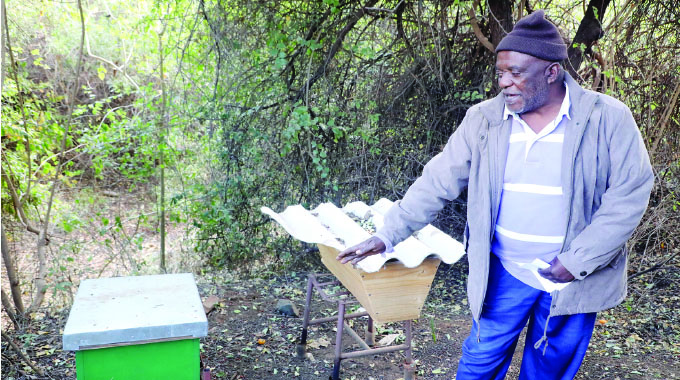
Flora Fadzai Sibanda, [email protected]
DESPITE their sting, which can cause a severe life-threatening allergic reaction, honey bees play a vital role in the ecosystem.
However, despite the potential risks, the benefits of honey bees far outweigh the dangers.
The bees have brought a new buzz to apiculture farmers in Bulawayo who pride themselves in being successful beekeepers.
As the country joined the rest of the world in celebrating World Bee Day yesterday, the Chronicle spoke to some beekeepers in Bulawayo who shared their insight on the significance of beekeeping.
World Bee Day was founded by the United Nations in 2017 following a proposal by Slovenia, which has a long tradition of beekeeping. The theme for this year’s World Bee Day is “Bee Engaged with Youth”. The theme highlights the role the youth can play in protecting bees and other pollinators.
Former Premier Soccer League chairman and now defunct AmaZulu Football Club secretary general, Mr Tendai Madzorera of Killarney suburb keeps 12 hives of bees at his homestead. He said he sells a 500g bottle of honey for US$5.
“In each hive, l harvest a full 20-litre bucket of honey. I then put the honey in 500g containers and sell it for US$5. I have 12 hives,” said Mr Madzorera.

“I started beekeeping two years ago after l saw a video on the internet, of people in apiculture. I decided to research what beekeeping was all about. At first, l was a bit hesitant as it seemed like a dangerous venture.”
Mr Madzorera said after attending several apiculture farming workshops, he decided to venture into bee farming.
“The workshops were an eye-opener for me. Whenever dealing with bees, one should be extra careful, to avoid being attacked,” he said.
“To avoid severe stings, if a person is stung by a bee they should move away from the hives because bees can smell their venom and once they smell it they go and attack.”
When he started, Mr Madzorera bought three hives and set them outside his home.
“Each hive can hold up to 20 000 bees, so when harvesting I have to be extra careful. We wait for nightfall before we go and harvest because one has to harvest when all the bees are inside their hive and resting,” he said.
“Harvesting is done by using smoke, which you put inside the hive, so that the bees get drunk and lose the power to communicate with each other.”
Harvesting is done twice a year, which is May and November.
Another farmer, Mr Welcome Bhila, who runs a honey-making company in Bulawayo, urged young people to take advantage of apiculture, saying it is a promising industry.
“Youths don’t see the importance of bees, especially our local youths. The rate of interest among the youth when we talk of bees and beekeeping is very low,” he said.
“As beekeepers and bee lovers, we have to take it upon ourselves to take as much knowledge, effort and resources as possible in trying to show the youths what’s ahead and how best they can make a quick U-turn and have a positive approach towards bees and other pollinators.”
Mr Bhila injected an initial capital of US$10 000 from his savings to start his own company in Bulawayo, Bee’s Honey Company in 2013.
Bee’s Honey Company manufactures beehives for beekeepers and also serves as Bulawayo’s sole market for honey.
The company also does honey processing, packaging and distribution.
Mr Bhila said he is in the process of building the country’s first beekeeping academy and research centre.
“We also provide training programmes for individuals around Bulawayo with some coming from as far as Harare. I will soon introduce a one-day beekeeping training for women and youths and my focus is to get as much knowledge as possible in return for more honey and other by-products,” he said.
Demand for honey and other bee products is high in Zimbabwe. Besides being a food and a sweetener, honey is used in making confectioneries and pharmaceuticals and as a natural medicine.
There is also a strong market for beeswax for making cosmetics, antiseptics and floor polish, furniture and shoe polish, soap, skin lotions and cough syrups.
Honey has health benefits, as a detoxifier, and contains vitamins E, D, C and K, which help strengthen the immune system.



 Online Reporter