Innocent Kurira [email protected]
ZIMBABWEAN football has never lacked ambition. Over the years, supporters have repeatedly been promised a brighter future for the Warriors, only for many of those hopes to fade before they could be realised.
Now Zifa is asking the football community to believe again.
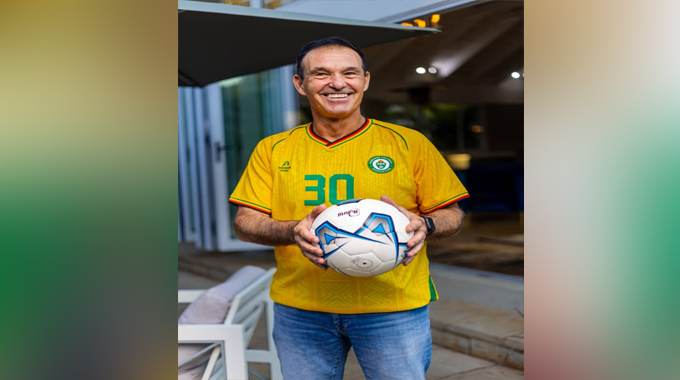
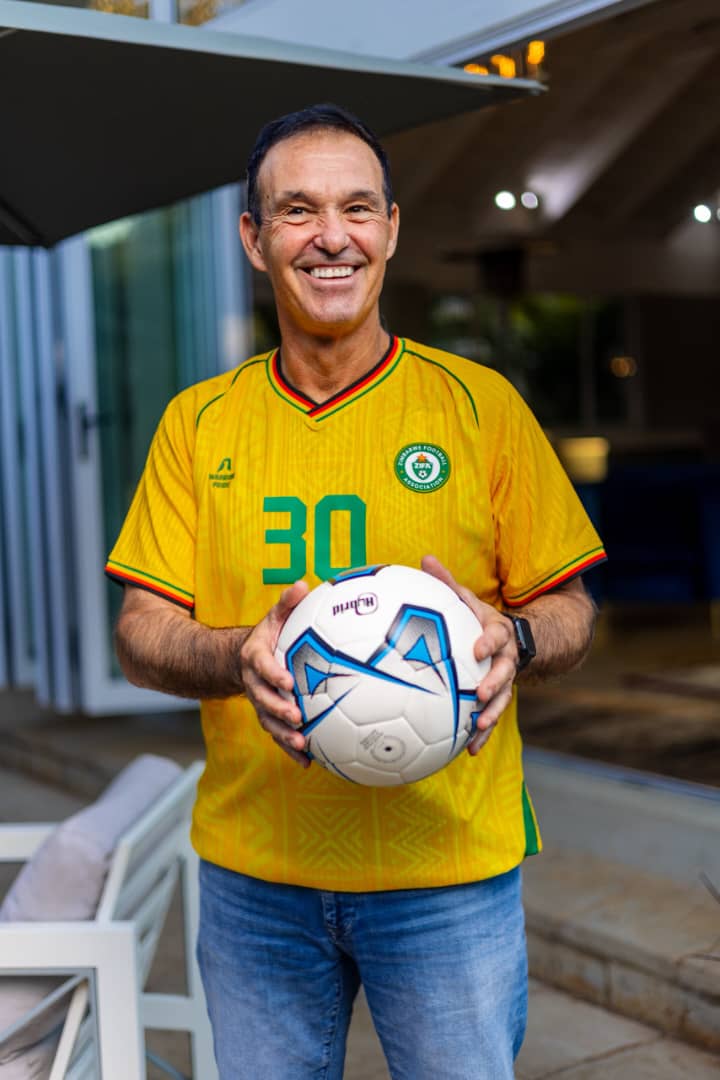
On Thursday, the association unveiled Spanish coach Ramon Catalá as the new Warriors head coach and placed him at the centre of its ambitious Dream 2030 project.
The initiative aims to overhaul the country’s national football structures by creating a clear development pathway that links junior teams to the senior national side under one football philosophy.
It is a bold vision. Yet, while many supporters welcome the long-term plan, there are also questions about whether Catalá is the right man to turn that vision into reality.
The UEFA Pro Licence holder arrives with more than 30 years of experience gained across Europe, Africa, Asia and the Middle East.
His career includes spells with clubs such as Celta Vigo, Espanyol, Real Zaragoza and Dynamo Kyiv, while he has also worked with the national teams of Nicaragua and Libya.
However, much of his background has been in fitness, technical development and assistant coaching roles rather than a lengthy record as a senior head coach.
That has prompted debate among football followers.
Veteran sportscaster Andrew Tambanewako was among those who expressed reservations about the appointment.
“My thoughts are simple, why in this modern-day football do I have to Google every Zimbabwe coach? Where do they always get people that we don’t know or have never heard of? Senegal have recently announced Vieira. Do you need to Google him? I will leave it there.”
His remarks may sound blunt, but they reflect the feelings of some supporters who have watched Zimbabwe appoint a number of foreign coaches over the years with limited success.
From Valinhos and Zdravko Logarušić to Baltemar Brito, Michael Nees and Marian Marinica, the Warriors have previously looked abroad for leadership, yet the desired breakthrough has remained elusive. As a result, the arrival of another foreign coach was always likely to be met with caution.
Veteran commentator Muziwethu Hadebe believes the concerns are less about Catalá’s nationality and more about the profile of his coaching career.
“It’s good we now have substantive coaches for the national teams. For the Warriors coach it will seem we have appointed someone whose history shows more on the fitness side than successes on the coaching front. That’s my main worry.”
Even so, Hadebe believes the Spaniard deserves an opportunity to prove himself.
“Maybe he will achieve great things at 65 with the Warriors. Let’s give him a chance.”
That may be the fairest approach for now. After all, Catalá has not yet overseen a competitive match for Zimbabwe. It would be premature to judge him solely on his résumé before he has had the chance to work with the team.
At the same time, supporters are entitled to ask questions about a decision that could shape the future of Zimbabwean football.
For football analyst Dumie Dhlakama, there are reasons to be encouraged by the structure Zifa has put in place around the new coach.
One of the biggest positives, he says, is that Catalá has arrived with his own trusted technical team.
“I’m happy that Catala brings his own assistants which is a first in recent years,” said Dhlakama.
He believes this will help create stability and improve communication within the coaching set-up.
“A coach has to work with trusted lieutenants, and it’s always good for him to choose his own trusted helpers.”
Zifa has appointed fellow Spaniards Marc Sanchez and Vicente Girona Izquierdo to assist Catalá, while Takesure Chiragwi brings local knowledge and experience to the senior team set-up.
More importantly, the Warriors appointment is only one part of a much bigger project.
The association has simultaneously named coaches for national teams from Under-15 level through to Under-23. The idea is to create a smooth pathway that allows young players to progress through the ranks before reaching the senior national team.
That, many observers argue, is where Dream 2030 should ultimately be judged.
The project’s success will not depend solely on whether Catalá wins his first few matches. The bigger question is whether Zimbabwe can build a sustainable football system capable of producing talent consistently.
Analyst Dumisani Gumpo believes the simultaneous appointments send a powerful message about Zifa’s intentions.
“Sweeping appointments of national team coaches simultaneously signal to players, fans, sponsors and all other stakeholders that the association has a concrete, multi-year plan that is aligned with a blueprint like Zifa’s Dream 2030 vision.”
He argues that Zimbabwe’s national teams have often been assembled on a short-term basis to meet specific tournament requirements, a cycle he believes the new structure could finally break.
“Appointing a senior head coach and junior staff at the same time transforms a national team setup from a loose collection of temporary squads into a cohesive football institution.”
It is certainly an attractive vision.
According to Zifa, players should progress through Under-15, Under-17, Under-20 and Under-23 teams before graduating to the Warriors. Along the way, they will be exposed to common technical principles centred on tactical awareness, athletic development, discipline, transitions and player growth.
On paper, the plan makes perfect sense. The real challenge, however, will be translating theory into results.
Football blogger Buhle Ncube reflected the cautious optimism shared by many supporters.
“I really do not know how to react to the appointment given the coach’s CV doesn’t appear to be someone who has vast coaching experience, so I think I will just give him my trust for now and see what he does.”
That neatly captures where Catalá finds himself today. He has not yet won over the doubters, but neither has he failed. For now, he is a coach with a long-term vision to sell and a football community waiting to see whether he can deliver.
Not everyone is convinced. Archford Hadebe of the Pass and Move podcast believes the appointment carries significant risks.
“I’m not happy with this appointment of Ramon Catala, the Spaniard coach who has a history of being a fitness trainer and no knowledge of our football. He has to start afresh and learn our game and players, of which we don’t have that time.”
His concerns highlight one of the biggest challenges facing the new coach.
While Dream 2030 focuses on the future, the Warriors cannot afford to ignore the present. Zimbabwe still has immediate competitive commitments, and Catalá must quickly familiarise himself with the domestic game, identify the best available players and implement his football philosophy.
That leaves him walking a difficult line.
Zifa is asking supporters to be patient as it builds for the future. Supporters, meanwhile, want evidence of progress now. The reality is that Catalá will have to satisfy both demands.
For that reason, the fairest judgement of his appointment will not be based solely on his name, nationality or CV.
Instead, it will depend on whether he can help build the football system Zifa is promising while also producing results on the pitch.
For now, Zimbabwe’s Dream 2030 remains exactly that, a dream. Whether Ramon Catalá becomes the man who turns it into reality is a story that is only just beginning.