Online Reporter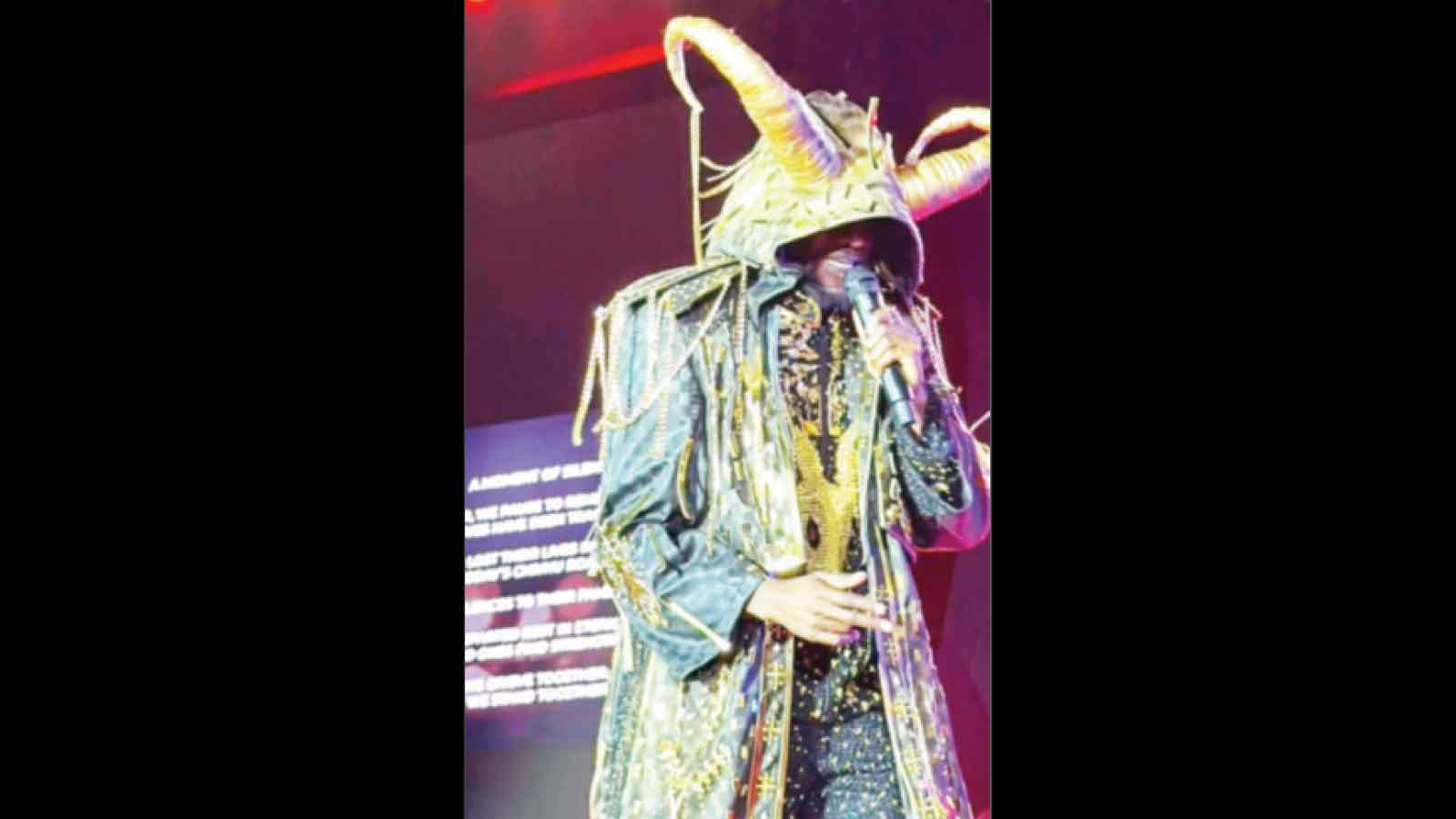
Zimpapers Entertainment Hub
Goats, aliens, Artificial Intelligence and controversial symbolism leave fans asking whether Zimdancehall singer Winky D has finally crossed the line.
There comes a point when “artistic freedom” stops being a convincing excuse for everything an entertainer puts before the public.
For Winky D, that moment may have arrived at Tête-à-Tête Season 2.
Some say the Gafa has never been afraid of controversy.
He has built much of his appeal around mystery, rebellion and challenging the establishment. But his latest visual statement has left Zimbabwe with a question that cannot simply be laughed away:
HOW FAR IS TOO FAR?
The performance itself was technologically impressive. Winky D embraced AI, futuristic visuals and cinematic staging, creating a spectacle that looked ambitious and internationally minded.
But then came the horns.
The goat imagery.
The alien-inspired visuals.
And suddenly the futuristic production was swallowed by a far more uncomfortable debate about spirituality, symbolism and taste.
For some fans, this was not daring fashion.
It was unnecessary provocation.
“The AI was impressive, and the performance was creative, but why bring horns and goat imagery into it? At what point do we say this has gone too far?” asked 28-year-old vendor Freddy Kamure.
That question deserves an answer.
Because Zimbabwe does not exist in a cultural vacuum.
This is a deeply religious society where imagery associated with occultism, demons, and dark spiritual traditions can carry serious meaning for audiences. An artiste has every right to experiment.
But audiences have every right to say “enough.”
Did the symbolism strengthen the artistic message — or simply manufacture controversy?
The promotional poster had already introduced an alien-like, surreal aesthetic, setting the tone for a world that appeared deliberately strange and otherworldly.
Then the stage presentation reinforced it.
Goat imagery.
Horns.
Digital creatures.
AI.
It may have been a carefully constructed artistic universe.
But if the intention was to make people uncomfortable, then it worked.
Perhaps too well.
THE BAPHOMET IN THE ROOM
Predictably, Baphomet entered the conversation.
And here the distinction between fact and accusation must remain clear.
Baphomet is not a biblical character, and the Bible does not identify Baphomet as Satan. The familiar modern depiction of a horned, goat-headed figure is largely associated with 19th-century occultist Éliphas Lévi.
But that does not erase the cultural association.
For many Christians, goat-headed and horned imagery carries deeply negative connotations.
The Bible itself uses horns symbolically, including in Daniel 8:3-8, where a ram and male goat appear in a prophetic vision.
Goats also feature symbolically in Matthew 25:31-46, where Jesus speaks of the separation of sheep and goats.
So, no, a horn does not automatically equal Satan. And there is no credible evidence that Winky D is an Illuminati member.
Claims to that effect remain speculation.
But that should not be used as a shield against criticism.
The absence of proof of Illuminati membership does not mean audiences must applaud every symbol placed before them.
Christians may reasonably be uncomfortable with imagery they associate with occult traditions.