Online Reporter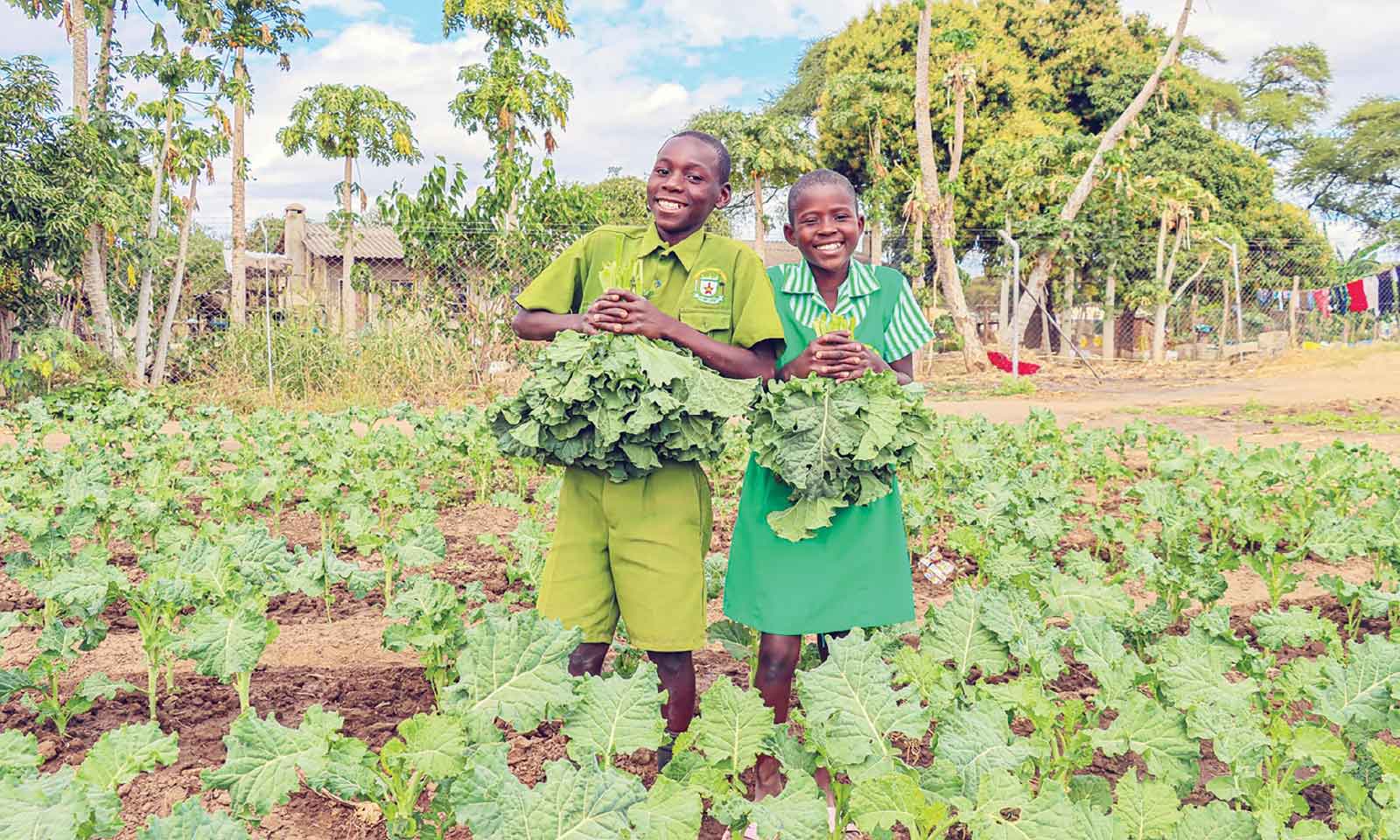
Shadreck Muchaku
Correspondent
Across Zimbabwe’s communal lands, from Chiguhune in Gutu district and beyond, smallholder farmers have long depended on household gardens for daily sustenance.
These modest plots have steadily supplied families with reliable harvests of leafy greens, tomatoes, onions, cassava and a rich variety of nutrient-dense root vegetables.
By diversifying diets at home, gardens have reduced reliance on expensive, often less nutritious market produce while strengthening household food security.
Equally important, these gardens have become vital tools for climate resilience. In an era of intensifying climate change, marked by recurrent droughts, prolonged dry spells and increasingly erratic rainfall, they offer low-input, flexible systems that buffer families against shocks.
Their capacity to produce nutritious food with minimal external resources has earned growing recognition as a cornerstone of sustainable land use; a way to meet present needs without depleting the limited soil, water and biodiversity on which rural communities depend. Yet traditional rain-fed agriculture, the backbone of most communal farming, is under mounting strain.
Staple crop yields have become unpredictable, exposing households to recurring seasonal shortages. As climatic pressures escalate, the very adaptive strengths of small-scale farming, its low input demands, flexibility and nutritional output, are gradually eroding. These realities are not distant warnings; they are the lived experience of the present moment and the clock is ticking.
Against this backdrop, the Government of Zimbabwe merits credit for translating policy commitments into tangible action. Programmes such as Operation Maguta and Pfumvudza/Intwasa have introduced conservation agriculture to resource-poor farmers through minimum tillage, mulching, crop rotation and smarter input management.
These initiatives have drawn international acclaim from the Food and Agriculture Organisation and Foundations for Farming. Nevertheless, significant barriers remain.
Soil degradation continues, youth interest in farming is waning and valuable intergenerational knowledge is slipping away. Closing these gaps is now essential if household gardens and conservation practices are to fulfil their full potential in building a resilient rural future.
Addressing these gaps requires scalable, cost-effective interventions, particularly the systematic expansion of household and school-based nutrition gardens.
Achieving this objective will require strong Government support, including the establishment of school gardens with reliable water infrastructure in strategically selected schools.
These gardens can serve as demonstration sites where community members observe practical techniques, exchange knowledge and adapt successful practices within their own households.
In addition to supplying fresh, nutritious produce that improves learners’ diets, school gardens can function as experiential learning spaces where students acquire practical agricultural skills.
Through hands-on participation, learners can develop competencies in composting, intercropping, stubble mulching and integrated pest management.
As learners share this knowledge with their families, the diffusion of sustainable practices can extend beyond the school environment, encouraging wider community adoption and strengthening local food systems.
Evidence from successful initiatives in South Africa’s Eastern Cape Province, including inclusive household programmes in Msobomvu village and community-driven food security projects, demonstrates the viability of such models.
Carefully adapting these experiences to Zimbabwe’s socio-ecological context, while leveraging existing agricultural extension networks, could significantly advance organic and low-input cropping systems that reduce farmers’ dependence on costly external inputs.
However, integrating school — and household-based initiatives into existing institutional frameworks for sustainable agriculture presents several challenges.
Complementary livelihood projects, such as poultry production using hardy breeds including Black Australorp, and Boschveld may provide valuable sources of manure and supplementary income.
Yet such initiatives can also attract opportunistic participation motivated primarily by short-term financial gain.
Effective governance mechanisms are therefore necessary to ensure that programme benefits reach genuinely vulnerable households while maintaining transparency and accountability.
A central pillar of this approach is the systematic recognition and integration of indigenous technical knowledge (ITK).
Local knowledge systems provide practical and context-specific strategies for pest and disease management, including the use of chilli-garlic extracts, mulching techniques, and companion planting.
When properly documented and scientifically validated, these practices can be integrated with modern agricultural approaches to create locally adapted and sustainable production systems.
Schools can further strengthen this knowledge exchange by hosting farmer-field days where elders, farmers and extension officers collectively demonstrate and discuss integrated practices, thereby reinforcing both scientific learning and cultural heritage.
Sustaining such programmes requires inclusive and socially cohesive support structures that manage limited financial resources responsibly. Importantly, monitoring should not be treated as a one-off activity but rather as an ongoing process of reflection, learning, and adaptation.
Through coordinated action among communities, schools, Government agencies, and development partners, integrated food-production systems can contribute meaningfully to improved nutrition, sustainable agriculture, and long-term community resilience.
Shadreck Muchaku holds a PhD in Rural Development and currently serves as an Adjunct Professor in the Vice-Chancellor’s Office at the University of Venda.