Online Reporter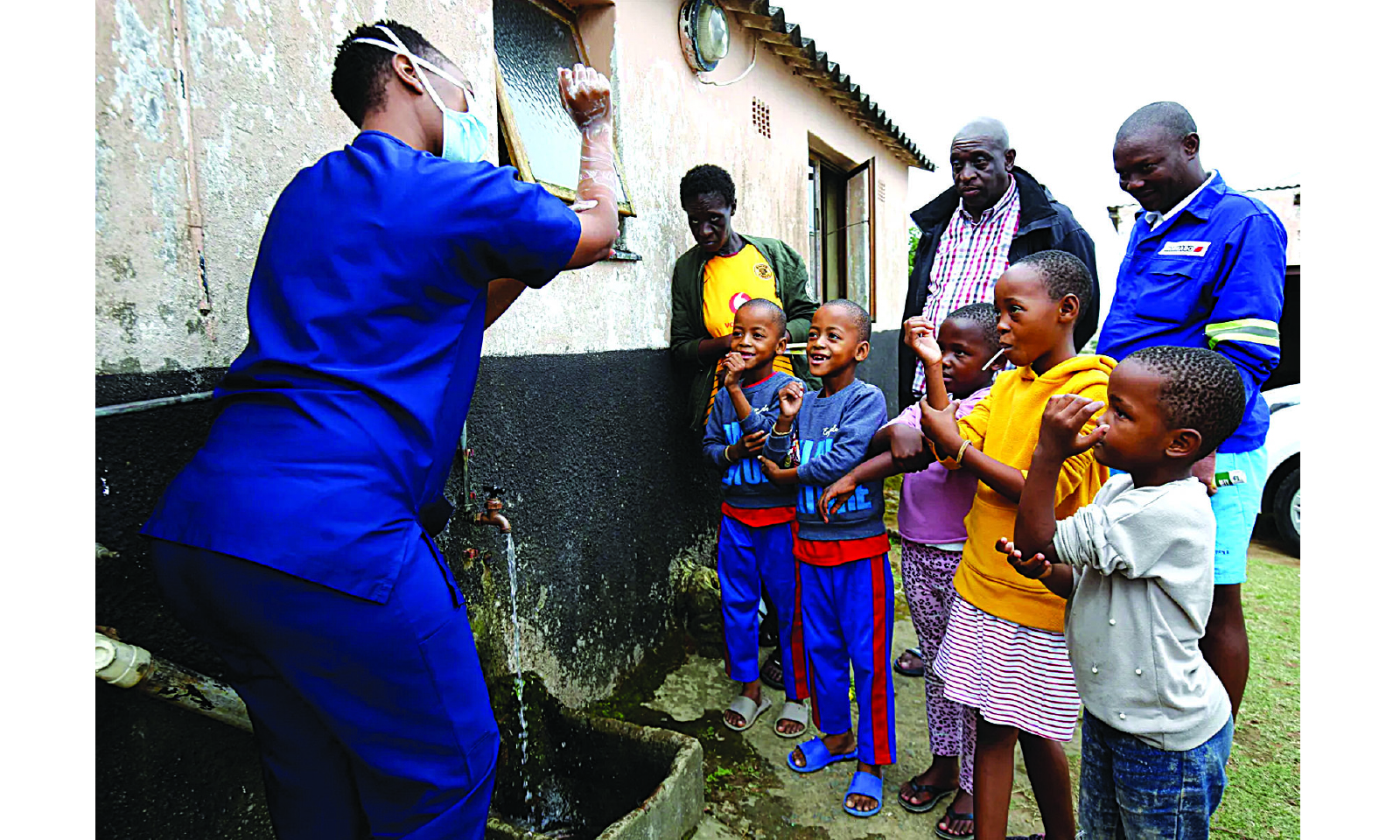
JOHANNESBURG. — When COVID-19 was declared a global pandemic in March 2020, the international community had dire predictions for Africa: the region’s underfunded and poorly equipped health facilities would crumble and millions of people could die.
The United Nations Economic Commission for Africa said in April 2020 that up to 3.3 million Africans could lose their lives as a direct result of COVID-19.
Five years on, Africa’s recorded COVID-19 death toll stands at just over 175,500 — that’s 2.5% of the 7 million global death toll, according to the World Health Organisation.
“None of the early predictions were steeped in deep science or research about Africa,” said Oyewale Tomori, who chaired Nigeria’s advisory committee on COVID response. We forgot how African scientists dealt with anthrax in Kenya, Ebola in Nigeria, and Marburg and mpox in Rwanda.
“Although they got international support for COVID, the expertise in these countries still is what controlled these outbreaks.”
Experts said Africa fared better than expected and than other continents as the grim forecasts failed to recognise Africa’s previous experiences with disease outbreaks, its strict COVID-19 lockdowns and youthful population.
By the time COVID hit, African health experts already had experience in border surveillance, contact tracing, social distancing, patient isolation, and even in conducting safe funerals, Tomori said.
Mosoka Fallah, director of the Science and Innovation Directorate at the Africa Centres for Disease Control and Prevention (Africa CDC) said preparation and the ability to diagnose cases quickly were key to tackling the outbreak.
Before the region identified its first case in February 2020, Africa CDC had gathered all the region’s health ministers to develop a continent-wide strategy.
When they found that only two labs in Africa could test for the virus, Fallah said they sent scientists to South Africa and Senegal for training, instead of sending samples overseas.
“Those in the West were saying that Africa did not have the skillset to do diagnostics and samples should be sent to Europe.
“But we refused and decided to build our capacity on testing,” Fallah said.
When flights stopped coming to Africa, it was difficult to get medical supplies manufactured abroad and the Africa CDC partnered with Ethiopian Airlines and the World Food Programme to move test kits and PPE across the continent, he said.
They also sought assistance from the WHO, philanthropic organisations, including the Jack Ma Foundation, and a coalition of African business leaders to source and buy scarce vaccines and PPE.
Fallah said Ghana began producing its own PPE to address massive shortages in its clinics.
“It was Africans looking deep within themselves and the coordinated government approach that reversed the dark prediction that there will be so many dead bodies in the streets that we will not be able to bury them,” Fallah said.
Moses Orinda, who was head of health programmes for Catholic Relief Services in Kenya during COVID-19, said there were other factors at play too.
“Many African countries had stricter containment measures compared to western nations; we also have larger youthful population, and good community outreach,” added Orinda. — www.context.news.