Victor Madzinga, [email protected]
I had been here only a few days earlier for the official launch. There had been champagne, speeches, ribbon-cutting and all the excitement that comes with a grand opening. Everyone was smiling. Everyone was optimistic. Club 626 looked like the future.
But this night was different.
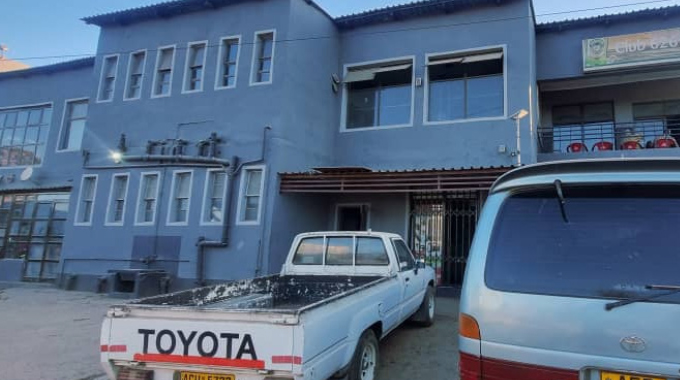
As I walked up to the building, the first thing that struck me was the silence. Not a single person stood outside on the veranda.
No laughter. No chatter. No groups of friends deciding whether to go in or move on to the next venue.
It was a sharp contrast to the place I had just left. There, music was pouring into the street and bouncers were struggling to control a queue stretching all the way to the gate.
At Club 626, there was nothing.
I pushed through the gleaming glass doors and stepped inside.
Rows of chairs and stools stood neatly arranged around polished tables. Everything looked spotless. Everything looked expensive. Everything looked ready for customers who were nowhere to be seen.
It was 9pm on a month-end Friday. Payday in Gwanda. The place should have been packed.
I climbed onto a high stool and took in the scene.
At one end of the counter sat a gentleman in an expensive suit, slowly nursing his drink with the seriousness of a man solving
Zimbabwe’s economic problems. A young police officer occupied another section of the bar, spending more time talking to one of the barmaids than drinking his beer. Behind the counter, two attendants shifted from foot to foot, occasionally laughing among themselves but mostly looking bored and restless.
The atmosphere was heavy. Even at a funeral, people talk. Here, there was hardly a sound. There was no music. The silence was so complete that you felt you could hear the buzz of a lonely fly circling the room.
It reminded me of Makombe’s old rural store, where the loudest noises were the ticking clock and your own thoughts. I immediately regretted coming.
Leaving, however, felt awkward. After all, the owner, Mandla, is my tshomie. So I did what many of us do when faced with huroyi hwehama. I stayed put and pretended everything was normal.
Unodya wakatsinzinya. You suffer quietly. The truth is that this had been the story of Club 626 for most of the previous year.
The strange thing was that Mandla had done almost everything right — at least on paper. The venue was beautiful. The leather seats were stylish. The lighting was elegant. The tables gleamed. The wine glasses looked like they belonged in a five-star hotel.
The club had been built for a very specific customer: the business executive.
This was supposed to be a sophisticated venue where successful professionals would discuss deals over imported wine while soft music played in the background. There was only one problem. That customer barely existed in Gwanda.
Or, if he existed, there were simply not enough of him to pay the bills. Most people in Gwanda still remember the venue that made Mandla famous: Talk of Gwanda on Fourth Avenue, better known as Limelite.
Now that place understood its customers. Limelite was not built for executives. It was built for ordinary people. For Tom, Dick and Harry. For me and my friends.
For the amakorokoza who had worked hard all week and wanted to spend, dance, laugh and enjoy themselves. The memories still make me smile.
There was always that one fellow dancing with such intensity that you wondered whether he was possessed or simply drunk beyond recovery.
There was the young man whose entire courting strategy involved pinching girls as they walked past. There was the customer who inevitably lost a battle with gravity after one Castle Lager too many.
The place was full of characters. Beautiful young women lined the passage leading to the toilets as if it were a fashion runway. Music blasted through the speakers. People danced. People laughed.
It was loud. It was messy. It was profitable. Most importantly, it reflected the people it served.
Club 626 was the complete opposite. It had been built for a market that existed largely in the owner’s imagination. That situation reminded me of a story my late friend Jonathan Makura, better known as Kamujoza, used to tell. May his soul rest in peace.
The story centred on St Mary’s Secondary School in Chitungwiza. There was an elderly boarding master whose eyesight had deteriorated badly. Then there was a student called John Dube, famous for scaling the school durawall at night and sneaking off to drink beer at Chikwanha Shopping Centre.
Eventually, the old man became suspicious. He would wait in the shadows watching the wall.
Whenever he spotted a figure climbing over it, he would shout:
“John Dube, dzokera!”
The student would panic and climb back down. The problem was that the boarding master eventually began mistaking everybody for John Dube.
One evening he shouted his usual warning.
“John Dube, dzokera!”
But the figure on the wall ignored him. Because it was not John Dube.
The boys quickly realised the old man could not see properly. Once they discovered that, all discipline disappeared. More students started sneaking out. What had once been one boy’s act of rebellion became a school-wide problem because the wrong person was being accused.
Business owners make exactly the same mistake.
We convince ourselves we know who our customers are. Then we keep calling them by the wrong name, hoping they will eventually respond.
When they do not, we blame them instead of questioning our assumptions. Every business has to decide who it wants to serve.
That decision should be shaped by reality, not wishful thinking. Business textbooks call it market segmentation and targeting.
In plain language, it means understanding who is actually walking through your door. That was Mandla’s mistake. He imagined a Gwanda full of executives seeking quiet conversation and sophisticated surroundings.
The market had different ideas. People wanted energy. They wanted music. They wanted affordable drinks. They wanted a place where they could dance, laugh and temporarily forget the pressures of life.
Eventually, the numbers became impossible to ignore. Mandla faced two choices. Close the business or change it. To his credit, he chose change. It was not an easy decision. Rebranding rarely is. Pride gets involved. Ego gets involved.
But business has a way of humbling people. So Mandla made the necessary adjustments. The expensive fittings stayed. Everything else changed. The music changed. The pricing changed. The atmosphere changed. Most importantly, the target market changed.
Instead of trying to turn Gwanda into Sandton, Club 626 began serving the Gwanda that actually existed.
Today, Mandla laughs when he reflects on the experience.
“Madness is when you seek to create your own version of reality,” he says.
I usually tease him in return.
“Call them by their actual names, and they will stop climbing the wall.”
He nods knowingly.
“The rebrand hurt my ego. But business is not about ego. If customers ask for lemons, you don’t give them oranges and then lecture them about vitamins.”
Not long afterwards, the results became obvious.
One evening I watched five young women walk into the club wearing short skirts and shorts. Two young men followed shortly afterwards — my tsheketsha friends, trying their best to appear confident.
There were shy smiles, exchanged glances and the unmistakable body language of people determined to enjoy themselves.
Then the music started. Ndolwane Sounds thundered through the speakers. Suddenly the empty chairs disappeared beneath customers. The barmaids stopped fidgeting. The counter became busy. The room came alive.
Club 626 had finally found its heartbeat. Same owner. Same building. Different mindset.
The lesson goes far beyond one nightclub in Gwanda.
First, accept the market you have, not the market you wish you had. Gwanda is not Sandton. It is not Borrowdale. There is nothing wrong with that. Successful businesses meet people where they are.
Second, rebranding is not failure. It is wisdom. Markets change. Consumer tastes change. Economic conditions change. The businesses that survive are those willing to adapt.
Third, never assume. Engage. Talk to customers. Watch what they buy. Notice who walks through the door. Pay attention to what makes them stay and what makes them leave. Data is cheaper than pride.
And this lesson applies far beyond nightclubs.
It applies to the boutique stocking designer clothes nobody can afford. It applies to the restaurant serving fancy fusion cuisine in a town craving isitshwala and beef. It applies to the salon buying expensive equipment while neglecting basic customer service.
Sometimes growth means accepting what reality is telling you. Sometimes it means swallowing your pride. Sometimes it means admitting that your customers know what they want better than you do.
Mandla learned that lesson.
Today, Club 626 is no longer a museum of good intentions. It is a functioning business. It pays salaries. It pays rent. It gives people a place to relax and enjoy themselves after a long week.
And me? I no longer sit in silence listening to flies. I sit where there is music, laughter and all the beautiful chaos that comes with a business that finally understands its customers.
Because in business, as in life, you must call people by their real names. Serve them what they actually want. And when reality knocks, open the door.
Otherwise, like that old boarding master, you may find yourself shouting at shadows while everyone else quietly climbs over the wall.